
⭐ EXPERT-REVIEWED  |  ✅ UPDATED 2026  |  🔒 NO SPONSORED BIAS  |  📚 EVIDENCE-BASED

Author: admin

  • Business Wealth vs Personal Wealth: How to Keep Both Growing

    Business Wealth vs Personal Wealth: How to Keep Both Growing

    Key Takeaways

    • Mixing business and personal finances creates significant legal, tax, and emotional risks that can jeopardize your long-term wealth.
    • Establishing a clear salary structure is the foundation of effective personal vs business finance management.
    • Tax planning for entrepreneurs should focus on leveraging entity-specific deductions rather than just minimizing immediate tax liability.
    • True wealth management for business owners requires decoupling personal net worth from the volatile performance of a single company.
    • Early retirement planning is crucial, as business owners often neglect their own long-term security in favor of reinvesting in company growth.

    For many entrepreneurs, the boundary between “the business” and “the self” often blurs into a single, high-stakes financial ecosystem. While the passion required to scale a business often necessitates total immersion, relying solely on your company as your primary vehicle for wealth is a gamble that carries substantial risk. Achieving sustainable financial freedom requires a deliberate shift in perspective: treating your business as a high-performing asset that funds your life, rather than seeing your life as a support system for your business. By mastering the art of segregating your capital while simultaneously optimizing both sides of your ledger, you can build a resilient foundation that survives market cycles and provides long-term prosperity. This guide explores the critical strategies for wealth management for business owners, helping you ensure that as your business flourishes, your personal financial security grows in tandem.

    The Danger of Mixing Business and Personal Finances

    The habit of commingling funds is the single most common pitfall in business owner financial planning. When your business operating account functions as your personal piggy bank, you lose the ability to track the true profitability of your venture. From a legal standpoint, this practice—often referred to as “piercing the corporate veil”—can be disastrous. If you operate as a corporation or a limited liability entity, you rely on a distinct legal boundary to protect your personal assets from business liabilities. When you pay for personal groceries with a business debit card or use company funds for private travel without proper accounting, you risk forfeiting that protection, effectively exposing your family’s home, savings, and investments to potential business litigation or creditor claims.

    Beyond legal risk, commingling creates an “accounting fog” that prevents you from understanding the health of your enterprise. Without clear segregation, you might believe your business is highly profitable, while in reality, your profit margins are being inflated or deflated by a mix of unrelated expenses. This lack of visibility makes strategic decision-making nearly impossible. When you cannot distinguish between business capital and personal wealth, you cannot accurately calculate your return on investment or identify which areas of your business are actually driving value.

    Furthermore, the psychological toll of mixing finances cannot be overstated. Entrepreneurs who treat their business bank account as their personal bank account often suffer from “revenue anxiety.” If you see a large balance in your business account and assume it is yours to spend, you may fail to account for upcoming payroll, tax obligations, or seasonal fluctuations. This reactive approach to spending often leads to financial instability, where the business survives on a month-to-month basis despite high gross revenue. Experts generally agree that the first step toward building wealth as a business owner is to enforce a strict “hands-off” policy regarding business capital. This means establishing a separate business account and a personal account, and moving money between them only through formal channels like payroll, owner draws, or dividend distributions. By creating this physical and digital wall, you protect your professional entity, simplify your tax reporting, and, most importantly, gain the clarity needed to manage your personal wealth as an independent entity that is no longer held hostage by the daily fluctuations of your business operations.

    How to Pay Yourself a Sustainable Salary

    Determining how much to pay yourself is a nuanced exercise in balancing the short-term needs of your company with your long-term personal financial goals. Many entrepreneurs make the mistake of paying themselves “whatever is left over,” which is inherently unsustainable. This method ties your personal lifestyle—and your family’s security—directly to the volatile performance of the company. Instead, successful business owner financial planning requires a deliberate, consistent salary structure that allows you to manage your personal budget independently of business revenue cycles.

    To begin, you must establish a market-rate salary. Research your industry standards and determine what a professional in your position would be paid by a similar company. Paying yourself a market-based wage serves two purposes: it forces the business to be profitable on its own merits, without “subsidizing” your lifestyle through owner-draws, and it simplifies your tax planning for entrepreneurs by creating a clear, predictable income stream. Once you have established a salary, treat it as a non-negotiable business expense. Just as you prioritize rent, utilities, and payroll for your staff, your own salary must be factored into the operational budget. This creates a stable floor for your personal finances, allowing you to automate savings, invest in retirement accounts, and build an emergency fund without having to wonder if this month’s profit will be enough to cover your expenses.

    There is, however, an important distinction between a salary and a distribution. For owners of C-corps or S-corps, the IRS generally requires “reasonable compensation” as a salary, which is subject to payroll taxes. Distributions or dividends, on the other hand, are payments made from excess profits. By balancing these two types of income, you can optimize your total take-home pay while minimizing unnecessary tax burdens. The key is to avoid the temptation to increase your salary or take a large distribution during a high-revenue month if the business needs that capital for reinvestment. A sustainable salary is not the maximum amount the company can afford to pay; it is the amount that supports your lifestyle and goals while leaving enough cushion for the business to remain competitive and stable during lean periods. By standardizing this, you transition from a business owner who is constantly scrambling for cash to an executive who manages their income with discipline and foresight.

    Optimizing Tax Efficiency Between Business and Personal Accounts

    Tax planning for entrepreneurs is often viewed as a once-a-year scramble, but it is actually a year-round exercise in strategic wealth management. The goal is to move money from the business side to the personal side in a way that minimizes total tax liability while maximizing your long-term net worth. This requires a deep understanding of your business entity type—whether you are a sole proprietor, LLC, S-Corp, or C-Corp—and how different tax rules apply to each.

    One of the most effective strategies for tax efficiency is maximizing business deductions that serve as investments in your future. For instance, instead of taking out extra cash as a taxable dividend, many business owners find value in utilizing company-sponsored health plans, equipment leasing, or professional development programs that qualify as business expenses. These expenditures lower your business’s taxable income without necessarily increasing your personal income tax burden, provided they are legitimate business activities. However, the most significant opportunity for tax efficiency often lies in the interplay between corporate retirement vehicles and personal investment accounts. By leveraging the specific contribution limits of business-based retirement plans, you can shield a significant portion of your income from immediate taxation, allowing that money to compound over time.

    The following table outlines common approaches to managing cash flow and tax efficiency between business and personal accounts:

    Approach Primary Benefit Best For
    Fixed Market-Rate Salary Predictability & Budgeting All business owners requiring stable cash flow.
    Owner Distributions Tax Flexibility S-Corp owners managing excess profit cycles.
    SEP/Solo 401(k) Contributions High Tax Deferral High-income earners looking to lower current tax.
    Retained Earnings Compound Growth Business owners planning for heavy capital expansion.

    Strategic tax planning also involves the timing of income and expenses. If you expect your business to have a lower profit year, it may be the perfect time to accelerate certain tax-deductible investments or realize long-term capital gains at lower tax rates. Conversely, in high-growth years, you might focus on maximizing contributions to retirement vehicles to offset the increased tax burden. The challenge for many entrepreneurs is that they view taxes as an external force they cannot control, when in fact, you have significant agency in how your business structures its income. By working with a financial advisor who understands the intersection of corporate and personal tax law, you can ensure that you aren’t just paying what you owe, but are also organizing your wealth to prevent unnecessary leakage.

    Diversifying Outside of Your Own Business Assets

    One of the most dangerous, yet common, traps for entrepreneurs is the “concentration risk.” Many business owners effectively have 90% or more of their total net worth tied up in their company. While this is necessary in the startup phase, it becomes a major liability as your wealth grows. If the industry shifts, a new competitor enters the market, or the economy enters a downturn, your primary asset and your primary income stream are simultaneously threatened. Effective wealth management for business owners demands a strategy that slowly shifts wealth from the company into external, diversified assets.

    Think of your business as an engine that generates “fuel”—your profits. The goal of your personal wealth management plan is to take that fuel and deposit it into a variety of different, uncorrelated “storage tanks” outside of the business. These tanks might include a broad-based index fund portfolio, real estate, precious metals, or even other business ventures that are not directly tied to your primary company. Diversification isn’t just about reducing risk; it is about creating an independent financial base that can support your lifestyle even if your business faces significant challenges or you eventually decide to exit.

    A helpful way to implement this is to treat your business like a private equity investor treats a portfolio company. If your business is your main asset, start treating your personal investment account as your own private equity fund. As your business produces free cash flow, set aside a non-negotiable percentage to be moved into an external, diversified investment account. This discipline ensures that your personal net worth grows regardless of how the business performs on a quarterly basis. Furthermore, having liquidity outside of the business provides you with an “anti-fragility” factor; if an unexpected business opportunity arises, you have independent capital that you can deploy, or if the business requires an emergency capital injection, you have a reserve to pull from without needing to rely on expensive debt or outside investors. The goal is to reach a point where your lifestyle is supported by the passive income generated by your diversified assets, allowing the business to become an option rather than an obligation.

    Retirement Planning Options for Self-Employed Individuals

    Retirement planning for business owners is often pushed to the bottom of the to-do list, yet it is one of the most powerful tools available for tax planning and long-term security. Unlike traditional employees who have a 401(k) and employer matching, you are the one responsible for setting up and funding these vehicles. The good news is that as a self-employed individual, you have access to retirement accounts with significantly higher contribution limits than the standard retail IRA or 401(k), allowing you to aggressively save during your most profitable years.

    The Simplified Employee Pension (SEP) IRA is a popular choice for many entrepreneurs due to its simplicity and flexibility. It allows you to contribute a percentage of your compensation without the administrative burden of a full-scale 401(k). For those who want more robust options, a Solo 401(k) often provides higher contribution potential because you can effectively contribute as both the employer and the employee. This “double-dipping” effect allows you to shelter a much larger portion of your business income from taxes than you could in any other standard account type. Additionally, many business owners look into Defined Benefit Plans, which act similarly to traditional pensions and can allow for even higher annual contributions, provided the business consistently generates enough cash flow to support the plan’s requirements.

    When selecting a retirement vehicle, you must consider both your current income and your anticipated future tax bracket. While tax-deferred accounts (like traditional 401(k)s) are excellent for lowering your tax burden when you are in your peak earning years, you should also consider whether a Roth component is available to you. Having a mix of tax-deferred and tax-free assets in your retirement portfolio gives you the flexibility to choose where to draw from in retirement, allowing you to optimize your tax liability in your post-work years. Ultimately, retirement planning is the ultimate act of self-preservation. It is the practice of ensuring that the business you built with your sweat equity can eventually serve as a legacy rather than a requirement for survival. By starting these plans early and automating contributions, you ensure that your personal wealth trajectory remains upward, irrespective of the eventual lifecycle of your business.

    Managing Business Cash Flow Without Sacrificing Personal Liquidity

    For many entrepreneurs, the business is the primary engine of wealth, but relying solely on business cash flow to sustain a personal lifestyle is a high-stakes gamble. Business owners often fall into the trap of “cash flow cannibalization,” where personal financial stability is tied entirely to the monthly volatility of company revenue. Effective wealth management for business owners requires a disciplined approach to segregating operational needs from personal liquidity requirements.

    The first step in this process is establishing a fixed, market-rate salary. Instead of taking “owner’s draws” whenever cash is available, transition to a W-2 payroll structure. This allows you to forecast personal cash flow with accuracy and forces the business to prove its viability independent of your personal living expenses. By treating yourself as an employee, you gain a clear view of the business’s true profitability, which is essential for long-term financial planning.

    To ensure personal liquidity remains untouched by business downturns, prioritize building a “personal buffer fund” that exists entirely outside of the corporate balance sheet. Experts generally suggest that this fund should cover six to twelve months of personal living expenses, held in high-yield, liquid accounts. When business revenue slows, this buffer prevents you from having to liquidate business assets at unfavorable prices to pay your mortgage or utility bills.

    Furthermore, managing cash flow requires a sophisticated approach to working capital. By extending payables strategically and optimizing your accounts receivable cycle, you can maintain a healthier cash position within the business. However, always prioritize the business’s core operational health. If you are constantly dipping into your personal savings to cover payroll or vendor invoices, it is a sign that the business model requires an adjustment rather than a personal subsidy.

    Risk Mitigation: Shielding Personal Assets from Business Liabilities

    The legal separation between an entrepreneur and their business is the cornerstone of risk management. If your personal assets—such as your home, personal brokerage accounts, or college savings—are commingled with business liabilities, you are exposing your family’s future to the risks of commercial litigation, vendor disputes, or industry downturns.

    The most common method of protection is the proper selection and maintenance of a business entity, such as an LLC or a corporation. These structures create a “corporate veil” that typically limits personal liability to the amount invested in the business. However, this veil is not indestructible. “Piercing the corporate veil” occurs when a court decides that a business owner has not maintained a clear distinction between personal and company finances, effectively stripping away liability protection.

    To maintain this wall, you must avoid the following common pitfalls:

    • Commingling Funds: Never use a business credit card for personal purchases or vice versa. Every transaction should be strictly documented to its respective entity.
    • Inadequate Capitalization: Operating a business without sufficient capital can be seen as an attempt to offload business risks onto creditors.
    • Informal Record-Keeping: Even for single-member LLCs, maintain formal meeting minutes and resolutions for significant financial decisions.

    Beyond entity structure, consider umbrella liability insurance. While general business liability covers claims related to your operations, an umbrella policy adds an extra layer of protection for personal assets in the event of catastrophic legal claims. Additionally, wealth management for business owners often involves the use of trusts or holding companies. By placing non-business assets (like real estate or intellectual property) into an irrevocable trust, you may be able to shield them from business-related creditors, provided these transfers are handled well in advance of any legal issues.

    Strategy Primary Objective Best For
    Limited Liability Entity (LLC) Legal Separation General business owners starting out
    Umbrella Insurance Excess Liability Coverage High-net-worth owners with significant personal assets
    Irrevocable Trusts Asset Protection & Estate Planning Long-term wealth preservation for families
    Formal Accounting Practices Preserving the Corporate Veil All entrepreneurs to avoid legal pierce

    Establishing a Long-Term Wealth Transfer Strategy

    Wealth management for business owners is incomplete without a clear strategy for the ultimate transfer of assets. Whether you intend to pass the business to your children, sell it to a strategic partner, or liquidate it upon retirement, the planning must begin years, if not decades, in advance. Procrastination in this area often leads to unnecessary tax burdens and the erosion of family wealth.

    One essential tool in this space is a Buy-Sell Agreement. This legal contract dictates what happens to your shares of the business if you die, become disabled, or decide to retire. Without a clear agreement, surviving partners or family members may face chaotic legal battles over ownership. By pre-funding this agreement with key-person life insurance, you ensure that the surviving partners have the liquidity to buy out your interest, while your family receives the cash value of the business immediately.

    For those looking to keep the business in the family, consider the use of a Family Limited Partnership (FLP). An FLP allows you to transfer ownership interests to younger generations while retaining control over the day-to-day operations of the company. This can be an effective way to shift future appreciation of the business assets out of your taxable estate, effectively reducing your eventual estate tax liability.

    Tax planning for entrepreneurs also includes maximizing the utility of charitable giving. By donating appreciated business interests to a donor-advised fund or a private foundation, you may be able to secure a tax deduction while removing those assets from your estate. This not only accomplishes philanthropic goals but also simplifies the eventual transfer of wealth by reducing the overall size of the taxable estate.

    Scaling Your Personal Wealth Alongside Business Growth

    Building wealth as a business owner involves a paradoxical challenge: your greatest asset (the business) is often your greatest concentration of risk. As the business grows, it is vital to “harvest” the value generated by the company and diversify that value into other asset classes. If 95% of your net worth is tied up in your company, you are not truly wealthy—you are merely “business-rich.”

    Successful wealth management for business owners requires a systematic process of taking profits out of the business and moving them into a diversified, external portfolio. This could include tax-advantaged retirement accounts, index funds, real estate, or other ventures that have zero correlation to your primary business. The goal is to reach a state of “financial independence” where your external investments can sustain your lifestyle, regardless of whether your business is thriving or struggling.

    This process of harvesting profits should be automated. Treat the distribution of profits like a “bill” that the business must pay to the owner’s personal wealth management account. By doing this, you capture the wins during the business’s peak years and provide yourself with the security needed to make rational, long-term business decisions rather than reactive ones based on personal financial desperation.

    Furthermore, as your wealth grows, focus on tax-efficient growth. Utilize tax-advantaged accounts like SEP IRAs, Solo 401(k)s, or defined benefit plans. These accounts not only help you accumulate capital but also lower your current-year tax burden, allowing you to reinvest the savings back into your growth strategies. By aligning your personal financial growth with your business success, you ensure that your total wealth is resilient, diversified, and sustainable for generations to come.

    Frequently Asked Questions

    How can I legally lower my tax burden as a business owner?

    Entrepreneurs can lower their tax liability by maximizing contributions to business-based retirement accounts, utilizing health savings accounts (HSAs), and taking advantage of all eligible business deductions. Working with a CPA to structure your business as an S-corp or C-corp can also offer specific tax-saving opportunities. The key is to engage in tax planning throughout the year rather than waiting until the filing deadline.

    Is it better to keep my business cash in a checking or savings account?

    For operational cash flow, a high-yield business checking account is typically ideal to maintain liquidity while earning a modest return. However, any surplus capital—specifically cash reserves or money earmarked for long-term projects—should be moved into secondary accounts or diversified investments to ensure that your business liquidity is not eroded by inflation.

    What is the biggest mistake owners make with personal vs. business finance?

    The most common mistake is failing to separate finances. Mixing personal and business expenses makes it difficult to track profitability, exposes personal assets to business lawsuits, and complicates tax preparation. Keeping two distinct sets of accounts is the foundational step for any serious approach to personal vs. business finance.

    How do I know when I am “business-rich” but not personally wealthy?

    You are likely “business-rich” if the majority of your net worth is tied to the valuation of a single company and you lack sufficient liquid assets outside of the business to support your lifestyle. A key indicator is having to rely on an immediate sale or loan from the business to cover unexpected, significant personal expenses.

    When should I start planning my business exit strategy?

    Experts generally agree that an exit strategy should be a component of your initial business plan. Whether you intend to sell, merge, or pass the business to heirs, having a long-term goal allows you to build the business in a way that maximizes its value for that specific event. Waiting until you are ready to retire is often too late to implement effective tax and succession planning.

    How does business debt affect my personal wealth management?

    Personal wealth management for business owners involves carefully managing the balance between business and personal leverage. Excessive business debt can make the company more fragile during economic downturns, potentially forcing you to utilize personal assets to keep the company afloat. Always aim to balance necessary business growth financing with a robust personal emergency fund that remains shielded from corporate debt obligations.

    Conclusion

    Managing the intersection of business and personal wealth is not a one-time event; it is a disciplined, ongoing practice. By effectively segregating your finances, protecting your personal assets from business risks, and systematically diversifying your wealth away from your company, you build a foundation that supports both your entrepreneurial ambitions and your long-term personal security. Remember, the true goal of building a business is to generate the financial freedom to choose your future—not to tie your entire identity and livelihood to the volatility of a single enterprise. Take the time to audit your current financial structure today, consult with qualified professionals, and start building a balanced, resilient portfolio. Ready to secure your legacy? Begin by consolidating your business accounts and speaking with an advisor about your long-term estate and tax strategy.

    By wealthsimplyput Editorial Team

    This article is for informational purposes only and does not constitute financial advice. Consult a qualified financial professional before making financial decisions.


  • Financial Literacy Mistakes to Avoid: Stop Losing Wealth Today

    Financial Literacy Mistakes to Avoid: Stop Losing Wealth Today

    Key Takeaways

    • Mastering financial literacy is the fundamental first step to preserving and growing your capital over the long term.
    • High-interest debt functions as a wealth tax, eroding your potential for compounding returns every single month.
    • Specific, measurable financial goals act as a compass for wealth management, preventing aimless spending.
    • Ignoring inflation turns conservative savings into a depreciating asset rather than a growth vehicle.
    • Building an emergency fund is not optional; it is the essential insurance policy that prevents you from liquidating investments during market downturns.

    Achieving true financial independence is rarely about finding a single “get rich quick” scheme; rather, it is the cumulative result of avoiding common wealth traps that derail the average person’s journey. Many individuals find that despite earning a comfortable income, their net worth remains stagnant or even declines due to a lack of fundamental financial education. By recognizing the most common money mistakes to avoid, you can shift your strategy from reactive spending to proactive wealth building. This guide from the wealthsimplyput Editorial Team is designed to help you navigate these pitfalls, providing actionable personal finance advice to ensure your assets work as hard as you do.

    Understanding the True Cost of Debt and High Interest Rates

    One of the most significant barriers to building wealth is the quiet, persistent drain caused by high-interest debt. When we discuss financial literacy, the conversation often centers on investment strategies or tax optimization, yet the most immediate way to increase net worth is to eliminate liabilities that carry high interest rates. Debt is not merely a number on a statement; it is a mathematical obstacle that works directly against the mechanics of compound interest. When you carry a balance on a credit card or a high-interest personal loan, the cost of borrowing often dwarfs the potential gains you might receive from traditional market investments.

    The danger lies in the “minimum payment” trap. When you pay only the minimum required amount, you are essentially covering the interest while barely touching the principal. Over time, this transforms a relatively small purchase into a massive expense. For example, a modest item bought on credit can effectively double in price if left unpaid for years. This is the antithesis of wealth management; instead of your money earning returns, you are paying a premium for the privilege of delayed payment. Many experts suggest that high-interest debt should be viewed as a financial emergency, warranting immediate action before any significant capital is allocated toward speculative investments.

    To effectively manage this, you must adopt a strategic approach to debt repayment. Many choose between the “snowball” method, which focuses on paying off the smallest balances first to gain psychological momentum, or the “avalanche” method, which prioritizes the highest interest rates to save the most money over time. Regardless of the method, the goal remains the same: stop the bleeding. By systematically eliminating high-interest debt, you free up monthly cash flow that can then be redirected into wealth-generating vehicles like index funds, retirement accounts, or diversified assets. Understanding the opportunity cost—what you could have earned if that money had been invested instead of paid to a lender—is a cornerstone of financial education. Ultimately, becoming debt-free is not just about peace of mind; it is about reclaiming your future earnings so they can contribute to your long-term prosperity rather than settling past obligations.

    Why Failing to Set Specific Financial Goals Leads to Stagnation

    The absence of clear, defined objectives is perhaps the most common reason people find themselves drifting through their financial lives without building substantial wealth. Without a destination, you cannot build a map. Financial literacy is not just about understanding spreadsheets or market trends; it is about behavioral alignment. If your only goal is “to save more,” you are likely to fail because the objective is too vague to drive action. Successful wealth building requires specificity: a target amount, a timeline, and a defined purpose for every dollar you allocate toward your future.

    When you fail to set specific goals, you lose the ability to prioritize. Should you pay off a mortgage, fund a child’s education, or maximize your retirement contributions? Without a structured plan, these choices are often made impulsively based on short-term emotions rather than long-term logic. Furthermore, specific goals act as a defensive shield against lifestyle inflation. When you know that every extra dollar earned is earmarked for a specific milestone—such as a property down payment or a diversified portfolio target—you are far less likely to squander that money on depreciating assets or non-essential lifestyle upgrades. Goal-setting turns wealth management into a game you can track and measure.

    Goal Strategy Description Best For
    SMART Objectives Specific, Measurable, Achievable, Relevant, Time-bound goals. Retirement planning
    Bucket Strategy Allocating funds into distinct categories (needs, wants, investments). Budgeting consistency
    Milestone Tracking Focusing on incremental net-worth targets. High-net-worth growth

    Writing your goals down is a critical step in the psychology of wealth. Research consistently shows that those who document their financial aspirations are statistically more likely to achieve them. A goal should be broken down into actionable steps. For example, rather than saying “I want to be wealthy,” a specific goal would look like: “I want to save $20,000 in a low-cost index fund by the end of 24 months.” This level of detail allows you to reverse-engineer your monthly savings requirements. Once the goal is set, it becomes easier to say ‘no’ to temporary temptations. This is the essence of financial discipline: replacing short-term gratification with the long-term satisfaction of meeting your benchmarks. By focusing on your targets, you create a feedback loop of success that motivates you to remain consistent, even when market conditions or personal circumstances become challenging.

    The Danger of Ignoring Inflation and Its Impact on Savings

    A common misconception in the world of personal finance is that keeping money in a standard, low-interest savings account is a “safe” strategy. In reality, ignoring the erosive power of inflation is a significant mistake that can quietly destroy your purchasing power over time. While the nominal balance in your account may remain the same, the actual value of those dollars declines annually as the cost of goods and services rises. This is known as negative real interest, and it is a silent wealth killer that many people fail to account for when planning their financial future.

    To combat this, you must treat inflation as a guaranteed expense that must be outperformed. If your savings are earning an interest rate that is lower than the rate of inflation, you are technically losing wealth every single year. Achieving true wealth management requires moving beyond simple cash savings and into vehicles that have the potential to appreciate at a rate that beats the Consumer Price Index (CPI) over the long term. This doesn’t mean you should abandon cash entirely; liquidity is important. However, it means recognizing that the portion of your wealth intended for long-term growth must be invested in assets that possess intrinsic value or historical growth trends, such as equities, real estate, or inflation-protected securities.

    Many individuals are paralyzed by the fear of market volatility, leading them to stay entirely in cash. While they avoid the “risk” of a market correction, they expose themselves to the “certainty” of inflation. Over decades, this difference is profound. A thoughtful approach to wealth involves balancing your liquidity needs with an inflation-hedging strategy. This is why financial education is so vital—it teaches you that “risk” is a multifaceted concept. There is the risk of losing value due to market swings, but there is also the risk of your money becoming obsolete because it wasn’t deployed correctly. By diversifying your holdings and ensuring that your asset allocation is aligned with your long-term goals, you can effectively hedge against the rising cost of living. Maintaining the same purchasing power ten, twenty, or thirty years from now is just as important as growing your wealth today.

    Neglecting an Emergency Fund: The Most Common Financial Error

    If you were to rank the most critical money mistakes to avoid, neglecting an emergency fund would sit at the very top. An emergency fund is not merely “extra cash”—it is your primary defense against the unpredictability of life. Financial accidents, job losses, or sudden medical expenses are not if-events; they are when-events. Without a dedicated cushion, a single unexpected bill can force you to rely on credit cards or, worse, liquidate your long-term investments at the worst possible time, such as during a market downturn.

    A properly funded emergency account provides a psychological layer of security that allows you to make better, more rational financial decisions. When you aren’t living in a state of constant financial anxiety, you are less likely to fall victim to high-interest predatory loans or impulsive, high-risk financial schemes. Experts generally recommend keeping anywhere from three to six months of essential living expenses in a highly liquid account. This ensures that you can handle life’s curveballs without compromising your long-term financial roadmap. It is, in essence, the foundation upon which the rest of your wealth-building strategy is constructed.

    Establishing an emergency fund also changes your relationship with your investments. When you know you have cash reserves, you can afford to let your long-term investments grow undisturbed through market cycles. You stop treating your retirement accounts like personal banks and start treating them like the wealth-generating engines they were designed to be. If you find it difficult to save, start small. Even a few hundred dollars can prevent a minor inconvenience from turning into a major financial crisis. Over time, you can increase the fund until it reaches a level that provides genuine peace of mind. Remember, the purpose of an emergency fund isn’t to make you rich; it is to keep you from becoming poor when life doesn’t go according to plan. This is a fundamental principle of wealth preservation that serves as a prerequisite for any aggressive growth strategy.

    Overspending and Lifestyle Inflation: The Hidden Wealth Killer

    Lifestyle inflation is the silent thief of wealth. It occurs when your spending increases in tandem with your income, effectively neutralizing any potential for increased savings or investment. For many, a pay raise or a bonus is an invitation to upgrade their standard of living—a nicer car, a larger apartment, or more frequent luxury dining. While these upgrades are understandable human desires, they are the primary reason why high-income earners often find themselves living paycheck to paycheck. Wealth management is not about how much you make; it is about how much you keep.

    To avoid this trap, you must consciously decouple your lifestyle from your earnings. The moment you earn more, your first instinct should not be to increase your consumption, but to increase your savings and investment rate. This is the difference between a consumer mindset and a wealth-builder mindset. By maintaining a relatively stable standard of living while your income grows, you widen the gap between your earnings and your expenses. That gap, when consistently invested, is the fuel that powers compounding returns and leads to long-term financial independence.

    Identifying lifestyle inflation requires rigorous honesty about what constitutes a “need” versus a “want.” Many people frame luxury items as necessities, masking the fact that they are trading away their future freedom for present-day status symbols. Financial literacy includes the ability to pause and evaluate the long-term impact of current spending choices. If you can learn to find satisfaction in the progress of your net worth rather than the appearance of your lifestyle, you will possess a competitive advantage over the vast majority of your peers. Being mindful of your spending habits is not about deprivation; it is about intentionality. It is about deciding that the future version of yourself, who is financially secure and free from the stress of debt, is more important than the temporary thrill of a purchase that will lose its luster in a few weeks. By keeping your expenses lean even as you prosper, you ensure that your wealth continues to accumulate at an exponential rate, ultimately granting you the freedom to choose how you spend your time and energy.

    The Risks of Investing Without a Long-Term Strategy

    Many individuals enter the investment landscape with a desire for quick returns, often driven by the excitement of market volatility or the latest trends. However, failing to establish a long-term strategy is one of the most significant money mistakes to avoid. Without a roadmap, your investment portfolio becomes a collection of reactive decisions rather than a purposeful engine for wealth accumulation.

    When you lack a long-term strategy, you are susceptible to “emotional investing.” This is the tendency to buy high when markets are euphoric and sell low when markets experience a temporary downturn. This cycle effectively cannibalizes your potential gains and prevents the magic of compounding interest from working in your favor. A long-term approach, by contrast, focuses on time in the market rather than timing the market. By establishing clear goals—whether it is funding a child’s education, purchasing real estate, or preparing for a comfortable retirement—you provide yourself with a psychological anchor that keeps you steady during periods of volatility.

    Furthermore, an unstrategic approach often ignores the critical balance of asset allocation. Investors without a plan may find themselves inadvertently over-concentrated in a single sector, geography, or asset class. If that specific area faces a downturn, the impact on your net worth can be catastrophic. True wealth management involves diversification across various asset classes, such as equities, bonds, and perhaps alternative investments, tailored to your specific risk tolerance and time horizon.

    Consider the difference between a speculative approach and a strategic, disciplined portfolio:

    Investment Approach Core Philosophy Typical Holding Period Best For
    Speculative Trading Chasing short-term price fluctuations Days to weeks High-risk capital only
    Buy-and-Hold Investing Capturing long-term market growth Years to decades Wealth building and retirement
    Dollar-Cost Averaging Reducing entry point risk Ongoing consistency Steady, risk-averse investors
    Asset Allocation Managing risk through diversity Balanced lifecycle Preserving and growing net worth

    Why Failing to Optimize Taxes Limits Your Net Worth Growth

    Tax drag is the silent killer of wealth. Many people mistakenly believe that their only responsibility is to pay taxes as calculated by their employer or government software at the end of the year. However, high-net-worth individuals and successful long-term investors understand that tax-efficient wealth management is a cornerstone of financial education. When you fail to optimize your tax liability, you are essentially leaving money on the table that could have been reinvested to generate further growth.

    The primary pitfall here is failing to utilize tax-advantaged accounts. Whether it is a 401(k), an IRA, or other localized investment accounts designed to shield your growth from immediate taxation, these tools are essential. By contributing to accounts that offer tax-deferred or tax-free growth, you allow your capital to compound without the annual erosion caused by capital gains taxes or dividend taxes. If you withdraw funds from these accounts prematurely or prioritize taxable accounts without necessity, you incur unnecessary costs that compound negatively over time.

    Additionally, investors often fail to practice “tax-loss harvesting.” This strategy involves selling investments that have declined in value to offset capital gains realized from other assets. While this should not be the primary driver of any investment decision, it is a sophisticated method of lowering your annual tax burden. Similarly, failing to understand how different types of income (ordinary income versus long-term capital gains) are taxed can lead to poor decision-making regarding which assets to hold in which accounts. Aligning your asset location—placing tax-inefficient assets in tax-sheltered accounts—is a vital wealth management tip that can improve your net-of-tax returns by significant margins over a lifetime.

    The Importance of Consistent Financial Tracking and Review

    Financial literacy is not a one-time achievement; it is a lifestyle of constant observation. One of the most common money mistakes to avoid is the “set it and forget it” mindset regarding your household budget and net worth. If you are not tracking where your money goes, you have no way of knowing if your current trajectory aligns with your financial goals.

    Tracking your finances provides two critical benefits: awareness and accountability. Awareness helps you identify “lifestyle creep”—the tendency to increase spending as your income rises. Without consistent review, it is easy for small, recurring expenses to balloon, absorbing capital that could have been directed toward debt repayment or investments. Accountability, on the other hand, allows you to evaluate your progress. Are you hitting your savings milestones? Are your investments performing within the expected range for your risk profile? Regular reviews allow you to pivot when life circumstances change, such as a career transition, a new family member, or a change in regional economic conditions.

    We recommend a monthly “financial summit” with yourself or your partner. During this time, look at three things: your total net worth, your savings rate, and your progress toward specific goals. Tracking these metrics over years provides a visual map of your wealth creation journey, which serves as a powerful motivator to stay the course even when external economic pressures arise.

    Common Pitfalls When Planning for Retirement

    Retirement planning is often the most significant financial project an individual will undertake. Unfortunately, many approach it with dangerous assumptions that can lead to a shortfall in their later years. One major pitfall is underestimating the cost of longevity. With medical advancements, people are living longer, meaning your retirement nest egg must support you for 30 or even 40 years. Relying solely on a pension or government benefits is typically insufficient for a lifestyle that maintains your pre-retirement standards.

    Another common mistake is failing to account for inflation. While your expenses may seem manageable today, the rising cost of goods, services, and especially healthcare can drastically reduce your purchasing power over two decades. If your retirement savings are held entirely in low-yield cash accounts to “play it safe,” inflation will effectively decrease the value of your wealth every year. You must ensure your retirement allocation includes growth-oriented assets that have historically outpaced the rate of inflation.

    Finally, there is the risk of the “one-size-fits-all” withdrawal strategy. Many retirees follow a standard percentage withdrawal rule without considering market conditions. If you withdraw a high percentage of your portfolio during a market downturn, you deplete your capital base, making it much harder for your account to recover when the market eventually turns upward. Flexibility in your withdrawal rate—spending less during lean market years—is a sophisticated strategy that can significantly extend the life of your retirement fund.

    How to Improve Your Financial Literacy for Long-Term Success

    Improving your financial literacy is an ongoing commitment, but it is one that pays the highest interest. You do not need to be an expert in economics to master your own wealth; you simply need to build a framework for continuous learning. Start by curating your information sources. There is a vast amount of “noise” in the financial media world, much of which is designed to incite fear or FOMO (fear of missing out). Prioritize reputable sources that focus on long-term wealth management principles rather than daily stock market gossip.

    Practical application is the fastest way to learn. After reading a concept—such as the power of compound interest or the basics of diversification—try to calculate how it applies to your own situation. If you are reading about index fund investing, look at the expense ratios of the funds currently in your portfolio. If you are reading about debt management, calculate the interest you are paying annually on your credit cards. These exercises move knowledge from abstract theory to tangible reality.

    Finally, engage with a community of like-minded individuals. Whether it is through financial seminars, educational forums, or consultation with a fee-only financial planner, surrounding yourself with others who prioritize financial health can reinforce your discipline. Remember that financial literacy is the foundation of freedom. The more you understand, the less you have to rely on guesswork, and the more confident you will become in the decisions that shape your future.

    Frequently Asked Questions

    What is the most important first step to take when trying to build wealth?

    The most important first step is establishing a clear understanding of your current financial situation, including your total income, expenses, assets, and liabilities. Once you have a transparent view of your finances, the next step is to create a budget that prioritizes saving and investing before discretionary spending. Without this foundation, it is impossible to set effective goals or measure your progress toward long-term wealth.

    How much of my income should I be saving every month?

    While there is no single rule that applies to everyone, many experts recommend a “pay yourself first” approach, aiming to save at least 15% to 20% of your gross income. However, if you are starting later in life or have aggressive retirement goals, you may need to save more. The key is to start with a percentage you can consistently maintain and gradually increase it as your income grows.

    Is it better to pay off debt or invest my money?

    This decision typically depends on the interest rate of your debt compared to the potential return on your investments. Generally, high-interest debt, such as credit card balances, should be paid off immediately because the interest cost significantly outweighs most long-term investment gains. For low-interest debt, such as a fixed-rate mortgage, many people choose to pay the minimum and invest their surplus capital, as the stock market may offer a higher historical average return over time.

    What does “tax-efficient investing” actually mean?

    Tax-efficient investing refers to strategies that minimize the amount of taxes you pay on your investment returns. This includes using tax-advantaged accounts like 401(k)s or IRAs, holding assets for more than a year to qualify for lower long-term capital gains tax rates, and utilizing tax-loss harvesting to offset gains. The goal is to keep more of your earnings so they can continue to compound over the long term.

    How often should I review my investment portfolio?

    A portfolio review should typically occur on a semi-annual or annual basis. You should check your asset allocation to ensure that market movements haven’t shifted your portfolio too far from your target risk profile. Avoid checking your portfolio daily or weekly, as this can lead to emotional decision-making based on short-term market noise rather than your long-term strategy.

    When should I hire a financial advisor?

    You might consider hiring a financial advisor when your financial situation becomes complex—such as when you begin estate planning, managing significant tax burdens, or navigating specific retirement income scenarios. A fee-only advisor can provide an objective perspective and professional expertise that helps you avoid common pitfalls. Always ensure your advisor acts in a fiduciary capacity, meaning they are legally obligated to act in your best interest.

    Conclusion

    Building wealth is rarely about finding the next “hot” stock or striking it lucky; it is about consistency, patience, and the avoidance of common, costly mistakes. By prioritizing financial education, maintaining a long-term strategy, optimizing your tax exposure, and regularly tracking your net worth, you take control of your financial destiny. The path to wealth is available to anyone willing to put in the work to learn and apply these fundamental principles. Start today by reviewing your current savings rate and checking your investment accounts for unnecessary fees or lack of diversification. Your future self will thank you for the discipline you exert today.

    By wealthsimplyput Editorial Team

    This article is for informational purposes only and does not constitute financial advice. Consult a qualified financial professional before making financial decisions.

  • Tax-Efficient Withdrawal Strategy: How to Make Wealth Last

    Tax-Efficient Withdrawal Strategy: How to Make Wealth Last

    Key Takeaways

    • Your withdrawal sequence is as important to your total wealth as your initial investment returns.
    • Diversifying across tax-deferred, tax-free, and taxable accounts provides the flexibility needed to navigate changing tax laws.
    • Strategic tax planning in retirement allows you to minimize the lifetime tax bite on your hard-earned savings.
    • Roth conversions can be a powerful tool to lower long-term tax liabilities, provided they are timed correctly.
    • Managing Required Minimum Distributions (RMDs) is essential to avoid being pushed into higher tax brackets later in life.

    For many investors, the accumulation phase of life is spent focusing on growth, dividends, and asset allocation. However, the transition from accumulating wealth to spending it requires an entirely different mindset. Many retirees mistakenly believe that once they stop earning a salary, their tax burden effectively disappears. In reality, the way you choose to harvest your nest egg can make the difference between a comfortable, sustainable lifestyle and one that is prematurely depleted by avoidable tax bills. A well-constructed withdrawal strategy is the silent engine of your financial security; it ensures that every dollar you withdraw is done with the goal of maximizing your net purchasing power and protecting your legacy. By understanding the intersection of investment account types and tax policy, you can craft a retirement income plan that makes your wealth last significantly longer.

    Why Your Withdrawal Order Determines Your Total Wealth

    The sequence in which you liquidate your assets is not merely a logistical choice; it is a fundamental pillar of retirement tax planning. When you retire, your total wealth is distributed across various accounts, each governed by different tax rules. If you tap into these accounts in the wrong order, you may find yourself paying unnecessary taxes, losing potential market growth, and potentially pushing yourself into higher tax brackets. The primary objective of a sound withdrawal strategy is to extend the longevity of your portfolio by minimizing the amount of capital that goes to the government in the form of taxes rather than into your own pocket.

    Consider the impact of tax drag. If you withdraw funds from a taxable account while leaving tax-advantaged accounts untouched, you might be paying taxes on capital gains and dividends today that could have been deferred. Conversely, draining your tax-deferred accounts too early can lead to a massive, immediate tax bill that shrinks your principal balance, leaving less money invested to compound over the long term. This loss of compounding is arguably the most significant cost of a poor withdrawal strategy.

    Furthermore, your withdrawal order dictates your eligibility for certain benefits and your susceptibility to surcharges. Many government-sponsored healthcare programs, for example, base premiums on your modified adjusted gross income. If your withdrawal strategy results in a high annual income, you may inadvertently trigger higher premiums, effectively raising your cost of living. A deliberate strategy—one that balances withdrawals across multiple “buckets”—allows you to manage your reported income, keeping it low enough to qualify for favorable rates and deductions while still meeting your lifestyle needs.

    Wealth-building isn’t just about what you save; it’s about what you keep. By strategically choosing which assets to sell first, you are essentially “tax-bracket management” in real-time. Experts generally agree that a flexible approach is superior to a rigid, one-size-fits-all rule. As tax codes change and the market fluctuates, your withdrawal strategy must adapt. Whether you are living off dividends, selling appreciated assets, or taking distributions from retirement accounts, each decision ripples forward, affecting the composition of your remaining wealth. Understanding that your strategy serves as a gatekeeper for your total net worth is the first step toward true financial autonomy in retirement.

    Understanding Tax Buckets: Tax-Deferred vs Tax-Free vs Taxable

    To master your withdrawal strategy, you must first categorize your assets into three distinct “tax buckets.” Each bucket behaves differently under the scrutiny of the tax code, and understanding these differences is critical for effective tax-efficient investing.

    The Tax-Deferred Bucket: This includes traditional 401k plans and traditional IRAs. Contributions to these accounts were typically made with pre-tax dollars, meaning you haven’t paid income tax on them yet. When you withdraw these funds, every dollar is treated as ordinary income. This bucket is the most common target for retirees, but it is also the most dangerous to deplete without a plan. Because you are essentially carrying a “tax liability” for the government inside your portfolio, taking too much too quickly can lead to a significant portion of your wealth being eroded by income tax.

    The Tax-Free Bucket: This includes Roth IRAs and Roth 401k accounts. These funds have already been taxed at the time of contribution. Consequently, qualified withdrawals are entirely tax-free. This bucket is an incredibly valuable resource for managing your tax bracket in retirement. When you need a large purchase—like a new car or an emergency home repair—pulling from the tax-free bucket allows you to cover the expense without adding to your taxable income for the year.

    The Taxable Bucket: This includes standard brokerage accounts, savings accounts, and certain types of bonds. These accounts don’t offer the same tax-deductible benefits as retirement plans, but they do offer lower long-term capital gains tax rates on growth. These accounts are often the most liquid and provide a valuable buffer during years when you want to minimize your reported income to stay in a lower tax bracket.

    Account Type Tax Treatment Best For
    Taxable Brokerage Capital gains rates Flexibility & Liquidity
    Traditional 401k/IRA Ordinary income Funding base expenses
    Roth IRA/401k Tax-free Bracket management

    By balancing these buckets, you create a “dial” that you can turn to control your tax burden year after year. For example, if you anticipate a year where you have high expenses, you can augment your taxable withdrawals with Roth withdrawals to ensure you don’t jump into a higher tax bracket, thereby keeping your overall wealth intact.

    The Ideal Sequence: When to Tap Each Investment Account

    There is no universal “ideal” sequence, but there is a logic that successful retirees follow to ensure their portfolio remains tax-efficient. Generally, the strategy involves harvesting assets that provide the most benefit to your long-term wealth preservation without triggering unnecessary tax events.

    Many financial experts suggest a “Tax-Efficient Withdrawal Order” that typically starts with the taxable brokerage account. By exhausting the growth in your taxable accounts first, you allow your tax-deferred and tax-free investments more time to compound. Because the gains in your taxable account are usually taxed at the lower long-term capital gains rate (assuming assets are held for more than a year), this can be an effective way to lower your immediate tax bill.

    Once the taxable account is depleted, the focus often shifts to the tax-deferred accounts. However, this is where the strategy becomes nuanced. You don’t necessarily want to drain your 401k entirely, as it will become a source of required income later. Instead, many retirees pull just enough from the traditional 401k or IRA to fill up their current tax bracket—meaning, they withdraw an amount that keeps them at the top of a lower, more favorable bracket. Any expenses exceeding that amount are then covered by the tax-free Roth accounts.

    The “Tax-Free Bucket” should be treated with care. Because Roth assets grow tax-free indefinitely and are not subject to the same withdrawal requirements as traditional accounts, they are often the best assets to hold for the “long haul” or to pass on as an inheritance. However, they are also your best tool for managing tax-bracket creep. If you find yourself needing extra cash in a year where you have already reached the ceiling of your desired tax bracket, pulling the remainder from your Roth IRA is the ideal solution, as it adds zero dollars to your adjusted gross income.

    This tiered approach requires discipline. It means resisting the urge to spend down your Roth accounts early because they feel “easy” or “tax-free.” Instead, treat them as your strategic reserve. By sequencing your withdrawals—starting with taxable assets, utilizing tax-deferred assets to fill lower tax brackets, and using Roth assets as a flexible top-off—you effectively smooth out your income, keep your tax obligations predictable, and keep your total wealth working for you in the market as long as possible.

    The Role of Required Minimum Distributions in Your Strategy

    The government requires that you begin taking distributions from your tax-deferred accounts—like your traditional 401k and traditional IRA—once you reach a certain age. These are known as Required Minimum Distributions (RMDs). For many, RMDs represent a significant “tax trap.” They force you to withdraw a specific percentage of your balance each year, regardless of whether you actually need the money or whether the market is currently experiencing a downturn.

    RMDs are problematic because they are considered ordinary income. If you have been diligent about saving throughout your career, your RMDs can be quite substantial. These forced withdrawals can push you into a significantly higher tax bracket, increase the percentage of your Social Security benefits that are subject to taxation, and escalate your healthcare premiums. If you ignore RMDs, the penalties are notoriously steep, making it a critical component of your retirement tax planning that cannot be overlooked.

    A proactive withdrawal strategy attempts to mitigate the “RMD spike” long before it happens. If you know that your RMDs will be high, it may be beneficial to take larger, voluntary withdrawals from your tax-deferred accounts earlier in retirement—during those years when your income is lower—to “smooth out” the tax impact. By taking money out when your tax rate is lower, you reduce the balance of the account that will eventually be subject to RMDs, thereby shrinking the future mandatory distributions.

    Furthermore, managing your RMDs often involves a “fill the bracket” philosophy. If you are in a low-tax-bracket year early in retirement, consider withdrawing more than your current expenses from your tax-deferred account and reinvesting the surplus into a taxable account or, if you are eligible, using it to fund a Roth conversion. While this seems counterintuitive because it involves paying taxes today, you are essentially buying a lower tax rate today to avoid a potentially higher, mandatory tax rate tomorrow. This is the essence of long-term wealth preservation: making small, calculated tax payments now to avoid large, unavoidable tax bills later that could jeopardize the longevity of your portfolio.

    How to Use Roth Conversions to Smooth Out Future Tax Brackets

    A Roth conversion is the process of moving funds from a tax-deferred account (like a traditional IRA) to a tax-free account (like a Roth IRA). When you perform this conversion, you must pay income tax on the amount converted in the year the move occurs. At first glance, paying taxes now might seem like the opposite of tax-efficient investing, but when viewed through the lens of your lifetime tax bill, it is often a brilliant strategic maneuver.

    The primary goal of a Roth conversion is to manage your tax brackets over the long term. If you believe your future tax rate will be higher than your current rate—perhaps because you expect large RMDs or changes in tax legislation—converting now allows you to “lock in” your current rate. By converting moderate amounts over several years, you can avoid the “tax spike” that often occurs when RMDs kick in, creating a more level and predictable income stream throughout your retirement.

    Timing is everything when it comes to conversions. The “sweet spot” is typically the window between the day you retire and the day your RMDs begin. During these years, you may have little to no earned income, putting you in a lower tax bracket. By utilizing this period to convert funds, you can shift money from your traditional IRAs to your Roth IRAs at a bargain price. You are essentially shifting wealth into a tax-free container while the tax cost is manageable, significantly reducing the future tax liability on that portion of your assets.

    Another strategic benefit of Roth conversions is the impact on your heirs. Roth accounts generally do not have the same RMD requirements during your lifetime, and they can be passed on to beneficiaries as tax-free growth vehicles. This makes them a superior tool for wealth transfer. However, because conversions are irreversible, they must be done with precision. You need to ensure you have the cash on hand outside of the retirement account to pay the taxes generated by the conversion, as using retirement funds to pay the tax bill itself can negate the efficiency of the strategy. As with all things in retirement, consistency and long-term planning are the hallmarks of those who successfully preserve their wealth against the inevitable erosion of taxes.

    Managing Capital Gains and Dividends for Lower Tax Rates

    When you transition from the accumulation phase to the distribution phase of your retirement, the nature of your income changes. While you once relied primarily on earned income, your wealth is now generating returns through dividends and capital gains. Understanding how these are taxed is a cornerstone of an effective withdrawal strategy. Unlike ordinary income—which is taxed at your marginal tax rate—long-term capital gains and qualified dividends are subject to preferential, lower tax rates.

    To minimize your tax burden, you must distinguish between your investment vehicles. Assets held in a taxable brokerage account are the primary targets for tax-efficient management. In these accounts, every sale of an appreciated asset triggers a taxable event. By adopting a “buy and hold” philosophy and utilizing tax-loss harvesting, you can manage the timing of these gains to align with your overall retirement income needs. For example, if you have a year where your income is lower than usual, that may be the opportune time to realize long-term capital gains, potentially even qualifying for the zero-percent long-term capital gains tax bracket.

    Dividends, however, require a different approach. Qualified dividends receive the same favorable tax treatment as long-term capital gains. If your portfolio is heavy on dividend-paying stocks, you can generate a significant portion of your annual retirement income at these lower rates, rather than withdrawing from a 401(k) or traditional IRA, which would be taxed as ordinary income. Always ensure your portfolio is diversified, as chasing high dividend yields can sometimes lead to unexpected capital depreciation.

    The Impact of Social Security Benefits on Your Withdrawal Plan

    Social Security is often the bedrock of retirement income, but it acts as a “tax multiplier” in your withdrawal plan. This occurs because the amount of Social Security benefits subject to federal income tax is determined by your “combined income.” Combined income is your adjusted gross income plus non-taxable interest, plus one-half of your Social Security benefits. As you withdraw more money from your tax-deferred accounts—like a traditional 401(k) or IRA—to cover living expenses, you inadvertently push your combined income higher.

    This dynamic can lead to a “tax torpedo,” where the inclusion of your Social Security benefits into your taxable income pushes you into a higher tax bracket, effectively increasing your marginal tax rate on those very withdrawals. Strategic retirement planning requires you to model how your withdrawal sequence interacts with your Social Security claiming age. Delaying Social Security benefits, while often beneficial for increasing the monthly payout, also delays the point at which your combined income calculations begin to impact your tax liability.

    Consider the table below to understand how different income sources impact your overall tax profile during retirement:

    Income Source Tax Treatment Impact on Social Security Taxation Best For
    Traditional 401(k)/IRA Ordinary Income High Deferring taxes during high-earning years
    Roth IRA/401(k) Tax-Free None Tax-free growth and liquidity
    Taxable Brokerage Capital Gains Rates Low Tax-efficient wealth preservation
    Social Security Partially Taxed N/A Guaranteed lifelong income

    Common Withdrawal Mistakes That Drain Wealth Prematurely

    One of the most frequent errors retirees make is the “default withdrawal” approach—simply taking money from the account with the highest balance or the one that is easiest to access. Without a formal withdrawal strategy, you may inadvertently liquidate assets that were intended for long-term growth or incur avoidable tax penalties. Another major pitfall is failing to account for Required Minimum Distributions (RMDs). Once you reach the age mandated by current legislation, you must withdraw a specific amount from your tax-deferred accounts. If you haven’t planned for this, these RMDs can force you into a higher tax bracket and limit your ability to manage your tax exposure for the remainder of the year.

    Another common mistake is neglecting the impact of healthcare costs and Medicare Part B/D surcharges (IRMAA). Your income level dictates the premiums you pay for Medicare. If you withdraw a large sum from your retirement accounts to fund a one-time purchase or trip, you might find yourself hit with an IRMAA surcharge two years later, effectively increasing your healthcare costs because your income two years prior exceeded certain thresholds. Wealth preservation is as much about controlling outflows—especially taxes and surcharges—as it is about market returns.

    How to Rebalance Your Portfolio While Withdrawing Assets

    Rebalancing is the process of realigning the weightings of a portfolio of assets. In your accumulation years, you likely rebalanced by buying more of the underperforming asset classes. In retirement, rebalancing is even more critical because you need to ensure you are not forced to sell “low” during a market downturn just to generate cash for living expenses. The most tax-efficient way to rebalance is to use your required withdrawals as a mechanism for rebalancing.

    Instead of selling assets specifically to rebalance, identify which portions of your portfolio have grown beyond their target allocation. If you need to withdraw cash, sell those over-weighted assets to fulfill the distribution. This strategy accomplishes two goals: it provides you with the liquidity you need for retirement, and it brings your portfolio back to your target asset allocation without triggering unnecessary trades that could result in transaction costs or capital gains taxes. If your account is tax-advantaged, such as an IRA, you can rebalance frequently without worrying about capital gains consequences, allowing you to maintain your desired risk profile throughout your golden years.

    Frequently Asked Questions

    What is the most tax-efficient order for withdrawing retirement funds?

    Generally, experts recommend a strategy that begins with taxable accounts, followed by tax-deferred accounts (like a 401(k) or traditional IRA), and finally tax-free accounts (like a Roth IRA). By letting your tax-advantaged accounts grow as long as possible, you maximize the power of tax-deferred or tax-free compounding. However, this should always be balanced against your specific marginal tax bracket for each year.

    How can I avoid the “tax torpedo” related to Social Security?

    You can mitigate the impact of the tax torpedo by managing your taxable income through strategic withdrawals. By utilizing tax-free income from Roth accounts or returns from taxable brokerage accounts (which may be taxed at lower capital gains rates), you can keep your “combined income” below the thresholds that trigger higher taxation on your Social Security benefits.

    Is a Roth conversion always a good idea?

    A Roth conversion can be a powerful tool, but it is not universally beneficial. It is typically most effective when your current tax bracket is lower than what you expect your tax bracket to be in the future, or when you wish to minimize RMDs later in life. You must have the cash available outside of the retirement account to pay the taxes incurred during the conversion process.

    How do Required Minimum Distributions (RMDs) affect my tax planning?

    RMDs are mandatory withdrawals from tax-deferred accounts that start at a specific age. Because they are taxed as ordinary income, they can significantly increase your annual tax liability. Effective planning involves anticipating the size of these distributions early and potentially performing Roth conversions or charitable qualified distributions (QCDs) to lower your future RMD burden.

    What role do tax-loss harvesting play in a retirement withdrawal strategy?

    Tax-loss harvesting involves selling investments that have lost value to offset capital gains realized elsewhere in your portfolio. In retirement, this can be an essential strategy for keeping your taxable income low while still liquidating assets from your brokerage account, allowing you to rebalance your holdings without triggering a large tax bill.

    Can I rebalance my portfolio without incurring taxes?

    Yes, if your assets are held within tax-advantaged accounts like an IRA or 401(k), you can buy and sell assets to rebalance your portfolio without incurring immediate capital gains taxes. In a taxable brokerage account, you will trigger taxes on any gains when you sell, so rebalancing there should be done strategically, perhaps by using new contributions or dividends to purchase underweighted asset classes rather than selling winners.

    Conclusion

    Building wealth is only half the journey; the other half is successfully managing that wealth so it lasts throughout your retirement. A tax-efficient withdrawal strategy is not a “set it and forget it” process. It requires ongoing vigilance regarding market conditions, changing tax legislation, and your own evolving income needs. By thoughtfully sequencing your withdrawals, managing your capital gains, and being mindful of how your income sources interact with Social Security and Medicare, you can significantly improve the longevity of your portfolio.

    Your goal is to retain as much of your hard-earned wealth as possible, leaving less to the tax authorities and more for your personal lifestyle and legacy goals. Take the time to audit your current accounts, understand your projected RMDs, and consult with a tax-focused financial professional to build a roadmap tailored to your specific situation. The peace of mind that comes with a well-structured plan is perhaps the most valuable asset of all.

    Take action today: Start by mapping out your expected income sources for the next five years. Identify which of your accounts are taxable, tax-deferred, and tax-free, and begin prioritizing your withdrawals to ensure you are not paying more in taxes than necessary.

    By wealthsimplyput Editorial Team

    This article is for informational purposes only and does not constitute financial advice. Consult a qualified financial professional before making financial decisions.

  • HSA vs FSA: Which Healthcare Account Is Better for Wealth?

    HSA vs FSA: Which Healthcare Account Is Better for Wealth?

    Key Takeaways

    • HSAs are tax-advantaged accounts that stay with you forever, acting as a long-term wealth building tool.
    • FSAs are designed for immediate medical needs and typically follow a use-it-or-lose-it rule at the end of the plan year.
    • Eligibility for an HSA is strictly tied to enrollment in a high-deductible health plan (HDHP).
    • Strategic wealth management often involves maximizing HSA contributions due to the triple tax advantage.
    • Understanding the nuances of healthcare tax benefits is essential for optimizing your annual financial planning.

    Navigating the complex landscape of healthcare savings can feel like an overwhelming administrative hurdle, but for the savvy investor, it represents a significant opportunity to build long-term wealth. When comparing the HSA vs FSA, you are looking at more than just different ways to pay for a doctor’s visit; you are evaluating two distinct financial instruments that serve vastly different roles in your broader wealth strategy. While one offers a flexible, immediate way to mitigate out-of-pocket costs, the other functions as a powerful, tax-efficient investment vehicle that can compound over decades. By mastering these tools, you can reduce your taxable income today while insulating your future self against the rising costs of healthcare. This guide breaks down the mechanics, rules, and strategic advantages of each account to help you make an informed decision that aligns with your financial goals.

    What Is a Health Savings Account (HSA)?

    A Health Savings Account (HSA) is a tax-advantaged medical savings account available to individuals who are enrolled in a high-deductible health plan (HDHP). Unlike many other employer-sponsored benefits, an HSA is technically a personal savings account that you own, meaning the funds follow you regardless of job changes or retirement status. From a wealth-building perspective, the HSA is often cited by financial professionals as the most tax-efficient account available in the United States, largely due to its unique triple tax advantage.

    The “triple tax advantage” works as follows: First, contributions made to the account are tax-deductible, which lowers your total taxable income for the year. Second, any interest or investment earnings that accumulate within the account grow entirely tax-free. Finally, withdrawals are tax-free as long as they are used to pay for qualified medical expenses. Because these funds do not expire, they function similarly to an Individual Retirement Account (IRA) if you manage them correctly. Many individuals choose to pay for current medical expenses out of pocket while allowing their HSA funds to remain invested in the stock market, letting the balance compound over many years. This shift in mindset transforms the account from a simple “piggy bank” for doctors’ visits into a long-term engine for wealth.

    To qualify for an HSA, you must meet specific requirements established by the IRS, primarily the enrollment in an HDHP. These plans typically have lower premiums but higher deductibles compared to traditional insurance plans. The government sets annual limits on how much you can contribute to these accounts, and those limits are adjusted periodically for inflation. Because the money in an HSA is yours to keep indefinitely, there is no pressure to deplete the account by the end of the year. This makes the HSA an ideal choice for those who are relatively healthy but want to create a tax-advantaged safety net for potential healthcare costs in their later years. When you reach age 65, the penalty for non-medical withdrawals disappears, making the account functionally identical to a traditional 401(k) or IRA, while retaining its tax-free status for medical expenditures. This level of versatility is why, when discussing the debate of HSA vs FSA, experts often point to the HSA as the superior choice for high-earning individuals looking to maximize their long-term financial health.

    Understanding the Flexible Spending Account (FSA)

    A Flexible Spending Account (FSA) is a specialized tax-advantaged account typically provided by employers that allows employees to set aside a portion of their earnings on a pre-tax basis for qualified medical expenses. The primary objective of an FSA is to provide immediate relief for the burden of out-of-pocket costs such as co-pays, prescriptions, and certain over-the-counter medical supplies. By utilizing an FSA, you essentially pay for these necessary expenses with “tax-free dollars,” effectively giving yourself a discount on healthcare costs by lowering your annual tax liability.

    Unlike the HSA, an FSA is owned by the employer, not the employee. This distinction is crucial for understanding how the account functions. Because the employer sets the terms, the rules regarding access, rollover, and termination are often more rigid. The most well-known—and often the most frustrating—aspect of the FSA is the “use-it-or-lose-it” rule. Under typical IRS guidelines, any funds remaining in the account at the end of the plan year are forfeited to the employer. While some employers offer a grace period or a small carry-over amount into the next year, these are optional perks, not guaranteed features of the account.

    For many families, an FSA provides a straightforward way to manage predictable healthcare expenditures. If you know you have upcoming expenses, such as vision correction, orthodontic work, or recurring prescriptions, you can estimate these costs at the beginning of the year and have the money deducted from your paycheck incrementally. This provides a sense of liquidity and budgeting ease. However, because the money does not accumulate value or grow through investments like an HSA, it is not considered a tool for long-term wealth creation. It is strictly a budgeting tool designed for short-term consumption. The advantage of the FSA lies in its accessibility; it does not require a high-deductible health plan, making it available to individuals whose health insurance coverage might not meet the strict criteria for an HSA. It is a highly effective way to manage current-year expenses, but it requires diligent planning to ensure you do not contribute more than you can reasonably spend within the calendar year. In the comparison of HSA vs FSA, the FSA is the tactical choice for immediate cash-flow management rather than a strategic asset for retirement.

    Key Differences in Eligibility and Enrollment

    The barrier to entry for these accounts is perhaps the most defining difference between them. Eligibility for a Health Savings Account is strictly regulated by the IRS and is tied directly to your health insurance coverage. To open and contribute to an HSA, you must be covered by a qualified High-Deductible Health Plan (HDHP). This plan must meet specific minimum deductible and maximum out-of-pocket limits as defined by federal authorities annually. Furthermore, you cannot be enrolled in Medicare, nor can you be claimed as a dependent on someone else’s tax return. These rules exist because the government treats the HSA as a supplement to high-deductible coverage, meant to help individuals cover the costs of that high deductible.

    In contrast, an FSA is significantly more accessible. You do not need to be enrolled in any specific type of health insurance to participate in an FSA; you only need to be an employee of a company that offers the account as part of its benefits package. This makes the FSA the default choice for employees who rely on “Gold” or “Platinum” tier health insurance plans that carry low deductibles, which would otherwise disqualify them from HSA eligibility. If your company offers an FSA, you can typically enroll during the annual open enrollment period regardless of your personal health status or the specifics of your insurance premium.

    Feature HSA (Health Savings Account) FSA (Flexible Spending Account) Best For
    Ownership Account Holder Employer
    Carry-over Rolls over indefinitely Use-it-or-lose-it
    Eligibility Must have an HDHP Available regardless of plan
    Wealth Potential High (Investment options) Low (Cash-only)
    Best For Long-term wealth & investing Immediate, predictable costs

    The enrollment process for both accounts usually coincides with your company’s benefits cycle. For the FSA, you must elect your annual contribution amount during open enrollment, and this amount is fixed for the duration of the year. Changing your election outside of a “qualified life event”—such as marriage, the birth of a child, or a change in employment status—is generally not permitted. This reinforces the need for precise planning when using an FSA. Because your eligibility for an HSA is tied to your insurance status, it is possible to lose your eligibility mid-year if you switch health insurance plans to a non-HDHP option. In such cases, you can no longer contribute to your HSA, though you still retain ownership of any funds already in the account and can use them for medical expenses whenever you need.

    Understanding these eligibility requirements is the first step toward effective wealth planning. If you are a young professional, your priority might be to minimize premiums and optimize savings, making the HDHP and HSA combination highly attractive. Conversely, if you have a family with chronic health needs or frequent medical visits, a more comprehensive insurance plan paired with an FSA might offer a better balance of predictable costs and risk mitigation. By carefully evaluating your own health trends and financial profile, you can determine which account structure provides the most benefit to your bottom line, keeping your long-term wealth objectives in clear view.

    Contribution Limits and Employer Matching

    Contribution limits for both HSAs and FSAs are dictated by federal guidelines, though they function under different regulatory frameworks. For an HSA, the IRS sets an annual maximum contribution amount, and this limit is split into two categories: self-only coverage and family coverage. Individuals who are 55 or older are granted a “catch-up” contribution, allowing them to contribute an additional amount beyond the standard limit. Because these accounts are personal property, you can contribute to them via payroll deduction, personal bank transfer, or even a lump-sum deposit before the tax-filing deadline, offering significant flexibility in how you fund your future medical wealth.

    Employer matching is where the HSA can truly shine as a wealth-building asset. Many employers contribute to their employees’ HSAs as a way to offset the higher deductibles of the required insurance plans. These employer contributions count toward your total annual limit but are not taxable as income. Essentially, an employer contribution is “free money” that lowers your cost of living and pads your savings. When negotiating a salary or benefits package, it is wise to consider the employer’s HSA contribution as a component of your total compensation. A generous employer contribution can drastically shorten the time it takes to reach a critical mass in your HSA investment account.

    The FSA contribution limits are typically lower than those of the HSA and do not feature a catch-up provision for older workers. The limit for an FSA is often adjusted annually based on inflation. Unlike the HSA, you cannot typically contribute to an FSA via personal bank transfers; the funds are almost exclusively collected through payroll deductions. While employers can contribute to an FSA, they are not required to do so, and many do not offer a match in the same way they do for HSAs. Because the FSA is an employer-owned account, the money is often made available to the employee in full on the first day of the plan year. This means you can spend your full annual election amount even if you have only been contributing for a few months. While this provides immediate utility, it also requires strict fiscal discipline. If you terminate your employment during the year, you may be required to pay back any amounts spent in excess of what you have actually contributed to date. Understanding these constraints is vital for anyone who views their benefits as part of their comprehensive strategy for managing household wealth.

    The ‘Use-It-or-Lose-It’ Rule Explained

    The “use-it-or-lose-it” phenomenon is the single most defining characteristic of the Flexible Spending Account. It is rooted in the structure of the account itself: since the employer owns the account and manages the risk associated with the funds, the IRS imposes strict time-based constraints to ensure the account is used for its intended purpose—current healthcare needs—rather than as a tax-advantaged savings vehicle. In its strictest form, if you do not spend every cent of your elected FSA funds by December 31st (or the end of your company’s plan year), the remaining balance is forfeited to the company. This creates a recurring “spending panic” at the end of every year, as employees scramble to purchase medical supplies or schedule appointments just to avoid losing their hard-earned money.

    However, the rigidity of this rule has evolved slightly in recent years to be more consumer-friendly. Many employers now choose to offer one of two “relief” provisions: a grace period or a carry-over. A grace period allows you to continue spending your previous year’s funds for up to two and a half months into the new year. Alternatively, a carry-over provision allows you to roll over a portion of your remaining balance into the following year, provided the balance does not exceed certain limits defined by the IRS. It is essential to check your specific benefits manual to see if your employer includes either of these options, as they are not federally required.

    Contrast this with the HSA, which has no “use-it-or-lose-it” rule. Every dollar you contribute to your HSA is yours to keep, forever. There is no deadline, no forfeiture, and no need to spend funds on unnecessary supplies at the end of the year. This lack of time-pressure is why the HSA is widely regarded as superior for long-term wealth preservation. You can allow your balance to sit for decades, growing through market investments, acting as a powerful buffer for healthcare expenses well into your retirement years. For many investors, the strategy is to view the HSA as a “stealth IRA.” By paying for medical expenses out-of-pocket today and keeping the receipts, you allow the HSA balance to grow tax-free. You can even reimburse yourself from the account years later, provided the expenses were incurred after the account was opened. This flexibility turns the HSA from a simple health benefit into a cornerstone of a robust, multi-decade wealth strategy.

    Tax Advantages: Triple-Tax vs Pre-Tax Benefits

    When analyzing wealth accumulation, the structure of your tax advantages is the most critical variable. Both a health savings account (HSA) and a flexible spending account (FSA) offer pre-tax contributions, meaning the money you deposit into these accounts is deducted from your gross income, lowering your taxable income for the year. However, the HSA stands in a league of its own due to its unique “triple-tax advantage,” a structure that sophisticated investors use to accelerate wealth.

    The triple-tax advantage of an HSA works in three distinct phases:

    1. Tax-Deductible Contributions: Just like a traditional 401(k), your contributions are made with pre-tax dollars. This reduces your current-year tax liability immediately. If your employer offers an HSA match, those funds are also tax-free, representing an instant return on investment.

    2. Tax-Free Growth: The funds inside an HSA can be invested in mutual funds, stocks, or exchange-traded funds (ETFs). Any interest, dividends, or capital gains generated by these investments are not subject to annual income taxes. Unlike a taxable brokerage account, you do not pay taxes on capital gains or dividends as you grow your nest egg.

    3. Tax-Free Withdrawals: When you use your HSA funds for qualified medical expenses, the withdrawals are completely tax-free. This creates a powerful loophole for wealth builders: you are effectively shielding your capital from taxes entirely, provided the funds are used for healthcare needs.

    In contrast, the FSA is primarily a spending tool rather than an investment vehicle. While FSA contributions are made on a pre-tax basis—saving you money on income taxes—they lack the investment growth potential and the long-term tax-free withdrawal benefit of the HSA. The FSA is designed for consumption, whereas the HSA is designed for accumulation.

    Portability: What Happens to Your Money When You Change Jobs?

    A major pillar of building long-term wealth is maintaining control over your assets. Portability refers to your ability to take your account balance with you when you leave an employer. This is perhaps the most significant differentiator between the two accounts.

    The HSA is owned entirely by the individual, not the employer. Because you hold the title to the account, it remains yours regardless of your employment status. If you switch companies, become self-employed, or retire, your HSA travels with you. The account remains open, the investments continue to grow, and you retain the ability to use those funds for healthcare expenses decades into the future.

    Conversely, the FSA is generally tethered to your employer. If you leave your job, you typically lose access to any remaining funds in your FSA. While some companies offer a short grace period or allow limited carryover, the “use-it-or-lose-it” nature of the FSA makes it a poor choice for long-term wealth preservation. You are forced to spend your balance within the plan year or forfeit it, meaning your money is never truly “yours” in the sense of building a permanent financial safety net.

    Feature HSA (Health Savings Account) FSA (Flexible Spending Account) Best For
    Ownership Individual Employer-Sponsored HSA for Long-term Control
    Portability Fully portable Lost upon job change HSA for Career Mobility
    Investment Yes, growth-focused No, spending-focused HSA for Wealth Building
    Expiration Funds never expire Use-it-or-lose-it HSA for Wealth Retention

    Investment Potential: Why HSAs Are Superior for Long-Term Growth

    To maximize wealth, your money must work for you through compounding interest. The HSA functions much like a specialized retirement account. Many HSA providers allow account holders to move funds into an investment portal once a certain balance threshold is met. By investing your HSA contributions in low-cost, broad-market index funds, you allow your medical savings to compound over decades.

    Consider the scenario of a healthy individual in their 30s. If they contribute to an HSA consistently and invest those funds, by the time they reach retirement age, they could have a significant balance that serves as a dedicated medical retirement fund. Because healthcare costs are often one of the largest expenses for retirees, having a dedicated, tax-free pot of money to cover these costs—outside of your 401(k) or IRA—is a sophisticated wealth strategy.

    The FSA, by design, lacks investment potential. Since the funds must be spent within the year, they sit in a low-interest cash account. There is no opportunity for market growth, meaning your FSA balance loses purchasing power over time due to inflation. When you choose an FSA, you are choosing to prioritize temporary tax savings over permanent wealth accumulation.

    When to Choose an HSA Over an FSA

    The decision to prioritize an HSA over an FSA depends on your risk tolerance, your current health status, and your long-term wealth goals. An HSA is the clear winner for wealth builders if you meet the following criteria:

    • You have a High-Deductible Health Plan (HDHP): Eligibility for an HSA requires you to be enrolled in an HDHP. If your employer provides this option, it is often a strategic wealth move to switch.
    • You have the liquidity to pay for current medical expenses out-of-pocket: The “HSA Wealth Hack” involves paying for medical bills using personal cash and letting the HSA funds grow in the market, then reimbursing yourself years or decades later.
    • You are looking to optimize for retirement: Treating your HSA as an auxiliary retirement account is an elite financial move.
    • You want control: You prefer to own your accounts so they cannot be liquidated by an employer’s policy change.

    An FSA might only be preferred if you have predictable, recurring medical expenses that require immediate, short-term tax relief, or if your employer does not offer a High-Deductible Health Plan as an option.

    Common Mistakes to Avoid With Healthcare Accounts

    Even with the right account, improper management can hinder your financial progress. Avoid these common pitfalls to keep your wealth strategy on track:

    Over-contributing: Be aware of the annual contribution limits set by the IRS. Exceeding these limits can result in penalties and excess taxes, which defeats the purpose of the account.

    Treating the HSA like a spending account: The biggest mistake people make is using their HSA debit card for every small doctor’s visit or prescription. By doing this, you forfeit the compounding growth potential of those dollars. Pay out-of-pocket when possible, and let your HSA balance compound.

    Forgetting to keep receipts: You do not need to submit receipts to the HSA provider at the time of purchase, but you must keep records of your medical expenses in case of an IRS audit. If you plan to reimburse yourself in the future, you need a digital or physical record of the original expense.

    Ignoring investment options: Many people leave their HSA balance sitting in a cash-only account. Check with your provider to see if they offer an investment platform. If they don’t, consider transferring your funds to an HSA provider that allows for investment in stocks and ETFs.

    Frequently Asked Questions

    Can I have both an HSA and an FSA at the same time?

    Generally, no. Because an HSA requires an HDHP, having a standard FSA would disqualify you from HSA eligibility. However, some employers offer a “Limited Purpose FSA” (LPFSA) which covers only dental and vision expenses, allowing you to maintain HSA eligibility while still getting tax benefits for specific needs.

    What counts as a “qualified medical expense” for my HSA?

    Qualified expenses typically include a wide range of services, including doctor visits, prescriptions, dental work, vision care, and even certain over-the-counter medications and medical devices. It is always wise to check the current IRS guidelines to ensure your spending qualifies before making a purchase.

    What happens to my HSA money if I don’t use it?

    Unlike an FSA, your HSA funds never expire. They stay in your account year after year, earning interest or investment returns. When you reach age 65, you can even withdraw the money for non-medical reasons without a penalty, though you would owe income tax on those withdrawals.

    Do I have to pay taxes on my HSA if I use it for non-medical expenses?

    If you withdraw funds for non-medical expenses before age 65, you will be required to pay income tax on that amount plus a 20% penalty. This is why the HSA should be viewed as a long-term savings vehicle rather than a source of emergency cash for non-health spending.

    Can I contribute to my spouse’s HSA if I am not on their plan?

    Yes, if you are a family, the total contributions made to all HSAs by you and your spouse cannot exceed the family contribution limit set by the IRS. It is a strategic way for couples to maximize their healthcare-related tax advantages.

    Is it better to pay for medical bills with my HSA or out-of-pocket?

    From a wealth-building perspective, it is almost always better to pay for medical bills out-of-pocket and save your receipts. By letting your HSA funds sit in the market and grow tax-free, you are leveraging the power of compounding, which far outweighs the immediate tax benefit of using the account today.

    Conclusion

    Choosing between an HSA and an FSA is more than just a healthcare decision—it is a wealth management decision. While the FSA offers a basic tax reduction for short-term spending, the HSA functions as a powerhouse for long-term growth and tax efficiency. By leveraging the triple-tax advantage, portability, and investment potential of the HSA, you can build a robust, tax-sheltered nest egg that serves your future self. Start prioritizing your long-term financial health today by evaluating your current health plan and moving toward an HSA-based strategy. Take control of your healthcare dollars, invest for the future, and secure your wealth for the long haul.

    By wealthsimplyput Editorial Team

    This article is for informational purposes only and does not constitute financial advice. Consult a qualified financial professional before making financial decisions.

  • Automated Investing: How to Build Wealth on Autopilot

    Automated Investing: How to Build Wealth on Autopilot

    Key Takeaways

    • Automated investing removes human error and emotional decision-making from the wealth-building process.
    • Consistent, scheduled contributions are more effective for long-term wealth than trying to time the market.
    • Robo-advisors provide a hands-off experience for beginners, while manual automation offers more control for experienced investors.
    • Automatic rebalancing ensures your portfolio stays aligned with your risk tolerance without requiring daily monitoring.
    • Building sustainable financial habits through automation is the most reliable path to achieving lasting financial independence.

    The pursuit of wealth is often framed as a high-stakes endeavor requiring constant vigilance, sharp intuition, and deep market expertise. However, for most individuals, the most effective strategy for building significant long-term wealth is actually the quietest one: doing almost nothing at all. Automated investing shifts the focus from timing the market to time in the market, allowing the power of compound interest to work in the background while you focus on your career, family, and personal growth. By removing the friction of manual decision-making and the temptation of market-driven emotional reactions, automated systems provide a disciplined framework that turns the abstract goal of financial freedom into a repeatable, systematic reality.

    What Is Automated Investing and Why It Works

    Automated investing is a wealth management strategy where your investment contributions and portfolio adjustments are executed through pre-set, recurring instructions rather than manual trades. At its core, the process relies on the principle of dollar-cost averaging—investing a fixed amount of money at regular intervals regardless of the share price. Because you buy more shares when prices are low and fewer shares when prices are high, this method lowers your average cost per share over time and eliminates the stress of searching for the perfect “entry point.”

    The primary reason this approach works so effectively is that it addresses the greatest enemy of the individual investor: behavioral bias. Human beings are biologically hardwired to panic during market downturns and get greedy during market rallies. When you manage your own portfolio, it is tempting to check your accounts daily, second-guess your strategy, and pivot based on sensationalist financial news. Automation acts as a guardrail. By setting your investments to execute on a schedule—such as immediately upon receiving your paycheck—you prioritize your financial future before the money has a chance to disappear into discretionary spending. It effectively treats your savings as a non-negotiable expense.

    Furthermore, automated investing democratizes access to sophisticated wealth management techniques that were once reserved for high-net-worth individuals. Today, anyone can leverage institutional-grade strategies like automatic rebalancing and tax-loss harvesting through digital platforms. These systems work tirelessly behind the scenes to ensure that your asset allocation remains consistent with your long-term goals. While manual investors are busy tracking individual stocks or attempting to forecast macroeconomic trends, the automated investor is simply letting their money compound. This “set it and forget it” philosophy is not just a lazy approach to finance; it is a scientifically sound methodology that leverages the consistent growth of global markets over decades. By removing yourself from the loop, you gain the peace of mind that comes from knowing your financial foundation is being built every single day, regardless of what is happening in the news cycle.

    How to Set Up Automatic Contributions for Maximum Impact

    To truly build wealth on autopilot, you must construct a pipeline that moves money from your income source to your investment accounts without manual intervention. This begins with a systematic audit of your monthly cash flow. Before automating, you must determine how much of your income can be consistently allocated toward your long-term wealth goals. A common starting point is the “pay yourself first” rule, where a designated percentage of your take-home pay is diverted to savings and investments the moment it hits your account.

    The most effective setup involves a tiered approach to your financial accounts. First, automate your employer-sponsored retirement plans, such as a 401(k), by setting a percentage contribution directly from your payroll. This is the ultimate form of automation because the money is invested before you even see it in your checking account. Once that foundation is established, move to your personal brokerage accounts or Individual Retirement Accounts (IRAs). Most modern financial institutions allow you to link your primary checking account to an investment account via an Automated Clearing House (ACH) transfer. You can set these to occur on specific days, ideally aligning them with your pay schedule.

    For maximum impact, consider the “split-pay” method. If your employer supports it, ask your payroll department to deposit a portion of your paycheck directly into your brokerage or investment account and the remainder into your checking account. This makes the transfer completely invisible, eliminating the psychological hurdle of moving money manually. Additionally, consider setting up “step-up” contributions. Many platforms allow you to increase your automated contribution by a small percentage, such as 1% every year. This leverages the principle of lifestyle creep in your favor; as you receive raises, you quietly divert that extra money into your investments without ever missing it. This subtle increase can significantly accelerate the growth of your wealth over 20 or 30 years. Finally, ensure that your automated contributions are directed into low-cost, diversified index funds or ETFs. Automation is only as effective as the underlying assets, and keeping costs low is essential to ensuring that the majority of your returns remain in your pocket rather than going toward fund management fees.

    Choosing Between Robo-Advisors and Manual Automation

    When choosing how to implement your automation strategy, you generally have two paths: utilizing a robo-advisor or building a manual automation system using a standard brokerage platform. Robo-advisors are automated wealth management platforms that use algorithms to build and manage a diversified portfolio based on your risk tolerance and financial goals. These platforms typically charge a small management fee but offer a comprehensive “all-in-one” solution, including automated tax-loss harvesting and portfolio rebalancing.

    Manual automation, conversely, involves selecting your own ETFs or mutual funds within a brokerage account and using the platform’s recurring investment tools to purchase those assets. This gives you total control over what you own, allowing you to avoid management fees beyond the internal expense ratios of the funds themselves. However, it requires you to be more proactive in your initial research and occasional maintenance. The following table highlights the differences between these two approaches to help you decide which path aligns with your current financial maturity.

    Feature Robo-Advisors Manual Automation Best For
    Ease of Use Extremely high Moderate Beginners prefer Robo-Advisors
    Control Low/Limited High Experienced investors prefer Manual
    Cost Management fee + expense ratios Expense ratios only Cost-conscious investors prefer Manual
    Rebalancing Fully automatic Manual or triggered Hands-off investors prefer Robo-Advisors
    Customization Minimal (Risk profile-based) Complete Tax-efficient strategies prefer Manual

    For most investors starting out, a robo-advisor provides the quickest path to professional-grade wealth management without the steep learning curve. The benefit of having a system that automatically handles tax-loss harvesting—a strategy that involves selling losing assets to offset capital gains—can often outweigh the small management fees these platforms charge. However, as your portfolio grows, the fees on a robo-advisor can become more significant, sometimes leading investors to transition to a DIY automated setup. Regardless of your choice, the most important factor is the consistency of your contributions. Whether you use a high-tech robo-advisor or a simple, automated purchase plan in a standard brokerage account, the goal is to remove the need for daily decision-making so that your wealth-building habits become second nature.

    The Psychological Benefits of Removing Emotion from Investing

    The human brain is evolutionarily designed to seek patterns and react to immediate threats, which is a disastrous combination when it comes to financial markets. When you manually manage your investments, every price swing triggers an emotional response. A sharp market correction can trigger the “fight or flight” response, leading to panic-selling, while a sustained bull market can incite overconfidence, prompting impulsive, high-risk bets. Automated investing acts as an emotional firewall, protecting you from your own worst impulses.

    By automating, you effectively detach your current financial actions from the current market environment. When you have a standing order to purchase $500 worth of shares every month, you aren’t asking yourself if the market looks “expensive” or “cheap” today. You are simply executing the plan you made when you were calm and rational. This removes the “analysis paralysis” that plagues many beginners. Instead of spending hours reading conflicting financial news articles, you can focus your time on activities that actually increase your earning potential—such as learning new skills, networking, or improving your personal productivity.

    Furthermore, automation fosters a sense of financial tranquility. Knowing that your wealth-building mechanism is operating in the background allows you to detach your sense of self-worth from your portfolio balance. You are no longer measuring your success by the daily volatility of your assets, but by the consistency of your contributions over time. This shifts the focus toward long-term wealth management, which is the only metric that truly matters for long-term success. As your portfolio grows, you will find that the automated system gives you a sense of agency that manual trading rarely provides. You are no longer a “trader” chasing the latest trend; you are an “investor” building a legacy. This mindset shift is one of the most powerful tools in the wealth-builder’s arsenal. It turns investing from a source of stress into a source of quiet, steady, and inevitable progress.

    Optimizing Your Asset Allocation with Automatic Rebalancing

    Asset allocation is the process of dividing your investment portfolio among different asset categories, such as stocks, bonds, and cash. It is widely considered by financial experts to be the most critical determinant of your portfolio’s long-term performance and risk profile. However, if you let your investments sit untouched for years, your allocation will inevitably drift. For example, if your stock portfolio performs exceptionally well, it may grow to represent a larger percentage of your total wealth than you originally intended, inadvertently increasing your exposure to market volatility. Rebalancing is the act of realigning the weightings of your assets to maintain your target risk profile.

    In a manual system, rebalancing is often ignored because it is uncomfortable; it requires you to sell assets that have been performing well to buy assets that have been underperforming. It goes against the natural human instinct to “buy more of what is winning.” Automated rebalancing solves this by following a strictly mathematical process. Whether you use a robo-advisor or a brokerage platform with “smart” portfolio features, the system periodically assesses your current holdings against your target allocation. If a specific class has drifted beyond a set threshold, the platform automatically sells or buys to bring the portfolio back into alignment. This forces you to “buy low and sell high” automatically and dispassionately.

    For those who prefer a more manual, low-cost approach, you can achieve a similar result by using your new contributions to rebalance. Instead of selling assets (which could trigger capital gains taxes), you can simply direct your next automated investment purchase toward the assets that have become underweighted in your portfolio. This is a highly efficient way to maintain your target allocation without incurring unnecessary transaction costs or tax events. By automating this process, you ensure that your level of risk remains consistent with your life stage and financial goals. Whether you are in your early career and aiming for aggressive growth or approaching retirement with a need for capital preservation, automatic rebalancing ensures that your portfolio is always working in your best interest. This level of optimization was once the domain of pension fund managers and ultra-wealthy investors, but today, it is available to anyone willing to set up the right automated system.

    Common Mistakes to Avoid When Automating Your Portfolio

    Automated investing is widely considered one of the most effective ways to build wealth, yet the “set it and forget it” mentality can lead to complacency. When you remove the friction of manual trading, you also remove the built-in pause button that forces you to evaluate your financial health. Understanding the common pitfalls ensures that your automation serves your goals rather than leading you down a path of financial neglect.

    One of the most frequent errors investors make is “set-it-and-forget-it” syndrome. While automation is designed to handle the heavy lifting of portfolio rebalancing and reinvestment, it does not account for life transitions. A job change, marriage, the birth of a child, or a significant change in your risk tolerance necessitates an update to your automated settings. If your contribution levels or asset allocations remain static for years while your life situation shifts, you may be missing out on opportunities to accelerate your wealth building or, worse, exposing yourself to levels of volatility that you can no longer comfortably sustain.

    Another pitfall is ignoring the impact of fees over the long term. Automated investment platforms, particularly robo-advisors, typically charge a management fee on top of the expense ratios of the underlying funds within your portfolio. While these fees are often reasonable compared to traditional wealth management services, failing to audit your total cost of ownership can erode your returns. Investors should regularly review their dashboard to ensure that the cumulative fees are not outpacing the value provided by the automation features.

    Furthermore, many beginners fall into the trap of under-funding their emergency fund before triggering automated investment transfers. If your automation pulls money from your checking account before you have a robust cash cushion, you risk having to sell your investments during a market downturn to cover an unexpected expense. This forces you to realize losses at the worst possible time. Always prioritize establishing a liquid, accessible emergency fund before setting up aggressive, recurring investment transfers.

    Lastly, neglecting the “behavioral gap” is a critical mistake. Even when you are automating your investments, news of market volatility can cause anxiety. If you find yourself logging into your account daily to check the performance during a market dip, you are likely to be tempted to turn off your automation or withdraw your funds. Automated investing is meant to exploit the consistency of the market, not provide a play-by-play account of its daily fluctuations. Maintain a long-term perspective and trust the system you built during a rational, calm moment.

    How Automated Investing Scales with Your Growing Income

    One of the most overlooked benefits of investment automation is its ability to scale effortlessly alongside your career growth. As you receive salary increases, bonuses, or additional revenue streams, the system can adapt to ensure your savings rate remains proportional to your income. This process is often referred to as “progressive automation.”

    When you first start, you might be contributing a modest percentage of your monthly income. However, as your standard of living remains relatively flat while your income climbs—a concept known as avoiding “lifestyle creep”—you should ideally direct the surplus into your investments. Most modern platforms allow you to set up incremental increases or percentage-based contributions rather than fixed dollar amounts. By linking your contributions to a percentage of your paycheck, your wealth-building engine automatically accelerates as you earn more, without requiring you to manually adjust your settings every time you get a raise.

    This scaling is instrumental in maximizing the power of compound interest. By consistently funneling a larger dollar amount into the market during your peak earning years, you can significantly shorten the time required to reach your financial milestones. Additionally, as your portfolio balance grows, the impact of rebalancing becomes more pronounced. An automated system will handle these larger transactions with the same emotional detachment as it did with your initial, smaller deposits, keeping your risk profile in alignment regardless of the account size.

    The table below compares various approaches to scaling automated contributions, helping you decide which method aligns best with your financial habits and goals.

    Strategy Mechanism Effort Level Best For
    Fixed Dollar Contributions Transferring a set amount (e.g., $500) monthly. Very Low Beginners with predictable monthly budgets.
    Percentage-of-Income Directing a set % (e.g., 15%) of each paycheck. Low Those with variable income or frequent raises.
    “Round-up” Investing Investing small change from debit card transactions. Minimal Investors focused on building micro-habits.
    Tiered/Threshold Scaling Increasing contributions when bank balance exceeds a target. Medium High-earners managing cash flow dynamically.

    Tax-Efficiency Strategies for Automated Investment Accounts

    As your portfolio grows, the tax implications of your investments become increasingly significant. Efficient wealth management involves not just growing your assets, but also keeping as much of those gains as possible. Automated investment platforms often provide built-in tools to assist with tax efficiency, but understanding these mechanisms is vital for any serious investor.

    One primary strategy is Tax-Loss Harvesting (TLH). This is a common feature among many automated robo-advisors. When an investment in your taxable portfolio drops in value, the system automatically sells it to realize a loss, which can then be used to offset capital gains or, within certain limits, reduce your taxable income. Simultaneously, the platform purchases a similar asset to maintain your target asset allocation. This keeps your wealth-building strategy on track while lowering your immediate tax bill.

    Another strategy is Asset Location. This involves placing different types of investments into different types of accounts based on their tax treatment. For example, high-dividend-paying stocks or tax-inefficient bonds are often better suited for tax-advantaged accounts like an IRA or 401(k), where the growth and income are shielded from annual taxes. Conversely, assets that generate long-term capital gains—such as broad-market index ETFs—are often more suitable for taxable brokerage accounts. Many advanced automated wealth management platforms now account for this by prioritizing certain assets in specific account types across your entire portfolio.

    It is also essential to be mindful of dividend reinvestment versus tax liability. While reinvesting dividends is a pillar of building wealth, dividends paid out in a taxable account are generally considered taxable income in the year they are received. While this is rarely a reason to avoid dividend-paying assets, you should ensure that you have set aside cash or accounted for this tax liability when planning your annual budget. Automation doesn’t stop the tax authorities from wanting their share, so integrating tax planning into your automated dashboard is a step that distinguishes passive savers from sophisticated investors.

    Monitoring Your Automated Progress: How Often to Check In

    The “autopilot” nature of automated investing can sometimes lead to a dangerous level of detachment. While you do not need to check your accounts daily—and, as mentioned, doing so is often counterproductive—periodic monitoring is essential to ensure that your financial ship is still on course.

    A sensible cadence for most investors is quarterly reviews. A quarterly check-in is frequent enough to spot any technical issues, such as failed transfers or stale banking connections, but infrequent enough to prevent you from reacting to temporary market noise. During these reviews, focus on three specific areas: your progress toward long-term goals, your current asset allocation, and any life-stage changes that might necessitate a tweak to your automation settings.

    Ask yourself: “Has my risk tolerance changed?” If you find yourself losing sleep over market volatility, you might need to adjust your automation to favor more conservative assets. Conversely, if you find that you are consistently leaving large amounts of cash sitting in your linked savings account, you might want to increase your automated transfer amount. The goal of monitoring is to ensure that your financial habits remain synchronized with your financial objectives.

    Finally, perform an annual deep dive. This is the time to review your tax documents, audit your cumulative fees across all platforms, and verify that your beneficiaries are still accurate. While automation does the heavy lifting, you remain the portfolio manager. Treat your investments like a business that requires an annual performance audit to ensure that your wealth-building strategy is as efficient and effective as possible.

    Frequently Asked Questions

    Is automated investing safe for beginners?

    Yes, automated investing is often recommended for beginners because it reduces the barrier to entry, minimizes emotional decision-making, and enforces the habit of regular contributions. By using reputable robo-advisors or automated features provided by established brokerages, beginners can build a diversified portfolio without needing deep financial expertise.

    Do I need a large amount of money to start automating?

    No, most modern automated platforms allow you to start with very small amounts—sometimes even as low as one dollar. The primary focus for beginners should be consistency rather than the initial size of the investment, as the habit of saving monthly is what leads to long-term wealth.

    Can I lose money with automated investing?

    Yes, all market-based investments carry the risk of loss. Automation simplifies the process of buying and selling, but it does not protect against market downturns. It is important to remember that automated investing is a long-term strategy designed to capture market growth over years or decades, rather than a method for guaranteed short-term profit.

    How does automated investing differ from manual trading?

    Manual trading involves active selection of individual stocks or funds, often driven by timing the market or reacting to news. Automated investing typically utilizes diversified portfolios—often ETFs—and relies on systematic, recurring contributions. Automation removes human bias, making it a “passive” approach that focuses on long-term accumulation rather than short-term gains.

    Will automated investing manage my taxes for me?

    While many platforms offer features like tax-loss harvesting to help improve your tax efficiency, an automated system is not a substitute for a professional tax advisor. Your platform may automate the process of offsetting gains, but you are still responsible for reporting all income and capital gains correctly on your annual tax filings.

    Can I stop or change my automation settings at any time?

    Yes, you have full control over your automated accounts. You can pause contributions, change the amount you invest, or withdraw your funds whenever you need to. However, it is generally advised to avoid making frequent, impulsive changes, as this can disrupt the compounding process and defeat the purpose of an automated strategy.

    Conclusion

    Building wealth is not about finding the next “get rich quick” stock; it is about the quiet, consistent power of automation. By setting your financial goals on autopilot, you remove the biggest obstacle to success: human hesitation. Through regular contributions, diversified index-based portfolios, and a disciplined commitment to long-term growth, you can transform your financial future without sacrificing your daily peace of mind.

    Now is the perfect time to audit your current habits. Take the first step today: identify a monthly contribution amount that fits your current lifestyle, select a platform that aligns with your risk tolerance, and turn on that automation. Your future self will thank you for the time, effort, and compounding growth you set in motion today. Start building your wealth on autopilot—it is the most reliable way to turn small, consistent habits into long-term financial independence.

    By wealthsimplyput Editorial Team

    This article is for informational purposes only and does not constitute financial advice. Consult a qualified financial professional before making financial decisions.

  • Investment Tax Drag: How Taxes Eat Your Wealth and How to Stop It

    Investment Tax Drag: How Taxes Eat Your Wealth and How to Stop It

    Key Takeaways

    • Investment tax drag acts as a silent wealth killer, reducing the net performance of your portfolio by siphoning off gains before they have the chance to compound.
    • The long-term impact of taxes on investment returns is exponential, turning potentially massive wealth growth into stagnant balances over several decades.
    • Tax-efficient investing strategies, such as utilizing tax-advantaged accounts and prioritizing asset location, are essential for maximizing after-tax wealth.
    • Not all assets are created equal; high-turnover funds and interest-bearing bonds are typically more tax-inefficient than long-term equity holdings.
    • Strategic fund selection, including the use of tax-managed index funds or ETFs, can help investors retain a larger share of their market returns.

    When you invest your hard-earned capital, the goal is straightforward: grow your wealth over time to support your future self. However, most investors focus almost exclusively on the “gross” returns their portfolios generate, ignoring the silent erosion occurring in the background. Taxes are one of the most significant, yet frequently overlooked, expenses in an investor’s journey. If you are not actively managing the tax implications of your portfolio, you are likely leaving a significant portion of your potential wealth on the table. This guide dives deep into the mechanics of investment tax drag and provides a blueprint for structuring your holdings to keep more of what you earn.

    What Is Investment Tax Drag and Why Does It Matter?

    At its core, investment tax drag refers to the reduction in an investor’s annual return caused by the taxes paid on investment income and realized capital gains. While we often think of taxes as a bill we pay once a year in April, for investors, taxes are a constant, invisible force that acts like a weight on a runner’s back. Whether it is the dividend yield from a stock, the interest earned from a corporate bond, or the capital gains tax triggered when you sell a profitable asset, the government takes its share. When that money is taken out of your account, it ceases to be part of your principal.

    This matters because of the math of compounding. Wealth is built not just by the rate of return you achieve, but by the size of the base upon which those returns compound over time. If a portion of your investment gain is siphoned off to pay taxes, you are left with a smaller base to grow in the following year. Over a short period, this drag might seem negligible—perhaps a few tenths of a percentage point. However, when viewed through the lens of long-term wealth accumulation, those tenths of a percentage point turn into significant sums of money.

    To truly master wealth preservation, you must distinguish between your portfolio’s gross return—what the market gives you—and your tax-adjusted returns—what you actually get to keep. The difference is the “drag.” Minimizing this drag is not about tax evasion; it is about tax-efficient investing. By aligning your investment choices with the tax characteristics of your accounts, you ensure that more of your capital remains working for you. In an environment where market returns are never guaranteed, controlling your tax burden is one of the few variables over which you have near-total control.

    Understanding tax drag is critical for any serious investor because it changes how you view asset selection. For example, a high-dividend fund might look attractive due to its yield, but if those dividends are taxed at your highest marginal income tax rate every year, the net result might be lower than a growth-oriented fund that qualifies for lower long-term capital gains rates. This is why authoritative wealth management often centers on the “net-of-tax” philosophy. When you stop chasing gross returns and start chasing wealth-maximizing net returns, you transition from being a passive victim of tax drag to an active architect of your financial future.

    How Taxes Impact Your Compounding Returns Over Decades

    The magic of compounding is often described as the “eighth wonder of the world,” but its dark twin is the cumulative effect of tax drag over time. When you pay taxes on your investment gains annually, you are essentially losing the potential earnings on that tax money for the rest of your life. This is the difference between “tax-deferred” growth and “tax-taxable” growth. In a tax-deferred account, such as a traditional 401(k) or IRA, the full amount of your gain compounds every single year because the tax bill is delayed until you withdraw the funds. In a taxable brokerage account, the IRS takes a slice every year, stripping away the ability for that money to compound further.

    Consider a hypothetical scenario where an investor earns a steady annual return over thirty years. If that investor holds an asset in a taxable account that triggers annual taxes, the effective rate of return is reduced by the tax percentage. Even if that reduction is only 0.5% or 1.0% per year, the discrepancy in the final account balance after three decades can be shocking. We are often talking about a difference of tens or even hundreds of thousands of dollars, depending on the initial investment size and the time horizon. This is not just a rounding error; it is a fundamental loss of purchasing power.

    The impact is compounded further by the nature of different tax rates. Short-term capital gains and interest income are typically taxed at ordinary income tax rates, which are often much higher than the preferential rates applied to long-term capital gains and qualified dividends. If your portfolio is structured inefficiently, you might find yourself paying the highest possible tax rates on your investments simply because of how you held them or how frequently you traded. Over twenty or thirty years, these inefficiencies function like a massive hidden fee on your portfolio.

    For those focused on long-term wealth, minimizing this drag is not just an optimization tactic; it is a necessity. If you allow taxes to eat 1% of your annual return, you are essentially paying a permanent “management fee” to the government that is likely higher than the cost of your index funds. While you cannot change the tax law, you can change your behavior. By focusing on longer holding periods, choosing tax-efficient investments that don’t trigger annual distributions, and utilizing tax-sheltered accounts for the most inefficient assets, you can keep more of your hard-won wealth. Ultimately, the goal of tax-efficient investing is to ensure that the compounding engine you have built is not hindered by unnecessary friction.

    Identifying Tax-Inefficient Investments in Your Portfolio

    Not all investment products are created equal when it comes to their tax profile. Identifying tax-inefficient investments is a foundational skill for any investor seeking to improve their tax-adjusted returns. Generally, tax inefficiency arises from assets that generate frequent, taxable distributions. These distributions, whether they are interest payments, dividends, or capital gains distributions, require you to pay taxes to the government even if you don’t sell a single share of the underlying investment.

    Corporate bonds, for instance, are notoriously tax-inefficient because the interest income they generate is usually taxed at ordinary income tax rates. Because this interest is paid out regularly, there is no way to defer the tax burden in a taxable account. Similarly, actively managed mutual funds that trade frequently can create significant “phantom” tax liabilities. Because these funds buy and sell stocks throughout the year, they frequently realize capital gains. According to tax laws in many jurisdictions, these funds must pass those capital gains on to their shareholders, who then must pay taxes on them—regardless of whether they sold their own shares or held the fund at a loss.

    Real Estate Investment Trusts (REITs) and certain high-dividend stocks are also frequently cited as tax-inefficient. While they offer income potential, the dividends from REITs are often treated as ordinary income rather than qualified dividends, meaning they don’t benefit from the lower tax rates usually reserved for equity investments. To manage this, an investor must look at the specific tax structure of their holdings and determine whether the returns after taxes justify holding them in a taxable brokerage account.

    The following table breaks down common investment categories and their general tax characteristics to help you evaluate your current portfolio.

    Investment Type Tax Nature Best For
    Municipal Bonds Generally tax-free interest Taxable accounts for high-earners
    Tax-Managed Index Funds Low turnover/deferred gains Long-term taxable portfolios
    Corporate Bonds Ordinary income (high tax) Tax-advantaged accounts (IRA/401k)
    High-Dividend ETFs Qualified/Ordinary income mix Tax-advantaged accounts
    Growth Stocks Long-term capital gains Taxable accounts (if held long-term)

    As you examine your own holdings, ask yourself two questions: “How much of this gain is distributed annually?” and “How is that distribution taxed?” By systematically replacing high-tax-burden assets in your taxable accounts with tax-efficient alternatives, you can significantly reduce the annual drag on your wealth. For those seeking to preserve wealth over the long term, moving toward a tax-efficient approach is one of the most effective ways to boost your terminal account value.

    The Role of Asset Location in Reducing Tax Drag

    Asset location is the strategic process of deciding which types of investments to hold in which types of accounts. Many investors make the mistake of holding the exact same portfolio across all their accounts, including their 401(k), IRA, and personal brokerage accounts. However, because different accounts have different tax rules—some tax gains now, some tax them later, and some allow for tax-free growth—placing the right investment in the right account can drastically improve your overall wealth outcomes.

    The basic principle of asset location is to place tax-inefficient assets in tax-advantaged accounts and tax-efficient assets in taxable accounts. Since tax-advantaged accounts like an IRA or 401(k) do not trigger taxes on annual interest, dividends, or capital gains distributions, they are the ideal home for assets that generate high taxable income. By shielding corporate bonds, REITs, or high-turnover mutual funds inside these wrappers, you eliminate the annual tax drag entirely, allowing the full amount of those distributions to be reinvested.

    Conversely, your taxable brokerage account should ideally be reserved for assets that are tax-efficient. This includes broad-market, low-turnover index funds or ETFs that rarely trigger capital gains distributions. Because you are only taxed when you sell these assets—and then only at potentially favorable long-term capital gains rates—they are the perfect fit for a taxable account. By holding these assets for the long term, you maximize the benefit of tax deferral, keeping the bulk of your wealth compounding outside of the tax collector’s reach until you decide it is time to sell.

    For individuals with significant wealth, asset location can also involve sophisticated strategies like tax-loss harvesting, which is easier to implement when you have a clear understanding of what is held where. When you intentionally place your “tax-hungry” assets in sheltered accounts, you also create more room in your taxable accounts to harvest losses during market downturns, which can be used to offset gains elsewhere. This integrated approach to portfolio management is a hallmark of sophisticated wealth building.

    It is important to remember that asset location is a long-term game. It requires disciplined portfolio maintenance, as you will need to rebalance your accounts periodically to ensure that your desired asset allocation remains intact. If you allow your taxable account to become too large relative to your tax-advantaged account, you may be forced to hold tax-inefficient assets in a taxable setting. Therefore, viewing your total wealth as a single, holistic entity—rather than a collection of disparate accounts—is essential for optimizing your tax-adjusted returns and ensuring that your journey toward financial independence is not unnecessarily slowed by the silent, steady drain of investment taxes.

    The Hidden Cost of High Portfolio Turnover

    Investment tax drag is frequently exacerbated by a factor many investors overlook: portfolio turnover. Turnover refers to the rate at which assets within an investment vehicle or your personal portfolio are bought and sold. While frequent trading might feel like an active, diligent approach to wealth accumulation, it is often a silent killer of long-term net wealth.

    When a fund manager or an individual investor sells a security for a profit, a taxable event is triggered. If the asset was held for less than a year, that profit is typically taxed at the higher ordinary income tax rate. Even for assets held longer, frequent buying and selling prevent the compounding power of tax-deferred growth from taking full effect. Every time you realize a gain, you are effectively “cashing out” a portion of your principal that would otherwise continue to compound, and handing a percentage of it over to the government.

    High turnover funds, such as those that engage in aggressive active management, are particularly prone to creating high portfolio tax drag. Even if the fund performs well on a gross basis, the net performance—what you actually keep—can be significantly lower due to the constant churn of the underlying assets. Investors should look for funds with lower turnover ratios, which often correlate with a “buy and hold” philosophy. By minimizing the frequency of transactions, you keep more capital working in the market rather than sitting on the sidelines or being siphoned off as tax payments.

    Harvesting Losses to Offset Tax Liabilities

    Tax-loss harvesting is one of the most effective strategies for mitigating investment tax drag. It involves selling securities that have experienced a loss to offset the taxes on gains realized from other investments. This technique allows you to lower your overall tax bill while maintaining your desired market exposure.

    When you sell an asset at a loss, that loss can be used to offset capital gains dollar-for-dollar. If your total losses exceed your total gains, you can typically use a portion of the remaining loss to offset up to a certain amount of your ordinary income annually, with the remainder carried forward to future tax years. This is a powerful tool for wealth preservation because it converts a disappointing investment result into a tangible tax benefit.

    However, investors must be mindful of the “wash-sale rule.” This regulation prevents you from claiming a tax loss if you purchase the same or a “substantially identical” security within 30 days before or after the sale. If you violate this rule, the loss is disallowed for current tax purposes. To continue participating in the market while harvesting a loss, many investors utilize “tax-loss harvesting partners”—essentially replacing the sold asset with a similar but not identical security, such as moving from one S&P 500 ETF to another that tracks the same index but is issued by a different provider. This keeps your market beta intact while securing the tax deduction.

    Strategy Primary Benefit Complexity Level Best for
    Index Investing Low turnover, reduced realized gains Low Long-term passive investors
    Tax-Loss Harvesting Reduces current tax bill Moderate High-income taxable account holders
    Asset Location Optimizes tax-deferred vs. taxable accounts Moderate Investors with multi-account portfolios
    Municipal Bonds Tax-exempt interest income Low Investors in high tax brackets

    Capital Gains Taxes: How to Manage Realized Profits

    Managing realized profits is a critical component of minimizing investment taxes. Capital gains tax is the tax you pay on the profit from the sale of an asset. Because these taxes are only due when you sell, the duration for which you hold an investment—your holding period—is the most important lever you have for tax management.

    Long-term capital gains, typically applied to assets held for more than a year, are generally taxed at more favorable rates than ordinary income. This provides a clear incentive for long-term investing. To minimize the drag on your wealth, aim to defer the realization of gains for as long as possible. The longer you defer, the longer that money remains invested, compounding in your favor.

    When you do need to sell assets for rebalancing or liquidity, employ the “specific identification” method rather than average cost. By specifying exactly which shares you are selling—ideally, the ones with the highest cost basis (the ones you bought when the price was highest)—you can minimize the amount of taxable gain triggered by the sale. This simple administrative step, often managed through your brokerage platform, can lead to substantial tax savings over a decade of portfolio maintenance.

    Optimizing Withdrawal Strategies for Tax Efficiency

    The phase of life often determines how you approach tax efficiency. During your accumulation years, you focus on deferring taxes. During the withdrawal phase, you must focus on the “order of operations” for which accounts you deplete first. Creating a tax-efficient withdrawal strategy is essential for protecting your wealth in retirement.

    Generally, experts suggest a withdrawal sequence that allows your most tax-advantaged accounts to continue growing for as long as possible. Typically, this means depleting taxable brokerage accounts first, followed by tax-deferred accounts (like traditional IRAs or 401(k)s), and finally tax-free accounts (like Roth IRAs). By draining the taxable account first, you allow the assets in your tax-advantaged accounts more time to compound tax-free or tax-deferred.

    However, this is not a one-size-fits-all approach. For instance, if you find yourself in a lower tax bracket in a specific year, you might choose to execute “Roth conversions,” moving funds from a tax-deferred account to a Roth account by paying the taxes now. This can be a strategic move to manage future tax brackets and hedge against the possibility of higher tax rates in the future. Always map out your projected withdrawals to ensure you are not unnecessarily pushing yourself into a higher tax bracket through large, unplanned distributions.

    Measuring Your Portfolio’s After-Tax Performance

    Most investors make the mistake of measuring success solely by pre-tax returns. If your portfolio returns 8% but you lose 2% to taxes, your real-world result is 6%. Ignoring this “after-tax return” can hide the fact that your current strategy is bleeding wealth. To get an accurate picture, you must calculate your annual after-tax performance.

    To do this, keep a clear record of all taxes paid directly due to your investment activity, including taxes on dividends, interest, and realized capital gains. Subtract these from your total returns. If you find that your after-tax return is consistently diverging from your gross return, it is a signal that your tax drag is too high. This is the moment to audit your fund choices, revisit your turnover rates, and ensure your asset location strategy is still sound.

    Ultimately, wealth preservation is about maximizing the amount of money that stays in your pocket, not just the amount that appears on a statement before the government takes its share. By constantly refining your approach through the lens of after-tax performance, you shift from being a passive taxpayer to an active tax manager of your own financial future.

    Frequently Asked Questions

    What exactly is investment tax drag?

    Investment tax drag is the reduction in an investment’s net return due to the taxes paid on capital gains, dividends, and interest. Because these taxes are paid out of your investment pool, they reduce the principal that remains to grow over time, creating a “drag” on the power of compounding.

    How does asset location help minimize taxes?

    Asset location involves placing tax-inefficient investments (like high-yield bonds or actively traded funds) in tax-advantaged accounts like IRAs, while keeping tax-efficient investments (like broad-market index ETFs or municipal bonds) in taxable brokerage accounts. This strategy optimizes your holdings based on the tax profile of the underlying assets.

    Is long-term investing always better for tax purposes?

    Generally, yes. By holding assets for longer than one year, you often qualify for lower long-term capital gains tax rates compared to short-term rates. Additionally, holding assets for long periods defers the tax liability, allowing your earnings to compound significantly more than they would if you were selling and paying taxes frequently.

    Can I really offset taxes by losing money on investments?

    Yes, through a process called tax-loss harvesting. When you sell an investment at a loss, you can use that loss to offset capital gains from other profitable sales. If your losses exceed your gains, you can often use up to a certain amount of the remaining loss to offset your ordinary income, providing a tax benefit for a bad market outcome.

    What is the wash-sale rule and why should I care?

    The wash-sale rule is a regulation that prohibits you from claiming a tax deduction for a loss on a security if you purchase a “substantially identical” security within 30 days before or after the sale. If you violate this rule, the tax benefit is disallowed. It is essential to be aware of this to ensure your tax-loss harvesting efforts remain compliant.

    How often should I review my portfolio for tax efficiency?

    While you should avoid over-trading, an annual tax review is highly recommended. At the end of each year, evaluate your portfolio’s realized gains and losses, assess whether your asset location strategy is still appropriate, and harvest any necessary losses before the tax year closes.

    Conclusion

    Managing investment tax drag is one of the most reliable ways to accelerate wealth accumulation. While market returns are often outside of your control, the tax efficiency of your portfolio is a variable you can manage directly. By utilizing strategies like asset location, tax-loss harvesting, and minimizing unnecessary turnover, you ensure that your hard-earned capital works for you—not against you. Remember, wealth is not just what you earn; it is what you keep. Take charge of your tax strategy today to preserve more of your wealth for the future.

    Ready to optimize your portfolio? Start by auditing your current holdings and checking their turnover ratios. If you aren’t sure where to begin, consider speaking with a qualified tax-aware financial advisor to build a plan tailored to your specific financial goals.

    By wealthsimplyput Editorial Team

    This article is for informational purposes only and does not constitute financial advice. Consult a qualified financial professional before making financial decisions.
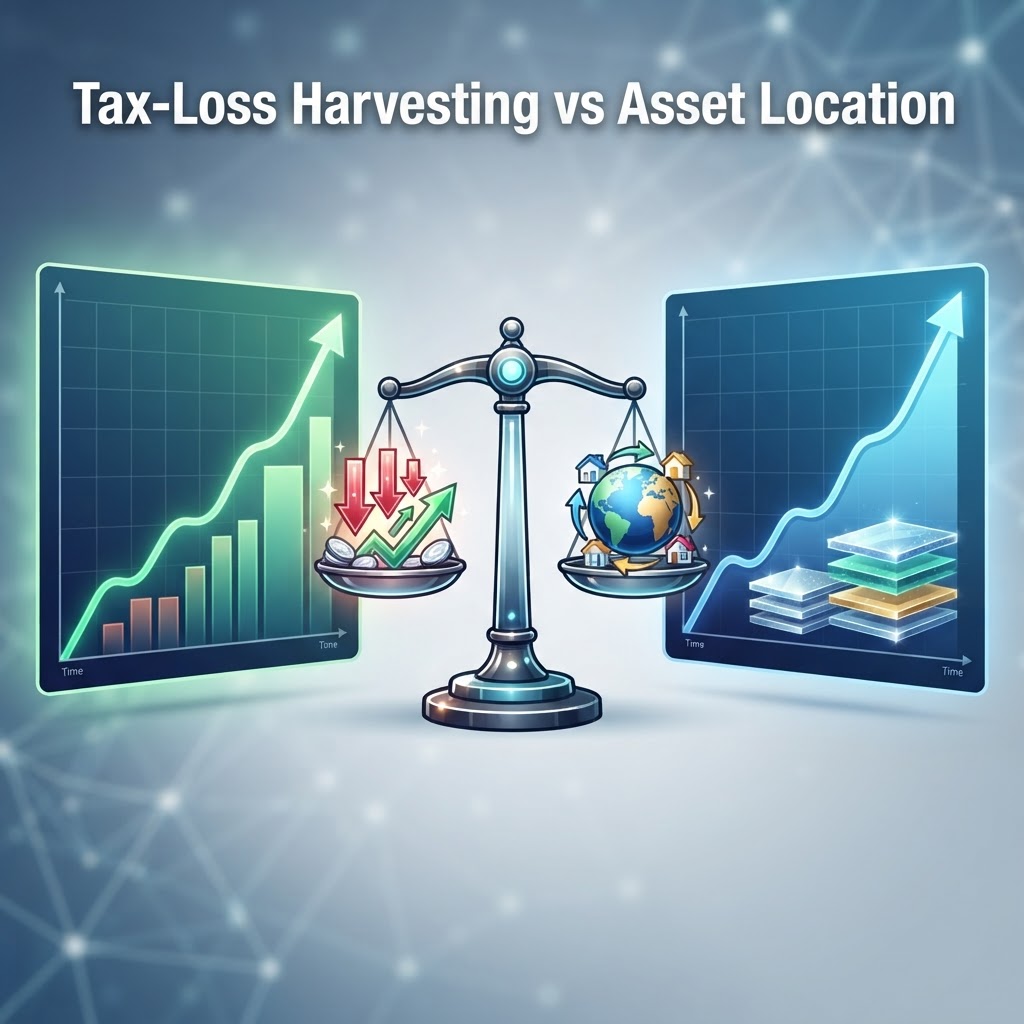
  • Asset Protection: How to Shield Your Wealth From Lawsuits

    Asset Protection: How to Shield Your Wealth From Lawsuits

    Key Takeaways

    • Asset protection is a proactive strategy to secure your wealth from potential legal threats before a claim arises.
    • Liability insurance and umbrella policies serve as your initial financial buffer against unexpected litigation.
    • Separating personal and professional assets using business entities is a critical layer of structural defense.
    • State-specific laws, such as homestead exemptions, provide automatic, low-cost protection for specific assets.
    • Effective wealth protection requires a layered approach, moving from simple insurance to complex legal structures like trusts.

    In the journey of building wealth, most people focus heavily on accumulation—investing, saving, and growing their portfolios. However, the most successful individuals understand that keeping what you have is just as critical as earning it. In an increasingly litigious global environment, the risk of a lawsuit, an accident, or a business dispute can threaten years of financial progress in a single afternoon. True financial security isn’t just about the numbers in your bank account; it is about the structural integrity of your financial life. By implementing robust asset protection strategies, you create a defensive perimeter that shields your hard-earned wealth from lawsuits, creditors, and unforeseen liability, ensuring that your legacy remains intact regardless of the challenges you encounter.

    Why Asset Protection Is Essential for Long-Term Wealth

    For many, the concept of asset protection sounds like something reserved only for the ultra-wealthy or corporate moguls. In reality, anyone who has built a modest level of wealth—a home, a retirement account, or a small business—is a potential target for litigation. Wealth protection is the practice of structuring your assets in a way that minimizes risk and discourages frivolous lawsuits. When your assets are properly shielded, you become a less attractive target to opportunistic litigants, as the cost of pursuing a claim against you often outweighs the potential recovery. This is not about hiding money or engaging in illegal activity; it is about legitimate risk management.

    The necessity of protecting family wealth stems from the unpredictable nature of legal liability. Consider the common scenario of a residential property owner. If a visitor is injured on your property, or if a minor household incident escalates into a negligence claim, your primary residence and personal savings could be at risk. Without a strategy, these assets are often sitting ducks, readily available to satisfy a court-ordered judgment. Experts generally agree that the window of opportunity to protect your assets closes the moment a legal threat appears. Once a lawsuit is filed, many courts will view the sudden transfer of assets as a “fraudulent conveyance,” which can be reversed by a judge. Therefore, proactive planning is the only reliable way to ensure that your financial foundation remains stable during tumultuous times.

    Beyond individual incidents, consider the broader economic reality of inflation and fluctuating market conditions. Protecting your wealth also means insulating your capital from the erosion caused by unexpected litigation costs, which can include hefty legal fees, settlements, and damage awards. A comprehensive approach involves diversifying your risk, ensuring that your wealth is not concentrated in a single, vulnerable basket. By treating asset protection as an ongoing pillar of your financial plan, you are effectively buying peace of mind. It allows you to participate in business ventures, investments, and personal property ownership without the constant anxiety that one unfortunate event could lead to financial ruin. This proactive posture is a hallmark of long-term wealth preservation, turning potential obstacles into manageable risks through foresight and careful documentation.

    Understanding Your Personal Liability Exposure

    To build an effective defense, you must first identify your points of vulnerability. Liability exposure refers to the degree to which your personal assets are subject to the claims of others. Most people do not realize that their lifestyle choices, professional roles, and even their hobbies can create significant legal exposure. Every time you drive a car, own a home with a pool, or serve on the board of a nonprofit organization, you are effectively stepping into a potential liability zone. Understanding where these risks originate is the first step in protecting family wealth from lawsuits that could otherwise jeopardize your financial trajectory.

    Your exposure is typically classified into two main categories: professional and personal. Professional exposure is highly relevant to entrepreneurs, physicians, and business owners. If you operate as a sole proprietor, there is often no legal distinction between you and your business. Consequently, a breach of contract, a customer injury, or a workplace accident can result in a claim against your personal assets. Many individuals make the mistake of assuming that their professional reputation or a lack of personal involvement in daily operations will shield them, but the law frequently looks at ownership status and personal decision-making when assigning blame.

    Personal exposure, on the other hand, is ubiquitous. The modern household often carries multiple points of entry for litigation: teenage drivers on an insurance policy, guests at social gatherings, or digital interactions that could lead to claims of defamation or intellectual property disputes. The rise of social media has introduced new, often overlooked areas of liability. An impulsive post or an ill-considered comment can lead to a lawsuit that impacts your personal wealth. Furthermore, the “deep pocket” phenomenon implies that those who appear to have wealth are more likely to be sued, regardless of the actual merit of the claim. This is why minimizing your visible exposure is a strategic necessity. By assessing your exposure through the lens of a “risk audit”—reviewing every asset you own and every role you play—you can begin to prioritize which areas require immediate shielding. Whether it is moving assets out of your name, adjusting insurance coverage, or formalizing business structures, this awareness is the foundation of any sophisticated strategy meant to protect your assets from lawsuits.

    How Umbrella Insurance Policies Provide a First Line of Defense

    When discussing asset protection strategies, insurance is frequently the most misunderstood component. Many people believe that their standard homeowners or auto insurance policy is sufficient. However, these policies often have low liability caps that are easily exceeded in a serious accident. An umbrella policy serves as an essential secondary layer, providing coverage that kicks in once your primary policy limits are exhausted. Think of it as a financial shield that prevents a massive judgment from reaching your personal savings, retirement funds, or equity-heavy assets.

    The primary advantage of an umbrella policy is its affordability relative to the high-limit protection it offers. Because it only triggers after your base policies are spent, the premiums are typically quite reasonable for the amount of coverage provided. For someone focused on wealth protection, this is an incredibly cost-effective way to manage risk. Without an umbrella policy, a single severe incident—such as a multi-car accident where you are at fault—could easily result in damages that exceed your primary policy limits by hundreds of thousands of dollars. Without the secondary coverage, you would be personally responsible for the remainder, which could force the liquidation of your investment accounts or even place a lien on your property.

    Beyond the simple math, an umbrella policy often covers risks that basic policies exclude, such as certain types of libel, slander, or claims arising from hosting events at your home. It creates a “buffer zone” that allows your legal team to negotiate from a position of strength, knowing that there is a substantial insurance limit available to satisfy potential claimants. It is important to note that insurance is not a substitute for sophisticated legal structures like trusts, but it is an essential first layer. If you are sued, the insurance company will typically handle the defense costs, which can be astronomical even if you are ultimately found not liable. This shift of the financial burden to an insurer is a fundamental aspect of protecting family wealth. By maintaining a high-limit umbrella policy, you ensure that in the face of litigation, the insurance carrier stands between you and the plaintiff, protecting your personal net worth from being the primary target of collection efforts.

    Strategy Primary Function Best For
    Umbrella Insurance Excess liability coverage Immediate, low-cost risk transfer
    Business Entities (LLC) Liability compartmentalization Entrepreneurs and real estate investors
    Domestic Trusts Asset management & control Long-term estate planning
    Offshore Trusts Highest level of legal friction High-net-worth individuals seeking maximum protection

    The Role of Business Entities in Separating Personal and Professional Assets

    One of the most effective ways to protect assets from lawsuits is to ensure that your personal life and your business life exist in separate legal silos. This concept, known as “corporate veil protection,” is the cornerstone of limiting personal liability. When you operate as a sole proprietor, every dollar you earn and every debt you incur is tied to your personal identity. If your business fails or faces a major legal claim, your personal home and savings can be seized to cover the losses. By utilizing a business entity such as a Limited Liability Company (LLC) or a Corporation, you create a legal boundary that restricts the claimant’s reach to the assets held within the business itself.

    For wealth protection, the LLC has become the gold standard, particularly for real estate investors and small business owners. Because an LLC is a separate “legal person,” it can own property, sign contracts, and employ staff. Should the business face a lawsuit, the plaintiff is generally limited to the assets owned by the LLC. This means that your personal retirement accounts, your primary residence, and your family’s personal property typically remain shielded. However, this protection is not automatic. It requires meticulous maintenance. Courts can “pierce the corporate veil” if they find that the entity is merely an alter ego for the individual, often due to the commingling of funds. To maintain this protection, you must keep business and personal finances entirely separate—using dedicated bank accounts, maintaining clear business records, and following corporate formalities.

    Beyond simple liability limitation, using business entities provides strategic flexibility. You can structure your holdings so that different assets—such as your operating business and your commercial real estate—are held in separate LLCs. This creates a “firewall” effect; if one entity faces a significant liability claim, the others remain untouched. This compartmentalization is a sophisticated approach that ensures a localized disaster does not cascade into a total loss of your net worth. It is worth noting that while forming an entity is relatively straightforward, the ongoing management is where the real value lies. By consistently treating your business as a distinct entity, you ensure that the legal protections you sought at the time of formation remain ironclad when you need them most. For those building wealth through multiple streams, layering these entities is an essential step in insulating your overall financial portfolio from individual risk points.

    Asset Location: Shielding Assets Through State-Specific Exemptions

    In the world of wealth protection, the geography of your assets matters just as much as the structure of your holdings. “Asset location” refers to the strategic placement of assets in jurisdictions that offer the most favorable laws for protecting wealth. Within the United States, asset protection is largely a matter of state law, and there is a significant discrepancy between the protections offered in one state versus another. Understanding these state-specific exemptions is a high-impact strategy that often costs very little to implement but can provide massive security for your primary assets.

    The most common and impactful of these is the “homestead exemption.” This law protects a portion of the equity in your primary residence from being seized by creditors in the event of a bankruptcy or a legal judgment. The variation across states is staggering; some states provide an unlimited homestead exemption, meaning your home is essentially shielded from most non-mortgage creditors, while others limit this protection to a relatively small dollar amount. If you reside in a state with low homestead protection, your home equity is essentially exposed. Wealthy individuals sometimes consider relocating to states known for strong debtor protections, not just for tax purposes, but to leverage these robust asset protection laws.

    Beyond homesteads, states also differ significantly on the protection of retirement accounts, such as IRAs and 401(k)s, and even life insurance cash values. Certain states provide comprehensive protection for these accounts under federal law, while others have gaps that state law must fill. Furthermore, some jurisdictions have pioneered the use of “Asset Protection Trusts,” which allow residents to place assets into a trust that is protected from creditors, even when the grantor retains some measure of control. By selecting a jurisdiction with strong “charging order” protection, you can make it exceptionally difficult for a creditor to seize an interest in a business entity. In essence, the charging order limits a creditor to only the profits distributed to the member, preventing them from seizing the company assets or forcing a liquidation. When planning your long-term strategy, ignore the “one-size-fits-all” advice. Instead, conduct a thorough review of the state laws where you own property and maintain accounts. By strategically positioning your assets in favorable jurisdictions, you create a natural, legally sanctioned barrier that protects your wealth without the need for overly complex or expensive offshore structures in every instance.

    How Irrevocable Trusts Can Remove Assets From Your Taxable Estate

    When individuals focus on wealth protection, they often overlook the intersection between lawsuit shielding and estate tax planning. An irrevocable trust serves as a dual-purpose tool: it is a potent mechanism to remove assets from your legal ownership—thereby shielding them from future creditors—and a strategic method to move assets out of your taxable estate.

    By definition, an irrevocable trust is a legal arrangement where you transfer assets to a trustee for the benefit of named beneficiaries. Unlike a revocable living trust, which allows the grantor to retain control and the ability to amend the terms, an irrevocable trust requires you to relinquish control. Because you no longer legally “own” the assets, creditors generally cannot reach them to satisfy a judgment against you. Furthermore, because these assets are no longer considered part of your personal estate, they are typically exempt from estate taxes upon your death, allowing you to pass more wealth to the next generation.

    The “transfer” aspect is critical. Once the assets are moved into the trust, the trust becomes the legal owner. Whether you are transferring real estate, business interests, or investment portfolios, the transition must be absolute to satisfy the scrutiny of tax authorities and courts. In many jurisdictions, once the “look-back period” (a set amount of time after the transfer) has passed, the assets become virtually untouchable by potential future litigants.

    However, the trade-off is flexibility. You cannot simply “take back” these assets if your financial situation changes. This is why many high-net-worth individuals opt for a “swap power,” which allows the grantor to exchange assets of equal value within the trust. This provides a degree of administrative flexibility without violating the irrevocable nature of the trust. Before proceeding, it is vital to understand that the primary motivation for this strategy should be a combination of long-term tax efficiency and genuine asset protection, not a last-minute attempt to hide assets from existing creditors, which could be legally challenged as a fraudulent conveyance.

    The Truth About Offshore Trusts and International Protection

    Offshore trusts, often termed Foreign Asset Protection Trusts (FAPT), are frequently misunderstood as tools for illicit tax evasion. In reality, when established in reputable jurisdictions—such as the Cook Islands, Nevis, or Belize—they function as powerful legal hurdles that discourage frivolous litigation. The philosophy behind offshore protection is not to hide money, but to create a legal environment where a local court judgment against you is not automatically enforceable.

    In most domestic jurisdictions, a court order can easily freeze or seize assets held in local banks. Conversely, if your assets are held in an offshore trust, a domestic court judgment generally holds no weight. To reach those assets, a creditor would typically be required to file a new lawsuit in the foreign jurisdiction, hire local counsel, and prove their case under that country’s specific laws. Many of these jurisdictions have stringent “burden of proof” requirements, often requiring the creditor to prove “beyond a reasonable doubt” that the assets were moved with the intent to defraud—a much higher threshold than the “preponderance of the evidence” standard used in US civil cases.

    It is important to emphasize that offshore trusts are not a “set-it-and-forget-it” solution. They require annual filings with the Internal Revenue Service and the Treasury Department (such as the FBAR and Form 3520). Failing to report these assets can lead to severe financial penalties that far outweigh the protection benefits. The most effective strategy involves a “hybrid” approach: keeping the assets in a trust while appointing a reputable, independent foreign trustee to maintain control, ensuring you are not the one technically in charge of the assets during a litigation crisis.

    Trust Type Primary Benefit Control Level Best For
    Revocable Living Trust Probate Avoidance High Estate management
    Domestic Asset Protection Trust (DAPT) Creditor Shielding Moderate US-based wealth
    Irrevocable Life Insurance Trust (ILIT) Estate Tax Reduction Low Insurance proceeds
    Foreign Asset Protection Trust (FAPT) High-Level Litigation Defense Low High-stakes litigation

    Common Asset Protection Mistakes That Expose You to Risk

    Asset protection is a proactive discipline. Many individuals find themselves exposed not because they lacked a plan, but because they committed fundamental errors that rendered their safeguards useless. Avoiding these common traps is essential for preserving your wealth.

    The most common mistake is delayed implementation. Asset protection is ineffective if it is initiated after a threat appears. If you attempt to transfer assets into a trust after a lawsuit has been filed or after an accident has occurred, the courts may label this a “fraudulent conveyance.” This allows the court to “undo” the transaction and seize the assets anyway, potentially leading to additional legal penalties for attempting to hide assets.

    Another frequent error is commingling assets. If you run a business, you must maintain a clear wall between business and personal finances. Using your business bank account to pay for personal groceries or using your personal credit card for business expenses “pierces the corporate veil.” When this wall is broken, a creditor who wins a judgment against your business can easily argue that your personal assets should be accessible to settle the company’s debts.

    Furthermore, many people rely exclusively on improper insurance coverage. Carrying only the minimum required liability insurance is a recipe for disaster. If you are involved in a significant accident, the damage will quickly exceed your policy limits, leaving your personal home, retirement accounts, and savings vulnerable to a “deficiency judgment.” Relying on an umbrella policy is a foundational, yet often ignored, step in any wealth protection strategy.

    Finally, failing to audit your holdings is a critical oversight. You should periodically review how your assets are titled. Assets held in “joint tenancy with right of survivorship” or even simple individual accounts are often sitting ducks for creditors. Consulting with a professional to ensure your titling, insurance, and trust structures are synchronized is the only way to ensure your protection is robust.

    When to Consult With an Asset Protection Attorney

    Navigating the complexities of asset protection requires professional guidance. While DIY information is helpful, the legal landscape is fluid and highly jurisdiction-dependent. Knowing when to engage an attorney can be the difference between successfully shielding your life’s work and losing it to a creditor.

    You should seek out a qualified attorney if your net worth exceeds the limits of your primary insurance policies. If you have significant equity in real estate, business interests with employees, or substantial investment accounts, you are automatically at a higher risk profile for litigation. An attorney can help you determine which combination of LLCs, trusts, and insurance policies will provide the most effective protection for your specific asset mix.

    Additionally, you should consult a specialist if you are in a “high-liability” profession. Physicians, surgeons, real estate developers, and corporate directors face a statistically higher risk of being targeted by lawsuits. In these fields, asset protection is not merely a “nice-to-have”—it is a professional necessity. Attorneys specializing in this area understand the nuances of state-specific laws, such as which states offer superior protection for LLCs versus which states have robust homestead exemptions that protect your primary residence.

    Finally, engage counsel if you are undergoing a major life event. Marriage, divorce, the launch of a new business, or a large inheritance are all “inflection points” where your risk exposure changes. A proactive conversation with an asset protection attorney during these transitions allows you to build a structure that evolves with your wealth, rather than reacting to a disaster after it has already occurred.

    Frequently Asked Questions

    Is an LLC enough to protect my personal assets from a lawsuit?

    An LLC is a strong starting point, but it is not a silver bullet. While it can protect your personal assets from business-related lawsuits (and vice versa), its effectiveness depends on your adherence to corporate formalities. If you fail to maintain separate bank accounts or fail to file required state documents, a court may “pierce the corporate veil,” nullifying your protection.

    Can I protect my assets if I have already been sued?

    Generally, no. Asset protection is a proactive strategy. If you move assets into a trust or LLC after a lawsuit has begun, the court will likely view this as a fraudulent transfer intended to hinder, delay, or defraud creditors. Most jurisdictions have laws that allow creditors to reverse such transactions, and you may face additional legal consequences.

    What is an umbrella policy and why do I need one?

    An umbrella policy is a type of excess liability insurance that provides coverage above the limits of your homeowners and auto insurance policies. It is designed to protect your wealth in the event of a catastrophic lawsuit. Because legal settlements can easily exceed standard policy limits, an umbrella policy acts as a vital layer of financial armor.

    Do offshore trusts really work for everyone?

    Offshore trusts are typically best suited for high-net-worth individuals due to the high costs of setup and ongoing compliance. While they offer superior protection, they are complex, require strict tax reporting, and are not appropriate for those with limited assets. For many, a well-structured domestic plan is more cost-effective and sufficient.

    How does a homestead exemption work in asset protection?

    A homestead exemption is a legal provision that protects a portion of the equity in your primary residence from being seized by creditors. The specific amount of protection varies drastically by state; some states offer an “unlimited” exemption, while others protect only a modest amount. It is essential to research your specific state’s laws to understand how much of your home is truly shielded.

    How often should I review my asset protection plan?

    You should review your asset protection plan at least once a year, or whenever you experience a major life event such as marriage, divorce, starting a business, or receiving a significant inheritance. Laws change, your financial situation evolves, and your risk profile is dynamic; regular check-ins ensure your strategy remains effective.

    Conclusion

    Protecting your wealth is a fundamental responsibility that requires foresight, discipline, and the right combination of tools. From securing an umbrella insurance policy to establishing robust legal entities like LLCs and trusts, your goal is to create a multi-layered defense that discourages potential litigants and preserves your financial legacy. Remember that true protection is about removing the incentive for others to target you; when your assets are properly structured, you become a less attractive target, often ending disputes before they ever reach a courtroom.

    The time to act is now. Do not wait for a crisis to evaluate your vulnerability. Review your current insurance coverage, consult with a qualified professional to audit your asset titles, and begin implementing the strategies discussed here to ensure your hard-earned wealth remains safe for years to come. Take the first step today by assessing your risk profile and speaking with a legal expert about the strategies that best fit your specific financial goals.

    By wealthsimplyput Editorial Team

    This article is for informational purposes only and does not constitute financial advice. Consult a qualified financial professional before making financial decisions.

  • Tax-Loss Harvesting vs Asset Location: Which Saves More Money?

    Tax-Loss Harvesting vs Asset Location: Which Saves More Money?

    Key Takeaways

    • Tax-loss harvesting allows investors to offset capital gains by selling underperforming assets, thereby reducing annual tax bills.
    • Asset location focuses on placing investments in the accounts that offer the most favorable tax treatment for that specific asset type.
    • Combining both strategies is often the most effective method to minimize investment taxes and accelerate long-term wealth accumulation.
    • High-growth assets generally perform best in tax-advantaged accounts, while tax-efficient index funds are better suited for taxable brokerage accounts.
    • Portfolio tax optimization is a continuous process that requires regular monitoring to ensure your wealth strategy remains aligned with evolving tax laws.

    For many investors, the difference between mediocre performance and long-term financial success often comes down to what they keep rather than what they make. While market returns are unpredictable, taxes are a near-certainty that can erode your compounding potential over decades. To build lasting wealth, you must navigate the complex landscape of investment accounts and tax codes with precision. Two of the most powerful tools in your arsenal are tax-loss harvesting and asset location. While often discussed in isolation, these strategies represent the dual pillars of portfolio tax optimization. By mastering how to manage realized losses and where to house specific asset classes, you can systematically reduce the tax drag on your portfolio, leaving more capital to grow over time. This guide explores how to integrate these approaches to effectively minimize investment taxes and maximize your total wealth.

    Understanding the Basics of Tax-Loss Harvesting

    Tax-loss harvesting is a fundamental practice in tax-efficient investing that allows you to turn market volatility into a strategic advantage. At its core, the concept is straightforward: if an investment in your taxable brokerage account has declined in value, you can sell that security to realize a capital loss. This loss can then be used to offset any capital gains you have realized during the same tax year. If your losses exceed your gains, you may be able to use the remainder to offset up to a specific amount of ordinary income, or carry the losses forward to future years to offset future capital gains.

    The beauty of tax-loss harvesting lies in the ability to lower your current tax liability without significantly altering your long-term asset allocation. Once you sell the losing asset, you can use the proceeds to purchase a “substantially similar”—but not identical—security. This allows you to stay invested in the market, maintaining your exposure to the asset class while officially locking in the tax deduction. However, investors must be mindful of the “wash-sale rule.” This IRS regulation prevents you from claiming a loss on the sale of a security if you purchase a “substantially identical” security within 30 days before or after the sale. If a wash sale occurs, the loss is disallowed for current tax purposes, and the cost basis of the new security is adjusted to include the disallowed loss.

    To execute this effectively, many investors rely on automated tools or index tracking. For example, if you sell a broad market ETF because it has dipped into negative territory, you might replace it with another ETF that tracks a different index but covers a similar segment of the market. This satisfies the requirement for keeping your market exposure intact while benefiting from the tax loss. Over many years, the cumulative effect of these harvested losses can significantly lower the total capital gains tax paid, ultimately increasing the net amount of money that remains invested and compounding for your future needs.

    It is important to note that tax-loss harvesting is typically only applicable in taxable brokerage accounts. Because tax-advantaged accounts, such as IRAs or 401(k)s, do not trigger taxes on capital gains or dividends, there is no tax benefit to be gained from realizing losses within those wrappers. For this reason, the strategy is a cornerstone of taxable account management. By systematically harvesting losses when the market presents opportunities, you transform unavoidable market downturns into a component of your broader wealth strategy, providing a cushion that improves your after-tax internal rate of return.

    The Core Principles of Strategic Asset Location

    While tax-loss harvesting focuses on how to handle losses, asset location is the art of deciding where to place your assets based on their tax characteristics. Not all investments are taxed the same way, and not all account types offer the same protections. Asset location involves deliberately placing assets that generate high tax burdens into tax-advantaged accounts (like 401(k)s or IRAs) and placing tax-efficient assets into taxable accounts. The goal is to minimize investment taxes by aligning the nature of the investment’s return—whether it is interest, dividends, or capital gains—with the tax environment of the account holding it.

    Consider the difference between a high-yield bond fund and a tax-managed equity index fund. Interest payments from bond funds are typically taxed at ordinary income rates, which are often higher than the preferential rates applied to long-term capital gains and qualified dividends. If you hold that bond fund in a taxable account, you are effectively paying a premium in taxes every year for the privilege of owning that asset. Conversely, if you hold that same bond fund in a traditional IRA, the interest grows tax-deferred, meaning you pay no taxes on those payments until you make a withdrawal. By prioritizing your taxable accounts for growth-oriented equities that primarily produce long-term capital gains, you are playing the tax code to your advantage.

    Another principle of asset location is simplicity. Attempting to perfectly locate every single asset across multiple accounts can lead to excessive complexity, which may actually work against your wealth strategy if it leads to poor behavioral choices or excessive trading costs. Instead, focus on the “big rocks”: identify the assets that generate the most significant tax friction and ensure they are housed in the most protected shells. This might mean keeping REITs or actively managed funds—which often generate higher turnover—inside your retirement accounts, while leaving low-turnover, broad-market equity index funds in your taxable accounts.

    The ultimate objective is to ensure that your total portfolio remains balanced according to your risk tolerance, but that the implementation of that balance is done in a tax-aware manner. When you align your assets with the most suitable account types, you reduce the “tax drag” on your portfolio. While the benefits may seem incremental on a year-by-year basis, they can be substantial over a multi-decade investing horizon. By being intentional about where your dollars reside, you protect your wealth from being nibbled away by unnecessary tax liabilities, ensuring more of your hard-earned money remains working toward your long-term goals.

    Strategy Primary Focus Best For
    Tax-Loss Harvesting Offsetting capital gains via asset sales Taxable brokerage accounts experiencing volatility
    Asset Location Optimizing account types for specific assets Balancing long-term tax efficiency across all accounts
    Tax-Efficient Investing Reducing annual tax friction Investors with high marginal tax brackets

    Why Combining Strategies Boosts After-Tax Returns

    Viewing tax-loss harvesting and asset location as separate silos is a common mistake that limits your ability to minimize investment taxes effectively. When integrated, these two strategies function as a cohesive wealth strategy that addresses both short-term market fluctuations and long-term tax structural efficiency. The synergy between the two is where the real power lies. Tax-loss harvesting provides the immediate, tactical mechanism to lower your tax bill when the market creates opportunities, while asset location provides the strategic, structural foundation that prevents tax friction from accumulating in the first place.

    For example, if you focus solely on asset location but ignore tax-loss harvesting, you are failing to capitalize on the periodic dips that even the best-constructed portfolios experience. Even with an ideal asset location, your taxable accounts will inevitably hold assets that lose value. By ignoring the opportunity to harvest those losses, you leave tax savings on the table. Conversely, if you focus only on tax-loss harvesting but ignore asset location, you might find yourself constantly fighting unnecessary tax fires caused by holding high-interest-yielding bonds in your taxable accounts. You become reactive, attempting to fix a problem that could have been avoided with a more thoughtful initial placement.

    When combined, these approaches allow you to build a portfolio that is both structurally sound and tactically nimble. Your taxable accounts become a canvas for tax-efficient, low-turnover assets that you hold for the long term, while you remain ready to harvest losses the moment volatility provides a chance to lower your capital gains tax liability. Meanwhile, your tax-advantaged accounts act as a safe harbor for higher-turnover or high-yield assets that would otherwise create a burdensome tax bill if left exposed in the taxable world. This dual approach ensures that your portfolio optimization is comprehensive, addressing both the “how” and the “where” of your investment strategy.

    Furthermore, these combined strategies support better emotional discipline. When you have a clear plan for how to handle market downturns (harvesting losses) and a clear structure for where your assets belong (asset location), you are less likely to panic-sell during market volatility. Instead of viewing a decline in your brokerage account as a pure financial loss, you see it as a mechanical opportunity to execute a trade that benefits your tax outlook. This frame of mind promotes longevity in the markets, which is ultimately the most important variable in wealth accumulation. Experts generally agree that the greatest threat to long-term performance is often the investor’s own behavior; having a robust, tax-aware system helps neutralize that threat by keeping the focus on process rather than price movement.

    Identifying Which Investments Go in Taxable Accounts

    Deciding which investments should reside in your taxable brokerage account is a process of filtering for “tax efficiency.” An investment is considered tax-efficient if it does not generate large annual tax bills through interest, dividends, or frequent capital gains distributions. Since taxable accounts are subject to annual taxes on realized gains and income, they are the least hospitable environment for investments that generate “tax friction.”

    The gold standard for taxable accounts is typically low-cost, broad-market equity index funds or ETFs. These vehicles are designed to track a wide index of companies, meaning they have very low turnover. Because the fund manager does not buy and sell underlying stocks frequently, the fund rarely distributes capital gains to its shareholders. Furthermore, many of these broad-market funds offer “qualified” dividends, which are taxed at the lower long-term capital gains rate rather than the higher ordinary income rate. By holding these in a taxable account, you defer the vast majority of your tax liability until the day you eventually choose to sell the asset.

    On the other hand, you should generally avoid placing investments that produce significant “ordinary income” into these accounts. Examples include corporate bonds, high-yield bond funds, or actively managed funds with high portfolio turnover. These assets create “tax leakage” every single year. For instance, if you hold a bond fund in a taxable account, you are taxed on the interest payments at your marginal income tax rate, regardless of whether you need that cash or choose to reinvest it. This effectively shrinks your rate of compounding because the tax is taken out before you have the chance to reinvest the full amount.

    When identifying investments for your taxable brokerage, ask yourself three questions: First, does this investment generate frequent taxable events, such as short-term capital gains from high turnover? Second, is the income generated by this investment taxed at ordinary income rates? And third, is there a long-term capital appreciation component that allows me to defer taxes until the future? If the answer is yes to the first two questions, that investment is likely better suited for a tax-advantaged account. If the answer is yes to the third, it is a prime candidate for your taxable brokerage. Keeping this hierarchy of assets in mind allows you to build a portfolio that naturally minimizes the annual tax burden on your household, ensuring that more capital remains in the market.

    How to Optimize Tax-Advantaged Accounts for High-Growth Assets

    Tax-advantaged accounts, including 401(k)s, 403(b)s, traditional IRAs, and Roth IRAs, are the most valuable tools in your wealth strategy because they provide shelter from the immediate reach of the tax authorities. Because these accounts are designed to encourage long-term saving, they offer unique advantages—either by allowing money to grow tax-deferred or by allowing it to grow entirely tax-free, as is the case with Roth vehicles. To optimize these accounts, you should look to fill them with assets that have the highest growth potential or the highest “tax cost” if they were held elsewhere.

    High-growth assets, such as small-cap stocks, emerging market equities, or sector-specific funds, are ideal candidates for tax-advantaged accounts. Because these assets are expected to deliver the largest price appreciation over time, they will eventually result in the largest taxable gains. By housing them within an IRA or 401(k), you essentially convert a massive future tax liability into a tax-free or tax-deferred benefit. While you don’t get the ability to harvest losses in these accounts, the trade-off is the protection of the massive gains you expect to realize over the course of your life.

    Furthermore, these accounts are the appropriate home for assets that generate high-tax interest payments. As mentioned previously, bonds are the classic example. If you hold a high-yield bond fund in a Roth IRA, you pay zero taxes on the interest payments as they are generated, and you pay zero taxes when you eventually withdraw that money in retirement. This is a massive improvement over holding those bonds in a taxable account, where that interest would have been clipped by your marginal tax rate every year. Effectively, you are shifting the highest “tax-cost” assets into the most protective wrappers.

    However, you must consider the specific type of tax-advantaged account you are using. Traditional IRAs and 401(k)s are tax-deferred, meaning you pay income taxes upon withdrawal. Roth accounts, meanwhile, are tax-free upon withdrawal. Some sophisticated investors prefer to keep their highest-growth assets in a Roth account specifically, because all the growth—no matter how large—will eventually be extracted without any tax obligation to the government. This is the ultimate form of wealth strategy: maximizing the assets that benefit most from the tax-free environment while maintaining the flexibility to harvest losses in your taxable brokerage accounts. By strategically assigning your asset classes across these distinct silos, you create a sophisticated engine for wealth that operates with maximum efficiency, keeping your investment returns in your pocket rather than transferring them to the IRS prematurely.

    Common Pitfalls When Balancing Harvesting and Location

    While the theoretical benefits of tax-loss harvesting and asset location are immense, the practical application often leads investors into traps that can erode the very wealth they are trying to protect. The most common pitfall is the failure to account for the “wash-sale” rule. When engaging in tax-loss harvesting, you must ensure you do not purchase a “substantially identical” security within 30 days before or after the sale. Many investors lose their tax benefit entirely because they inadvertently buy the same ticker in an automated dividend reinvestment plan or an IRA, rendering the harvested loss ineligible for a tax deduction.

    Another frequent mistake is the over-optimization of asset location. Some investors become so obsessed with placing high-tax assets into tax-deferred accounts that they ignore the total portfolio balance. For instance, putting all of your high-yielding bonds into an IRA is standard advice, but if that strategy forces you to take on excessive risk elsewhere to maintain your desired equity exposure, you have prioritized a minor tax saving over a major asset allocation goal. Wealth preservation requires a holistic view; tax efficiency should never override the fundamental principles of risk management and diversification.

    Furthermore, investors often underestimate the “turnover cost” of their strategy. Constantly shifting assets to achieve perfect location or selling winners too quickly to offset gains can lead to higher transaction costs and commissions. Even in a zero-commission environment, the “spread”—the difference between the buy and sell price—adds up. Additionally, if you are frequently selling assets to realize losses, you might find yourself out of the market for a few days, potentially missing out on sharp market rebounds. These “friction costs” frequently negate the incremental gains provided by a strict tax-efficiency regimen.

    The Role of Rebalancing in a Tax-Efficient Portfolio

    Rebalancing is the heartbeat of a sound investment strategy, yet it is often the most neglected tax-efficient tool. Rebalancing brings your portfolio back to your target asset allocation, ensuring you aren’t over-exposed to a sector that has run up or under-exposed to one that has lagged. However, in a taxable brokerage account, selling outperforming assets to rebalance triggers capital gains taxes. This creates a paradox: you need to rebalance to control risk, but rebalancing creates a tax event that hurts your total wealth.

    To master rebalancing in a tax-efficient manner, you should use cash flows. Instead of selling winners to buy losers, use new contributions to buy the asset classes that have underperformed. This allows you to rebalance your portfolio toward your target weights without ever triggering a taxable sale. If your portfolio is large enough, you can also use dividends and interest collected within the account to purchase the underweight assets. By using these organic inflows, you effectively rebalance your wealth without incurring a single dollar in capital gains tax.

    If you must sell to rebalance, view it as an opportunity for tax-loss harvesting. Look for assets that have declined in value and sell those simultaneously with your winners. This is often referred to as “tax-efficient rebalancing.” By pairing the sale of a winner with the sale of a loser, you offset the capital gains, potentially resulting in a tax-neutral event while still maintaining your desired asset allocation.

    Calculating the Impact of Tax Drag on Long-Term Wealth

    Tax drag is the silent killer of compounding. It represents the difference between the gross return of an investment and the actual return an investor keeps after taxes are paid. Over a period of 20 to 30 years, even a small amount of tax drag can reduce your final wealth by a significant margin. Consider an investor earning a 7% annual return. If they lose 1% annually to taxes, their net return drops to 6%. Over three decades, that 1% difference can lead to a terminal portfolio value that is 20% to 30% lower than a tax-optimized version of the same portfolio.

    To calculate tax drag, investors typically look at three factors: ordinary income taxes on dividends, short-term capital gains, and the eventual impact of long-term capital gains. Assets that pay high, non-qualified dividends (like real estate investment trusts or corporate bond funds) are notorious for creating high tax drag because they are taxed at your ordinary income tax rate. Conversely, tax-efficient investments—like broad-market index ETFs that rarely distribute capital gains—keep tax drag to a minimum.

    When modeling your own wealth strategy, don’t just look at the “expense ratio” of your funds. Look at the “after-tax yield.” If Fund A costs 0.05% but generates significant taxable distributions, it might be more expensive in terms of tax drag than Fund B, which costs 0.15% but is structurally optimized to avoid taxable events. Understanding this distinction is what separates the average investor from those effectively building long-term, multi-generational wealth.

    Strategy Primary Benefit Tax Complexity Best For
    Tax-Loss Harvesting Offsetting Gains High Active taxable accounts
    Asset Location Deferral/Elimination Moderate Long-term hold strategies
    Buy and Hold Minimal Turnover Low Passive long-term investors
    Rebalancing with Inflows Risk Management Very Low Investors with new cash

    How to Build a Tax-Optimized Investment Workflow

    Building a tax-optimized workflow starts with a “Top-Down” approach to your accounts. First, define the purpose of each bucket: your 401(k) or IRA is for long-term growth and tax deferral; your Roth account is for tax-free compounding; and your taxable brokerage account is for liquidity and flexible harvesting. Once your accounts are categorized, follow this step-by-step workflow for every trade or contribution:

    1. Contribution Allocation: Whenever you add money to your portfolio, deposit it into the account where that specific asset class belongs based on your asset location strategy (e.g., REITs and bonds in IRAs, broad index funds in taxable accounts).
    2. Dividend Review: Every quarter, assess where your dividends are going. Opt to have them deposited as cash into your brokerage account rather than automatically reinvested if you need to use those funds for rebalancing elsewhere.
    3. Harvesting Check: Review your taxable account monthly for unrealized losses. If a security is down, consider selling it to lock in the loss, but be careful not to buy it back within the 30-day window.
    4. Rebalance via Trade-offs: When you need to rebalance, check if you have losses available in your portfolio. If you do, sell the loser to harvest the loss while simultaneously selling the winner that caused the allocation drift.
    5. Year-End Sweep: Perform a final review of your tax exposure in December. Ensure you have realized enough losses to cover any capital gains you triggered throughout the year.

    By automating parts of this workflow and setting calendar alerts for the rest, you reduce the psychological burden of trying to “time” tax events, turning what should be a complex task into a routine maintenance cycle.

    When to Consult a Financial Advisor for Tax Strategy

    There is a point at which the complexity of your financial life exceeds the capability of DIY tax-optimization. If you are managing a portfolio with multiple business interests, significant employer stock options, or assets spread across international jurisdictions, the potential for a mistake that leads to an IRS audit or a massive tax bill is high. Financial advisors who specialize in tax-managed investing add significant value here, not just by picking funds, but by coordinating the timing of your sales with your broader estate planning and income tax bracket management.

    Consider consulting a professional if you are approaching a major life transition, such as retirement or the sale of a business. These events involve a massive concentration of capital, and the tax implications are often irreversible. A professional can help you structure a “decumulation” strategy—the process of spending down your portfolio—that is just as tax-efficient as your accumulation phase. While their fees may seem high, the cost of miscalculating a capital gains tax strategy on a multi-million dollar portfolio is often significantly higher.

    Frequently Asked Questions

    Is it better to prioritize tax-loss harvesting or asset location?

    Most wealth experts suggest that asset location is a foundational step, while tax-loss harvesting is a continuous tactical activity. You should set your asset location strategy once when you open your accounts and adjust it annually, whereas tax-loss harvesting is something you monitor throughout the year to capture market volatility. Both are important, but asset location sets the structural efficiency of your portfolio.

    Can I perform tax-loss harvesting in a Roth IRA?

    No. Tax-loss harvesting only applies to taxable brokerage accounts. Because Roth IRAs are tax-advantaged and do not report capital gains or losses to the IRS, there is no tax benefit to selling an asset at a loss within these accounts. In fact, you should avoid “harvesting” in an IRA, as you would simply be selling an asset that could otherwise grow tax-free.

    What is the “Wash-Sale” rule and how does it affect me?

    The wash-sale rule prevents you from claiming a capital loss on an investment if you buy a “substantially identical” security within 30 days before or after the sale. If you violate this rule, the loss is disallowed for tax purposes and added to the cost basis of the new security. To stay safe, ensure your automated reinvestment plans are turned off for the specific asset you are harvesting.

    Does tax-efficient investing guarantee higher returns?

    No. Tax-efficient investing is about keeping more of the returns you earn by reducing the government’s share. It does not change the performance of the underlying assets. However, over long periods, the compounding effect of the tax dollars you saved—rather than paid—can lead to significantly higher net wealth.

    How often should I rebalance my portfolio for tax efficiency?

    Experts generally suggest a disciplined schedule, such as once or twice a year, or whenever your asset allocation drifts by a pre-determined threshold, such as 5%. By setting a threshold, you avoid reacting to minor market noise, which reduces the number of taxable events you trigger.

    Are ETFs better than mutual funds for tax efficiency?

    In many cases, yes. Most ETFs are structured in a way that allows for “in-kind” redemptions, which can reduce the number of capital gains distributions passed on to investors. Mutual funds are more prone to capital gains distributions that you are forced to pay taxes on, regardless of whether you sold your own shares. However, this varies by fund, so always check the tax-cost ratio of any fund before investing.

    Conclusion

    Mastering the intersection of tax-loss harvesting and asset location is a hallmark of sophisticated wealth management. By viewing your portfolio through the lens of after-tax performance, you take control of your financial future rather than leaving it to the whims of the tax code. Whether it is through the strategic placement of high-yield assets in tax-advantaged accounts or the disciplined harvesting of losses during market dips, every move you make toward tax efficiency compounds over time.

    Remember that wealth is not just about how much you earn, but how much you keep. Start by auditing your current holdings, implementing a clear asset location strategy, and committing to a routine of tax-efficient rebalancing. Your future self will appreciate the diligence you apply today.

    Ready to take the next step in optimizing your wealth? Review your current brokerage statements and see if your assets are properly aligned for the long haul.

    By wealthsimplyput Editorial Team

    This article is for informational purposes only and does not constitute financial advice. Consult a qualified financial professional before making financial decisions.

  • How to Teach Kids About Money: A Guide to Building Financial Habits

    How to Teach Kids About Money: A Guide to Building Financial Habits

    Key Takeaways

    • Financial literacy for children is a cornerstone of long-term wealth, setting the stage for future stability.
    • The psychology of money evolves, requiring parents to adjust lessons as children grow from toddlers to teenagers.
    • An allowance for kids serves as a practical laboratory for decision-making, budgeting, and value exchange.
    • Opening kids savings accounts introduces the concepts of interest and long-term goal setting in a tangible way.
    • Distinguishing between needs and wants is the first step toward mastering intentional spending and disciplined wealth management.

    Teaching children how to navigate the complex world of finance is perhaps the most significant gift a parent can provide to ensure their future prosperity. In a global economy where financial independence is increasingly difficult to attain, early exposure to money management can mean the difference between long-term security and lifelong debt. Many parents feel overwhelmed by the task of discussing wealth with their children, fearing that money topics are too technical or sensitive for young minds. However, financial education is not about complex market theories; it is about cultivating habits, fostering emotional intelligence regarding spending, and understanding the inherent value of resources. By integrating these lessons into daily life, you can empower the next generation to manage their finances with confidence and clarity. As the wealthsimplyput Editorial Team, we believe that wealth begins with education—not just in the classroom, but through consistent, intentional guidance at home.

    Why Financial Literacy is a Vital Life Skill

    Financial literacy for children is more than a simple lesson in math; it is a foundational life skill that dictates how an individual interacts with the world. When we consider the trajectory of a person’s life, their ability to manage wealth often influences their professional choices, their stress levels, and their capacity to achieve personal goals. For many, money is a source of anxiety, often stemming from a lack of early education regarding how money works. By demystifying the financial process, parents provide their children with a toolkit for autonomy.

    The primary benefit of teaching kids about money is the development of a long-term perspective. When a child learns that wealth is built through patience and consistent action rather than instant gratification, they develop the discipline required for successful investing and retirement planning later in life. Furthermore, financial literacy acts as a protective mechanism against common pitfalls such as predatory lending, high-interest consumer debt, and the cycles of living paycheck to paycheck. When a child understands the concept of opportunity cost—that choosing to spend money on one item means sacrificing the ability to buy another—they begin to make more rational, intentional decisions.

    Beyond individual benefit, financial competence strengthens society. A population that understands how to save, budget, and invest wisely is a population that is better equipped to navigate economic downturns. Teaching kids wealth is therefore an investment in the collective stability of the next generation. It transforms money from a vague, mysterious entity into a tangible resource that can be directed toward meaningful endeavors, such as charitable giving, entrepreneurship, or personal education. When financial lessons are normalized from a young age, money becomes a tool for empowerment rather than a source of shame or fear. Consequently, by prioritizing this education, parents are fostering a culture of mindfulness, where wealth is viewed through the lens of purpose rather than mere accumulation. This shift in mindset is the difference between surviving and thriving in a modern economy.

    Starting Early: The Psychology of Money at Different Ages

    The development of financial habits begins much earlier than many parents realize. Children are constant observers of their environment, and they begin to internalize how their parents value, spend, and discuss money from a very young age. Because the cognitive capacity for abstract thought changes as children grow, parents must adapt their approach to financial literacy for children to match their child’s current developmental stage.

    For toddlers and preschoolers, the lessons should remain extremely simple and visual. At this stage, it is not about counting coins or understanding interest, but about observing the transaction process. When you use a debit card or a mobile app to pay for groceries, explain that money is a resource you earned through work, not an infinite supply found within a plastic card. Use clear, physical objects to show that money is exchanged for goods and services. The core goal here is to establish the link between effort and value.

    As children enter their elementary school years, they move into a stage where they can handle small, concrete math tasks. This is the ideal time to introduce a clear system for saving and spending. Many experts suggest a three-jar system: one for saving, one for spending, and one for giving. This physical separation helps kids visualize their money’s purpose. By seeing their savings jar grow over several weeks, children begin to grasp the concept of delayed gratification. They are essentially learning that if they abstain from a small purchase today, they gain the power to acquire something of greater value later.

    When children reach the teenage years, the scope of financial lessons should shift toward autonomy and preparation for independence. Teenagers are capable of understanding more abstract concepts like interest rates, the risks of credit, and the basics of wealth building. At this age, parents should move from being “money managers” to “financial consultants.” Encourage them to manage a budget for their personal expenses, like clothes or entertainment. If they earn money through part-time jobs, introduce them to the power of compound interest by showing them how a kids savings account or a basic investment vehicle grows over time. By adjusting your teaching style to these distinct stages, you move from simple observation to practical application, ultimately preparing your child for the complexities of adult wealth management.

    Allowance Strategies: Should You Pay for Chores?

    One of the most debated topics among parents is whether an allowance for kids should be tied to household chores. The answer often depends on what goal the parent is trying to achieve. Is the allowance a tool for teaching budgeting, or is it a mechanism to ensure household labor gets completed? Understanding the distinction between these two concepts is essential for effective money management instruction.

    Approach Description Best For
    Commission-Based Payment tied specifically to completing extra tasks. Teaching the direct link between labor and income.
    Flat Allowance Fixed amount given regardless of chores. Consistent budgeting and money management practice.
    Value-Added Combination of fixed funds plus performance bonuses. Encouraging both habit and initiative.

    A pure “commission” model mimics the adult workforce: you do a task, you get paid. This is excellent for teaching kids wealth from an entrepreneurial perspective. However, it can create a transactional household where children refuse to contribute to the common good of the home unless money is involved. Most families operate as a team, and contributing to the upkeep of a shared living space is an expectation of being a family member, not a billable task. Therefore, many experts recommend separating allowance from essential chores.

    Consider the flat allowance as a “teaching budget.” By providing a predictable, small amount of money, you give your child the opportunity to make mistakes while the stakes are still low. If they spend their entire allowance on a cheap toy that breaks the next day, they learn a valuable lesson about quality and impulsive spending. If you only provide money when they perform chores, they might not have the consistent flow of funds necessary to learn the nuances of long-term budgeting. The focus should be on how the money is handled—saving versus spending—rather than just the labor performed to earn it.

    For parents who want to instill a strong work ethic, consider offering “extra” chores that go above and beyond the daily requirements. If a child wants to earn more for a specific goal, they can tackle additional, non-essential tasks like deep-cleaning the garage or washing the car. This distinguishes between being a contributing member of the household and being an individual who actively pursues extra income. This hybrid approach helps children learn that while basic obligations are expected for free, initiative and hard work can lead to increased financial rewards, a core principle of building wealth later in life.

    Opening the First Bank Account: Practical Lessons in Banking

    Moving from a physical piggy bank to a formal financial institution marks a significant milestone in a child’s financial journey. Opening a kids savings account is more than just a logistical task; it is the first time a child interacts with the formal financial system, providing an opportunity to learn about trust, documentation, and the mechanics of growth. It validates their savings efforts and makes the concept of wealth feel tangible and serious.

    When selecting an account, look for features that specifically cater to young savers. Many banks offer accounts with no minimum balance requirements and no monthly maintenance fees, which is ideal for a child just starting out. The most important feature for a child, however, is a mobile app or a simple online dashboard that allows them to track their balance. Being able to see their progress visualized on a screen makes the invisible process of saving feel exciting. It reinforces the habit of checking one’s own finances, a practice that successful adults utilize throughout their lives.

    Once the account is open, use the opportunity to explain how banks actually work. Describe the bank as a secure place that holds money and, in some cases, pays the owner a small amount—interest—for the privilege of keeping those funds safe. While interest rates for standard savings accounts may be modest, explaining that their money is “growing on its own” can be a powerful motivator. It introduces the foundational concept of compounding, which is the most critical tool for long-term wealth accumulation. You might even consider “matching” their savings for a limited time to simulate an employer-sponsored retirement match, showing them how additional contributions drastically accelerate the timeline for reaching a goal.

    Finally, involve your child in the process of visiting the bank or navigating the banking website. Let them be the one to deposit birthday money or allowances. This physical or digital interaction builds a sense of ownership. If the bank offers a debit card for older children, use this as a teaching tool for digital literacy and security. Discuss the importance of PIN protection, monitoring for unauthorized transactions, and why debit cards are different from credit cards. By involving them in the banking experience, you are removing the intimidation factor often associated with financial institutions, ensuring that they feel capable and empowered whenever they need to engage with professional financial services in the future.

    Teaching the Difference Between Needs and Wants

    Distinguishing between needs and wants is the bedrock of disciplined spending and, by extension, the ability to build long-term wealth. Many adults struggle with this boundary, which is why early intervention is so critical. A “need” is an essential item required for survival or the maintenance of one’s basic health, such as healthy food, shelter, and clothing. A “want” is a desire for something that provides comfort or enjoyment but is not essential for survival. Teaching children this distinction helps them avoid the “lifestyle creep” that often traps individuals as they begin to earn higher incomes later in life.

    To start, use everyday scenarios to prompt discussion. During a shopping trip, ask your child to identify items in the cart that are needs versus wants. Is that box of cereal a need, or is the sugary brand-name version on the shelf a want? This conversational exercise helps normalize the process of evaluating one’s purchasing decisions. It teaches them to pause before they reach for an item and ask, “Why do I want this?” The goal is to move children away from the impulse-driven behavior that leads to excessive, unnecessary consumption and toward a habit of intentional, value-based spending.

    A highly effective technique is the “Waiting Rule.” When a child asks for something that is clearly a want, suggest that they wait 24 hours, or even a week, before making the purchase. Often, the initial spike of desire fades, and the child realizes they don’t actually value the item as much as they initially thought. This teaches them that emotions are not a good basis for financial decisions. If they still want the item after the waiting period and have the money for it, they are at least making an informed decision, having weighed the item against their other financial goals. This practice of “paused gratification” is a direct hedge against the consumerism that often prevents people from achieving financial independence.

    Lastly, encourage your children to track their own spending for a month. Even if it is just on a piece of paper, having a record of where their money went is eye-opening. Often, children are shocked to realize how much of their money was spent on small, recurring “wants” like snacks or app store purchases. This simple act of reflection transforms their perspective on money. They stop seeing their allowance as something to be spent immediately and start seeing it as a finite resource that should be allocated toward the things they value most. By mastering the art of distinguishing needs from wants early on, they develop the self-control and clarity required to make sophisticated financial choices in adulthood.

    Introduction to Delayed Gratification and Saving

    At the heart of teaching kids about money lies the difficult but essential concept of delayed gratification. In an era of instant delivery, streaming services, and one-click purchasing, waiting for a reward feels counterintuitive to many children. However, the ability to prioritize long-term goals over immediate impulses is perhaps the most significant predictor of future financial success and the foundation of building wealth.

    To teach this, parents should move away from the idea that money is a resource to be spent as soon as it arrives. Instead, frame money as a tool for future self-empowerment. When a child receives an allowance or birthday money, encourage them to categorize those funds. A simple “Spend, Save, Give” jar system acts as a visual representation of the choices they have. By setting a specific, tangible goal—such as a new bicycle or a video game—children learn to see their savings grow, making the act of “not buying” the small candy bar today feel like a strategic move rather than a deprivation.

    The goal is to move the child’s mindset from “I want this now” to “I am working toward this later.” Praise the process of waiting. When they choose to save instead of spending impulsively, acknowledge their self-control. This positive reinforcement validates their decision-making skills and helps them understand that money is a limited resource that requires careful management to achieve larger, more meaningful milestones.

    How to Explain Interest and Compound Growth to Kids

    Explaining interest can be challenging because it requires an abstract understanding of time. To simplify this, treat interest as a “reward for patience.” Explain that banks and investment vehicles pay you extra money just for letting them hold onto your savings. If you keep your money in a savings account, the bank recognizes your commitment and adds a small percentage as a thank-you.

    Compound growth, or the “snowball effect,” is where the real magic happens. Use a physical analogy: compare a small snowball rolling down a hill. At first, it collects only a tiny bit of snow. But as it gets larger, it has more surface area, allowing it to collect exponentially more snow with every rotation. Explain that money works the same way: interest earns interest, and over years and decades, that small initial amount turns into significant wealth.

    For older children, use a simple calculator to show the difference between saving 100 dollars in a box under the bed versus putting it into a high-yield savings account or a low-risk investment over ten years. Seeing the numbers climb due to the accumulation of interest transforms the concept from a boring math problem into a powerful tool they can leverage for their own future wealth creation.

    Involving Children in Family Budgeting Discussions

    Financial transparency within the family is a powerful teaching tool. While you should never burden a child with the stress of family finances, inviting them into age-appropriate discussions about the household budget helps them understand the real cost of living. This prevents the “money tree” mentality, where children assume funds are infinite.

    When planning a family vacation or a trip to the grocery store, bring your children into the process. Show them the budget for the week’s meals. If they want a specific premium brand of cereal, compare the price to the store brand and explain how those small differences, when multiplied over a month, impact the total amount available for fun activities. This turns the budget into a team project rather than a series of parental “no’s.”

    Assign them a “project budget.” If the family is planning a movie night, give them a set amount of money and ask them to determine the cost of snacks and drinks. If they stay under budget, allow them to keep the change or contribute it to their long-term savings goal. This practical application reinforces that budgeting is about choices and trade-offs, not just restrictions.

    Tool/Method Description Best For
    The Jar System Physical jars for Spend, Save, and Give categories. Younger children learning basic concepts.
    Kids Savings Accounts Bank accounts that teach digital money management. Pre-teens starting to earn their own money.
    Budgeting Apps Digital platforms designed for youth financial tracking. Teenagers with smartphones and regular chores.
    Investment Platforms Custodial brokerage accounts for long-term growth. Families focused on generational wealth.

    Common Financial Mistakes Parents Often Make

    Even well-intentioned parents frequently fall into traps that hinder a child’s financial development. One common error is using money solely as a reward for good behavior. While earning money through chores is a great lesson, linking it too heavily to emotional outcomes can lead to a transactional view of relationships. Always keep the conversation focused on the value of work and the utility of money.

    Another mistake is bailing children out of every financial mistake. If a teenager spends all their money on an unnecessary gadget and then cannot afford something they actually need, it is tempting to cover the cost for them. However, this robs them of a natural, low-stakes consequence. Allowing children to experience the frustration of a depleted budget teaches them to be more cautious with their resources in the future.

    Finally, many parents avoid talking about their own financial struggles. While you do not need to share intimate debt details, acknowledging that money is something adults also have to manage—and sometimes make mistakes with—humanizes the process. It teaches your children that financial literacy is a lifelong journey, not a destination, and that everyone can learn to improve their financial health with time and practice.

    Resources and Tools to Simplify Financial Lessons

    The modern digital landscape offers a wealth of resources for parents. Beyond physical piggy banks, many banks now offer custodial accounts specifically designed for minors, often accompanied by mobile apps that allow parents to track spending and set spending limits. These tools provide a safe sandbox for kids to interact with modern banking systems, including debit cards that help them transition from physical cash to digital currency.

    Educational books and online modules focused on financial literacy for children have become increasingly high-quality. Look for platforms that use gamification—turning the act of learning about interest or stock ownership into a game—to keep children engaged. The most effective tools are those that allow children to “touch” their money, whether through a physical ledger or an interactive app interface. As they see their net worth fluctuate and grow, they become more invested in the long-term goal of building wealth.

    Frequently Asked Questions

    At what age should I start giving my child an allowance?

    Most experts suggest introducing an allowance when a child begins to understand the concept of choices, typically around age 6 or 7. At this stage, they can understand that money is limited and that they must choose between different items.

    Should chores be tied to allowance payments?

    This is a personal family decision, but many financial educators recommend separating basic family contribution chores from “paid” work. You can treat the allowance as a teaching tool while reserving paid tasks for extra efforts to instill a strong work ethic.

    How do I handle it if my child spends all their money immediately?

    Let them. The best way to learn the value of a dollar is to experience the disappointment of not having any left. Avoid providing “emergency” top-ups, as this undermines the lesson that money is finite and requires planning.

    Are high-yield savings accounts good for kids?

    Yes, they are excellent. They provide a tangible way for children to see their balance grow from interest alone, which serves as a powerful motivator for long-term saving rather than immediate spending.

    How much should I share about the family’s financial situation?

    Share enough to show that the family budget is a set of choices, but avoid sharing specific details that might cause anxiety, such as exact salary figures or specific debt amounts, unless the child is old enough to handle the context.

    What is the most important financial habit for a child to learn?

    Consistency is key. Whether it is saving a small percentage of every dollar received or regularly reviewing their budget, the act of treating money with intentionality rather than impulsivity is the most valuable habit for future wealth.

    Conclusion

    Teaching kids about money is one of the most impactful legacies you can provide. By moving beyond simple math and into the mindset of wealth creation, you are equipping your children with the skills to navigate a complex financial world with confidence. From the early lessons of delayed gratification to the more complex discussions around interest and budgeting, your guidance today builds the foundation for their independence tomorrow. Remember, financial literacy is a journey that you take alongside your children—be patient, be transparent, and stay consistent. Start today by having a simple, open conversation about money, and watch as your children grow into financially capable individuals ready to manage their own wealth.

    By wealthsimplyput Editorial Team

    This article is for informational purposes only and does not constitute financial advice. Consult a qualified financial professional before making financial decisions.

  • Inheritance Tax Planning: How to Pass Wealth to Heirs Safely

    Inheritance Tax Planning: How to Pass Wealth to Heirs Safely

    Key Takeaways

    • Inheritance tax planning is a critical component of long-term wealth preservation, ensuring your hard-earned assets reach your beneficiaries rather than being eroded by government levies.
    • Understanding the difference between lifetime estate exemptions and annual gifting limits is the foundation of any sound estate tax strategy.
    • Irrevocable trusts provide a powerful mechanism to remove assets from your taxable estate while maintaining a level of control over how your heirs receive their inheritance.
    • Life insurance can be utilized as a liquidity tool to pay off unexpected estate tax liabilities, preventing the need to liquidate family businesses or real estate.
    • Proactive legacy planning requires early action, as many tax-efficient inheritance methods are most effective when implemented years before they are actually needed.

    Planning for the transfer of wealth is often one of the most complex yet rewarding journeys a person can undertake. Many individuals spend a lifetime accumulating assets, building businesses, and nurturing investments, only to realize that without a clear, deliberate strategy, a significant portion of that hard-earned wealth could be lost to taxes upon their passing. Effective inheritance tax planning is not merely about avoiding taxes; it is about ensuring that your vision for your family’s future is realized exactly as you intended. By integrating a thoughtful estate tax strategy into your broader financial plan, you can protect your assets, provide security for your loved ones, and create a lasting legacy that transcends generations. In this guide, the wealthsimplyput editorial team explores the sophisticated tools and methodologies available to help you navigate this intricate landscape with confidence and clarity.

    Understanding the Basics of Inheritance and Estate Taxes

    To engage in effective inheritance tax planning, one must first demystify the terminology that often confuses even the most diligent investors. While the terms are frequently used interchangeably in casual conversation, there is a technical distinction between “inheritance tax” and “estate tax” that carries significant weight in your financial strategy. An estate tax is levied on the total value of the assets you own at the time of your death before they are distributed to your heirs. Conversely, an inheritance tax is a tax imposed on the beneficiary who receives the assets. Depending on the jurisdiction in which you reside or hold assets, one or both of these may apply, and understanding this framework is the absolute first step toward successful wealth transfer.

    Wealth transfer is often governed by a lifetime exemption—a specific dollar amount that an individual can pass on, either during their lifetime or at death, without triggering federal or regional transfer taxes. Assets that exceed this threshold are typically subject to a graduated tax rate, which can significantly diminish the value of the inheritance passed to the next generation. Because these exemption limits are subject to legislative changes, relying on static information can be dangerous. Experts generally suggest that individuals view their estate as a dynamic entity that requires periodic auditing to ensure that growth in asset value—such as appreciation in real estate or equity portfolios—does not inadvertently push the total estate value over the exemption threshold.

    Furthermore, tax-efficient inheritance relies on a thorough inventory of all assets. This includes not just cash and brokerage accounts, but also personal effects, retirement accounts, life insurance policies, and business interests. Many people mistakenly believe that their primary residence or small business assets are exempt from these considerations, but in many global jurisdictions, these represent the bulk of a taxable estate. By clearly identifying what comprises your total taxable wealth, you can begin to identify which assets are most “tax-heavy” and which are better suited for specific legacy planning vehicles. This foundational work allows you to move away from reactive, last-minute planning and toward a proactive, multi-year strategy that treats your estate like a high-stakes financial portfolio that must be managed with precision.

    How Asset Thresholds Impact Your Tax Liability

    The impact of asset thresholds on your tax liability cannot be overstated. In many regions, the tax structure is designed with a “cliff” effect or a graduated scale, meaning that every dollar of growth within an estate might be subject to higher marginal tax rates if the estate value crosses a certain threshold. For those whose wealth is concentrated in illiquid assets—such as a family home, an operating farm, or a private business—this can be particularly problematic. If an estate crosses a significant threshold, the tax bill might exceed the available liquid cash, forcing heirs to sell assets that were intended to remain in the family.

    To effectively minimize inheritance tax, many planners utilize sophisticated valuation techniques. It is important to note that fair market value for tax purposes is rarely as simple as the price you think your house might fetch on the open market. Estate tax strategy often involves formal appraisals and, in some cases, the application of “valuation discounts.” For instance, if you hold a minority interest in a family business, that interest might be valued lower than a proportionate share of the total business value because it lacks controlling power. These discounts can be an essential tool in keeping a taxable estate beneath critical thresholds.

    The timing of your wealth transfer is just as critical as the valuation of your assets. If you hold onto highly appreciative assets until death, you might trigger a massive tax event. However, if you transfer those assets while you are living, you may benefit from different tax treatments or use of the aforementioned exemptions. This delicate dance of timing requires an intimate understanding of your local tax laws. Investors should observe the following comparison of common approaches to managing threshold risks:

    Approach Key Mechanism Best For
    Outright Gifting Direct transfer of ownership Simple wealth transfer of cash
    Grantor Trusts Transferring appreciation to heirs Fast-growing assets
    Valuation Discounting Applying lack-of-marketability discounts Closely-held business interests
    Charitable Giving Donating to philanthropic entities Reducing total taxable estate volume

    When your assets approach or exceed the government’s established thresholds, the goal should be to “freeze” the value of your estate. This means moving assets that are expected to grow significantly—such as stocks in a promising company or real estate in a developing area—out of your name and into a structure that benefits your heirs. By transferring these assets before they reach their peak value, you ensure that future appreciation occurs outside of your taxable estate, effectively passing that growth to your heirs entirely tax-free. This strategy is a cornerstone of advanced wealth management and is one of the most effective ways to ensure that family wealth is preserved across generations.

    Leveraging the Annual Gift Tax Exclusion for Wealth Transfer

    One of the most accessible yet underutilized tools in the arsenal of legacy planning is the annual gift tax exclusion. In many jurisdictions, individuals are permitted to gift a certain amount of money or assets to as many different recipients as they wish, every single year, without it counting against their lifetime estate tax exemption or triggering any immediate tax liability. For an individual—or a couple choosing to “split” gifts—this creates a powerful opportunity for tax-efficient inheritance. Over the course of a decade, this strategy can move a substantial amount of wealth to the next generation, completely bypassing the reach of estate taxes.

    The beauty of the annual gifting strategy is its simplicity. It does not require complex trust documents or expensive legal filings in its most basic form. However, to maximize this, one must be disciplined. It requires a consistent, annual commitment to moving funds from your own accounts to those of your children, grandchildren, or other intended beneficiaries. Many families find that setting up a systematic transfer program works best, ensuring that the maximum allowed amount is gifted consistently. This not only reduces your taxable estate but also allows you to see the impact of your wealth during your lifetime, as your heirs can use the funds for education, home purchases, or starting their own businesses.

    There are nuances to gifting that warrant caution. It is generally advised to gift assets that have the highest potential for long-term growth. While gifting cash is the simplest method, gifting high-growth stocks or interest-bearing assets can be even more beneficial in the long run. By moving these assets early, you remove their future growth from your taxable estate. However, it is essential to keep meticulous records of all gifts. Tax authorities expect clear documentation of the date, amount, and recipient of every gift. Failing to maintain these records could lead to disputes with tax authorities later, potentially complicating the settlement of your estate. Furthermore, while the annual exclusion is a great tool, it should never be prioritized at the expense of your own financial security. Before committing to a multi-year gifting plan, ensure your own retirement funding is robust and that you are not creating a liquidity risk for your own needs.

    The Benefits of Irrevocable Trusts in Asset Protection

    When your goals for legacy planning move beyond simple gifting, the irrevocable trust becomes a central pillar of your strategy. An irrevocable trust is a legal entity that, once established, generally cannot be altered or terminated by the grantor. While the term “irrevocable” may sound restrictive, it is precisely this lack of control that makes the vehicle so powerful for tax purposes. Because you have effectively surrendered control and ownership of the assets placed within the trust, the government no longer views those assets as part of your taxable estate. Consequently, they are typically protected from estate taxes upon your death, regardless of how much they appreciate in the future.

    Beyond the tax advantages, these trusts offer significant asset protection benefits. Assets held in an irrevocable trust are typically shielded from the personal creditors of the beneficiaries and, in some cases, the grantor. This is particularly valuable for individuals in high-risk professions or those who wish to ensure that their inheritance remains intact for their grandchildren, regardless of the financial circumstances of their immediate heirs. By dictating the terms under which distributions are made—for instance, releasing funds only when a beneficiary reaches a certain age or achieves specific milestones—you provide a layer of stewardship that can prevent the rapid dissipation of family wealth.

    Setting up an irrevocable trust is a sophisticated endeavor that requires coordination with legal and financial professionals. You must choose a trustee who will manage the assets according to the trust document. This could be a family member, a professional, or a trust company. The choice of a trustee is critical, as they will have the fiduciary responsibility to act in the best interests of the beneficiaries. Additionally, there are tax filing requirements for trusts, which differ from personal income tax returns. It is crucial to view the trust not just as a one-time setup, but as a long-term administrative commitment. For many wealthy individuals, the cost and effort of maintaining an irrevocable trust are vastly outweighed by the peace of mind and tax efficiency it provides, making it a staple of modern, comprehensive wealth management plans designed to last for generations.

    Utilizing Life Insurance to Offset Potential Tax Burdens

    Even with the most careful planning, many estates will still face a residual tax liability. This is particularly common for families whose wealth is tied up in illiquid assets such as a successful family business, a portfolio of commercial real estate, or unique collections. When an estate tax bill comes due, the executor often faces a liquidity crisis. Without enough liquid cash to pay the tax, they may be forced to sell off assets at fire-sale prices, destroying the very wealth you worked so hard to build. This is where life insurance becomes an essential component of a robust estate tax strategy, acting as a “liquidity bridge.”

    By structuring a life insurance policy within an Irrevocable Life Insurance Trust (ILIT), you can ensure that the death benefit is used specifically to cover estate tax liabilities. Because the trust—not you—owns the policy, the death benefit generally does not count toward your taxable estate. This effectively creates a pool of tax-free cash available at the exact moment your estate needs it most. The insurance proceeds provide the executor with the necessary funds to pay federal and regional taxes, meaning that other family assets can remain in the estate or be distributed to heirs according to your wishes, rather than being surrendered to the government.

    When considering this approach, it is vital to work with experts who understand the intersection of insurance law and tax code. The policy must be carefully drafted and the premiums properly funded to ensure the policy remains in force and satisfies all regulatory requirements. “Over-insuring” is a common mistake; you want the coverage to be sufficient to handle the projected tax burden, but you do not want to divert excessive capital away from investments that could be growing your wealth in other ways. Furthermore, your life insurance strategy should be reviewed every few years. As your estate grows or as legislative thresholds shift, your need for liquidity may change. By treating life insurance as a dynamic tool—adjusting coverage amounts and trust structures as your financial picture evolves—you ensure that your legacy planning remains responsive to both your personal goals and the shifting realities of the global economic environment.

    Charitable Giving Strategies to Reduce Taxable Estates

    For individuals with substantial wealth, charitable giving acts as more than a philanthropic endeavor; it is a sophisticated estate tax strategy that serves to minimize inheritance tax while ensuring a lasting legacy. By strategically shifting assets to tax-exempt entities, you effectively lower the total value of your taxable estate, thereby reducing the burden on your heirs.

    One of the most effective methods for wealth transfer via philanthropy is the establishment of a Charitable Remainder Trust (CRT). A CRT allows you to place assets into an irrevocable trust. The trust then pays an income stream to you or your designated beneficiaries for a set period or for life. At the end of that term, the remaining assets pass to a charitable organization. This approach provides an immediate income tax deduction, removes the assets from your taxable estate, and provides a reliable income stream during your lifetime.

    Alternatively, many high-net-worth individuals utilize a Donor-Advised Fund (DAF). A DAF functions like a charitable investment account. You make a tax-deductible contribution to the fund, which can be invested and grow tax-free. You then recommend grants from the fund to qualified non-profit organizations over time. Because the assets are legally transferred to the fund sponsor, they are typically excluded from your estate for tax purposes.

    It is also worth considering a Charitable Lead Trust (CLT), which is essentially the inverse of a CRT. In a CLT, the charity receives the income payments for a set period, and the remaining assets eventually pass to your heirs. This is particularly useful for wealth transfer when you want to minimize inheritance tax on assets that are expected to appreciate significantly. By “freezing” the value of the assets for estate tax purposes at the time they are placed in the trust, the subsequent appreciation passes to your heirs free of further estate taxes.

    Managing Business Interests and Succession Planning

    Passing a business to the next generation is often the most complex aspect of legacy planning. Business interests are frequently the primary source of an individual’s wealth, yet they are often illiquid and difficult to value, creating a significant tax risk if not handled correctly. An effective estate tax strategy for business owners involves early preparation to avoid forced sales to pay death taxes.

    One common strategy is the use of a Family Limited Partnership (FLP) or a Limited Liability Company (LLC). By restructuring a business into an FLP, you can transfer non-voting interests to your heirs while retaining control of the management through general partnership units. Because the interests transferred are “non-voting” and often carry restrictions on marketability, they can typically be valued at a discount for gift and estate tax purposes. This allows you to move more of the business’s total value out of your taxable estate at a lower “tax cost.”

    Succession planning must also address the “who” and “how.” Beyond tax minimization, you must ensure that the business transition does not lead to operational instability. This involves documenting clear roles for family members or key employees, establishing buy-sell agreements, and considering life insurance policies owned by the business or an Irrevocable Life Insurance Trust (ILIT). These policies can provide the necessary liquidity to pay estate taxes, ensuring that the business does not need to be liquidated to satisfy the tax authorities.

    Strategy Primary Tax Benefit Best For
    Family Limited Partnership (FLP) Valuation discounts on asset transfers Families keeping business assets together
    Irrevocable Life Insurance Trust (ILIT) Provides liquidity for estate taxes Ensuring business continuity without liquidation
    Buy-Sell Agreement Fixes value for tax purposes Multi-owner businesses and partnerships
    Charitable Lead Trust (CLT) Reduces taxable value of appreciating assets Philanthropic owners with growing business equity

    Common Inheritance Tax Mistakes to Avoid

    Even with good intentions, many families inadvertently increase their tax liability due to common pitfalls. The most frequent error is failing to update estate planning documents after significant life changes. Marriages, divorces, the birth of children, or the acquisition of new business assets should always trigger a review of your estate plan. Outdated documents often fail to take advantage of current tax exemptions or may name beneficiaries who are no longer aligned with your goals.

    Another common mistake is the improper titling of assets. You may have a perfectly crafted will or trust, but if your bank accounts are titled as “Joint Tenants with Right of Survivorship,” those assets will bypass your carefully designed estate plan entirely. They will pass directly to the joint owner, potentially disrupting your efforts to equalize inheritances among heirs or to minimize inheritance tax by keeping estate values under a certain threshold.

    Many individuals also fail to account for “hidden” taxable assets. Retirement accounts, for instance, are often subject to income tax for your heirs, yet people frequently forget to factor these into their overall wealth transfer strategy. Furthermore, failing to use gifting strategies—or using them incorrectly—is a major missed opportunity. Gifting assets while you are alive can remove the future appreciation of those assets from your estate, but it must be done in compliance with annual exclusion limits to avoid eating into your lifetime gift tax exemption.

    Finally, neglecting the liquidity needs of an estate is a frequent oversight. If your wealth is concentrated in real estate, private business interests, or art, your heirs may find themselves “asset rich but cash poor” when it comes time to pay the tax bill. Ensuring that a portion of your estate is held in liquid assets or covered by an appropriate insurance policy is essential to protect the long-term integrity of your wealth.

    Why Early Estate Planning Is Essential for Wealth Preservation

    Estate planning is often deferred because it involves confronting one’s mortality. However, from the perspective of wealth preservation, procrastination is a significant financial risk. The primary advantage of early planning is the ability to leverage “time value.” Many tax-efficient inheritance strategies—such as moving high-growth assets out of your estate—are significantly more effective when implemented years or even decades before death.

    When you wait until later in life, your options for minimizing inheritance tax become more limited. You are often forced into reactive strategies rather than proactive ones. Early planning allows for the gradual transfer of wealth, which reduces the total impact of taxes while providing you with the opportunity to observe how your heirs handle the responsibility of inheritance.

    Furthermore, early planning provides peace of mind. It ensures that your wishes are documented and that your assets will be distributed according to your specific intent, rather than by default government mandates. It also helps prevent family disputes by clearly outlining the succession of assets and responsibilities. By addressing these matters early, you are not just protecting your wealth; you are protecting the relationships between the people who matter most to you. Ultimately, a well-structured plan turns a potential financial burden into a seamless legacy that supports your family for generations.

    Frequently Asked Questions

    What is the difference between an estate tax and an inheritance tax?

    An estate tax is levied on the total value of the deceased person’s estate before it is distributed to heirs. An inheritance tax, conversely, is paid by the individual receiving the assets. While the federal government in the United States primarily utilizes an estate tax model, some local jurisdictions may apply inheritance taxes based on the beneficiary’s relationship to the deceased.

    Can I give away all my assets before I die to avoid taxes?

    While you can gift assets, there are rules governing how much you can give tax-free annually. If you exceed these annual limits, the gifts count against your lifetime gift tax exemption. It is crucial to coordinate these gifts with a professional to ensure you are staying within the legal boundaries of current tax laws.

    How does a revocable trust differ from an irrevocable trust for tax purposes?

    A revocable trust typically offers flexibility, allowing you to change terms during your lifetime, but the assets remain part of your taxable estate. An irrevocable trust generally removes assets from your taxable estate because you relinquish control, which is a powerful way to reduce potential future tax liabilities.

    Does life insurance count as part of my taxable estate?

    Yes, in many cases, life insurance proceeds can be included in your taxable estate if you own the policy at the time of your death. Many people use an Irrevocable Life Insurance Trust (ILIT) to own the policy, which can potentially keep the death benefit out of the taxable estate.

    How often should I review my inheritance tax planning strategy?

    You should review your plan whenever you experience a major life event, such as a marriage, birth, or sale of a business. Even in the absence of life changes, it is wise to revisit your estate plan every three to five years, as tax laws and your personal financial landscape can shift significantly over time.

    What is the “step-up in basis” rule, and why does it matter?

    The “step-up in basis” rule allows heirs to inherit assets—like stocks or real estate—at their current market value rather than the original purchase price. This significantly reduces the capital gains tax your heirs would owe if they decide to sell the assets, making it a critical component of overall wealth transfer and tax-efficient planning.

    Conclusion

    Inheritance tax planning is a fundamental pillar of responsible wealth management. By taking proactive steps today, you transform the process of wealth transfer from a potential administrative and financial headache into a clear, strategic legacy that benefits your heirs and honors your intentions. Whether through charitable giving, business succession planning, or simply utilizing annual gifting exclusions, the tools available to protect your assets are vast and effective when utilized correctly.

    Do not wait for a life milestone to begin the conversation with a financial professional. Start organizing your documentation, reviewing your beneficiary designations, and exploring the trusts and structures that align with your long-term goals. The effort you invest now will provide security for those you love in the future.

    By wealthsimplyput Editorial Team

    This article is for informational purposes only and does not constitute financial advice. Consult a qualified financial professional before making financial decisions.