⭐ EXPERT-REVIEWED  |  ✅ UPDATED 2026  |  🔒 NO SPONSORED BIAS  |  📚 EVIDENCE-BASED

Author: admin

  • Best Passive Income Ideas 2026: Build Streams While You Sleep

    Best Passive Income Ideas 2026: Build Streams While You Sleep

    🏷️ Passive Income

    Passive income ideas 2026

    ⭐ Key Takeaways

    • ✅ True passive income requires upfront investment of time, money, or both
    • ✅ Dividend ETFs generate $250-$400/month per $100K invested with minimal effort
    • ✅ REITs distribute 90%+ of income as dividends — real estate without the landlord work
    • ✅ The 4% rule: $1.2M invested supports $48,000/year in passive withdrawals
    • ✅ Start with one stream, master it, then add another

    Top Passive Income Streams

    Stream Monthly on $100K Startup Cost Effort
    High-yield savings $375-500 Your savings Zero
    Dividend stocks $250-400 Savings Very low
    REITs $300-500 Savings Very low
    Rental property $300-1000/unit $20K-100K down Moderate
    Digital products $100-5000+ Time Low after creation

    Dividend ETFs: Start Building Today

    ETF Dividend Yield Expense Ratio
    VYM (Vanguard High Dividend) 3.0% 0.06%
    SCHD (Schwab Dividend Equity) 3.5% 0.06%
    DGRO (iShares Dividend Growth) 2.2% 0.08%
    DVY (iShares Select Dividend) 3.8% 0.39%

    Dividend Investing: A Closer Look

    Dividend-focused ETFs and individual dividend stocks remain one of the most accessible passive income streams because they require no active management once purchased and can be held inside a tax-advantaged account. Funds like high-dividend-yield ETFs typically distribute income quarterly, and reinvesting those dividends during your accumulation years compounds returns significantly over time — a phenomenon often underestimated because the effect is invisible year to year but dramatic over decades. When evaluating dividend investments, yield alone is a misleading metric: a stock or fund with an unusually high yield (8%+) often signals financial distress or an unsustainable payout rather than a genuine bargain. More reliable indicators include a company’s dividend growth streak (companies that have raised dividends for 25+ consecutive years are sometimes called “Dividend Aristocrats”), payout ratio (the percentage of earnings paid as dividends — above 80% can signal risk), and overall balance sheet health. Diversifying across dozens or hundreds of dividend payers through a fund, rather than concentrating in a handful of individual stocks, meaningfully reduces the risk that any single company’s dividend cut disrupts your income stream.

    REITs: Real Estate Income Without Being a Landlord

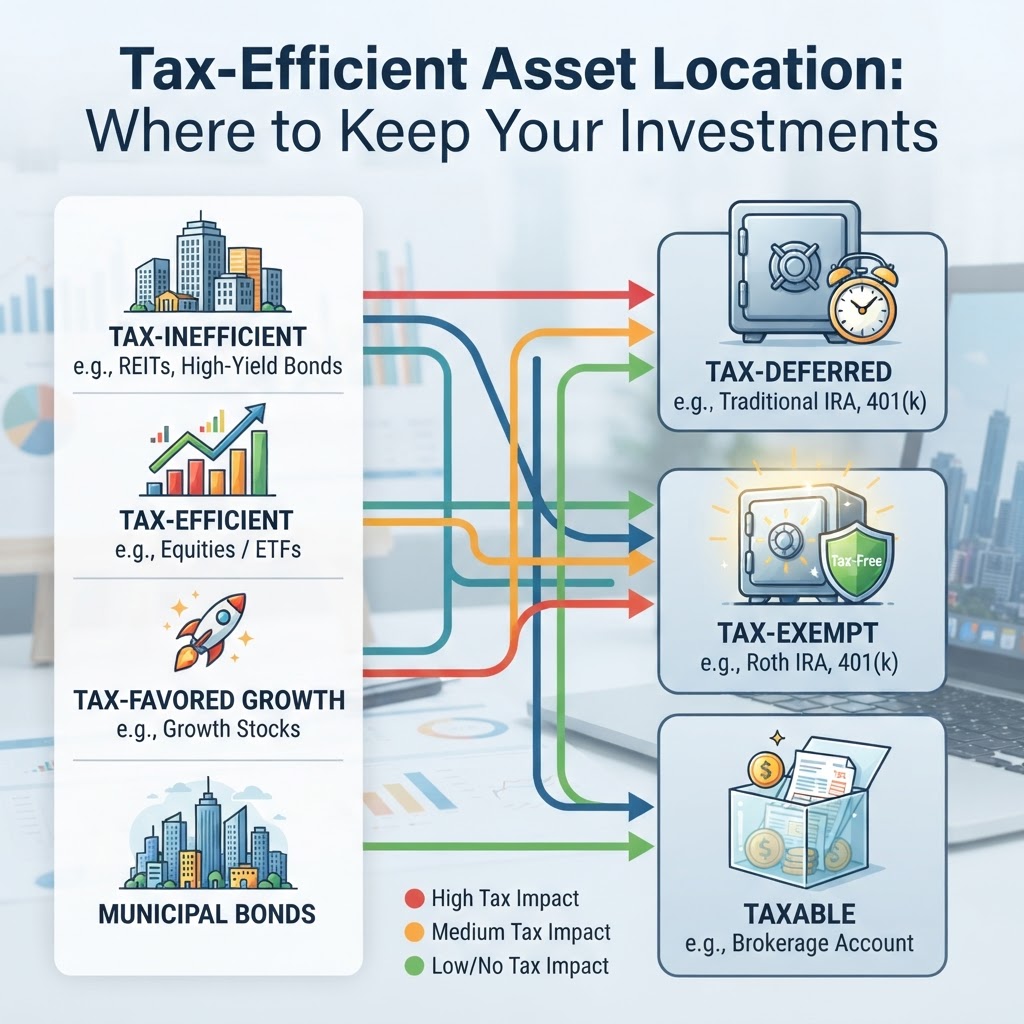
    Real Estate Investment Trusts (REITs) are companies that own and operate income-producing real estate — apartment buildings, shopping centers, warehouses, data centers, cell towers — and by law must distribute at least 90% of their taxable income to shareholders as dividends. This structure makes REITs one of the highest-yielding categories of publicly traded income investments, though it also means REIT dividends are less tax-efficient than qualified dividends from regular stocks, since most REIT distributions are taxed as ordinary income rather than at the lower qualified dividend rate. This makes REITs a natural candidate for tax-advantaged accounts like an IRA or 401(k), where the ordinary-income tax treatment doesn’t matter until withdrawal. Publicly traded REITs offer daily liquidity like any stock, while non-traded REITs — often marketed aggressively with high commissions — typically lock up your money for years and deserve significant scrutiny before investing. Diversified REIT index funds spread risk across property types and geographies, reducing exposure to any single real estate sector’s downturn.

    Bond Ladders and Fixed Income

    A bond ladder involves purchasing bonds with staggered maturity dates — for example, bonds maturing in one, two, three, four, and five years — so that a portion of your fixed income portfolio matures and can be reinvested at prevailing rates every year, rather than locking your entire allocation into a single interest rate environment. This strategy provides predictable, passive interest income while managing interest rate risk more effectively than an all-at-once bond purchase. Treasury bonds carry no default risk since they’re backed by the federal government, while corporate and municipal bonds offer potentially higher yields with correspondingly higher risk depending on the issuer’s credit quality. Bond funds and ETFs offer similar income with more liquidity and diversification than individual bonds, though without the guaranteed return-of-principal at a specific maturity date that individual bonds provide. For retirees or those nearing retirement, fixed income laddering remains one of the most reliable ways to generate predictable passive cash flow with lower volatility than equities.

    Real Estate Crowdfunding and Fractional Ownership

    Real estate crowdfunding platforms allow investors to buy fractional shares of specific properties or real estate funds with much lower minimums than buying property outright — often starting at $500-$5,000 rather than the hundreds of thousands needed to purchase a rental property directly. Returns typically come from a combination of quarterly or annual income distributions and potential appreciation when the property is eventually sold. The tradeoff is significantly reduced liquidity compared to publicly traded REITs — many platforms lock up capital for several years with limited or no ability to exit early — and less regulatory oversight and price transparency than public markets provide. This category is best approached as a smaller allocation within a broader passive income strategy rather than a core holding, given the illiquidity and platform-specific risk (some crowdfunding platforms have failed or faced financial difficulty, leaving investors with reduced options for recovering capital).

    Traditional Rental Property: The Original Passive Income Stream

    Owning rental property remains one of the most substantial passive income opportunities available, though it’s also the least “passive” of the options on this list unless you hire a property manager, which typically costs 8-12% of monthly rent. Direct rental ownership offers unique advantages: leverage (a mortgage lets you control an appreciating asset with a fraction of its value in cash), significant tax benefits (depreciation can shelter rental income from taxes, and 1031 exchanges allow deferring capital gains taxes when trading up to larger properties), and inflation protection (rents and property values tend to rise with inflation over time). The downsides are equally real: tenant issues, maintenance costs, vacancy periods, and the concentration risk of having significant wealth tied up in a single illiquid asset in a single location. For those wanting rental income exposure without direct property management, REITs and real estate crowdfunding (covered above) offer a genuinely more passive alternative, at the cost of the leverage and tax benefits direct ownership provides.

    Digital Products and Royalty Income

    Creating a digital product — an online course, an ebook, a stock photo library, printable templates, or a software tool — requires substantial upfront time investment but can generate ongoing sales with minimal continued effort once created and marketed. Unlike financial passive income, this category depends heavily on your existing skills, audience, or willingness to build one, and success is far less predictable than a diversified investment portfolio’s expected returns. That said, digital products carry no ongoing capital requirement beyond your time, and profit margins can be extremely high since there’s no marginal cost to each additional sale. Royalty income from books, music, or licensed intellectual property works similarly — most of the effort happens upfront in creation, with income continuing as long as the work remains in demand. Realistic expectations matter here: most digital products generate modest income unless paired with genuine marketing effort and audience-building, which itself is an ongoing, non-passive activity even after the product is complete.

    Peer-to-Peer Lending and Private Credit

    Peer-to-peer lending platforms connect individual investors with borrowers, allowing you to earn interest income by funding portions of personal or business loans. Advertised returns often look attractive (sometimes 6-10%+), but realized returns after accounting for loan defaults are typically lower, and this category carries meaningfully higher risk than most other passive income streams on this list, since you’re essentially acting as an unsecured lender without the diversification and risk management infrastructure that banks and institutional lenders use. Diversifying across many small loan fragments rather than concentrating in a few loans reduces (but doesn’t eliminate) default risk. This category is best treated as a small, higher-risk allocation within a broader passive income strategy rather than a primary income source, given the limited track record of many platforms through a full economic cycle including a recession.

    Tax Considerations for Passive Income

    Different passive income streams carry meaningfully different tax treatment, and understanding this affects both which accounts to hold them in and your actual after-tax return. Qualified dividends and long-term capital gains from stocks and stock ETFs typically receive preferential tax rates. REIT dividends, bond interest, and peer-to-peer lending income are generally taxed as ordinary income, making tax-advantaged accounts (401(k), traditional or Roth IRA) a more efficient home for these assets when possible. Rental real estate income can often be substantially reduced for tax purposes through depreciation, though depreciation recapture applies when the property is eventually sold. Digital product and royalty income is typically taxed as ordinary self-employment income, which also means it may be subject to self-employment tax in addition to income tax. A tax professional familiar with investment income can help structure your specific mix of passive income sources across taxable and tax-advantaged accounts most efficiently.

    Building Multiple Passive Income Streams: A Realistic Timeline

    Financial independence built primarily on passive income rarely happens quickly, and understanding a realistic timeline helps set appropriate expectations. In the first one to two years, most people focus on a single stream — typically starting with dividend index funds or a high-yield savings account — while paying down high-interest debt and building an emergency fund, since passive income growth is undermined if you’re simultaneously carrying expensive debt. Years three through seven often involve adding a second stream, whether that’s REITs, a digital product, or beginning to save toward a rental property down payment, while continuing to grow the first stream through consistent contributions. Beyond year seven, many people who reach meaningful passive income have three or four diversified streams working simultaneously, with the combined income gradually approaching a level that provides genuine financial flexibility — whether that means reducing work hours, changing careers without financial pressure, or eventually retiring early. The households who reach substantial passive income fastest are rarely those chasing the highest-yielding or most exotic options; they’re typically the ones who consistently invest in diversified, lower-cost vehicles over many years.

    Common Passive Income Mistakes to Avoid

    • Chasing unrealistically high yields — an 8-10%+ yield on a stock or fund often signals elevated risk of a dividend cut, not a genuine bargain
    • Underestimating the “upfront work” required — nearly every passive income stream requires meaningful capital, time, or skill investment before it becomes truly passive
    • Over-concentrating in a single stream or asset — diversifying across multiple passive income types reduces the impact if any single stream underperforms
    • Ignoring tax efficiency — holding tax-inefficient assets like REITs and bonds in the wrong account type can meaningfully reduce after-tax returns
    • Falling for “guaranteed passive income” marketing — legitimate passive income always carries some risk; anyone promising guaranteed high returns with no risk is likely running a scam

    ❓ Frequently Asked Questions

    ❓ Is passive income really passive?

    Most requires meaningful upfront investment. Once established, maintenance is minimal. Anyone promising completely effortless income is misleading you.

    ❓ How much do I need to live on passive income?

    4% rule: to spend $4,000/month ($48,000/year), you need ~$1.2M invested in a diversified portfolio.

    our editorial team

    Personal Finance Content Researchers

    Our team researches personal finance topics using publicly available data to help you make informed financial decisions.

    ⚠️ Disclaimer: Educational purposes only. Not professional financial, tax, or investment advice. All investing involves risk. Consult a qualified financial professional before making decisions.

    Building Real Wealth: Evidence-Based Financial Strategies

    Wealth building is not complicated, but it is demanding. It requires consistent behaviour over long periods of time, discipline during market downturns and lifestyle inflation pressure, and a clear understanding of the fundamental principles that separate households that build lasting wealth from those that earn well but arrive at retirement with little to show for it. The principles themselves are not secrets — they are widely known. The challenge is applying them consistently across decades of real life with its competing demands, temptations, and disruptions.

    The first principle is spending less than you earn — consistently, not occasionally. This sounds obvious but runs counter to powerful cultural forces that normalise lifestyle expansion proportional to income growth. Every raise, bonus, and windfall represents an opportunity either to accelerate wealth building or to inflate lifestyle. Households that consistently direct a meaningful portion of income increases to savings and investment rather than consumption build wealth at rates that surprise even financially sophisticated observers when compounded over 20-30 years.

    The second principle is investing early and consistently. The mathematics of compound growth reward early investors with an advantage that later savers cannot overcome through higher savings rates alone. A 25-year-old who invests $500 per month until age 65 at a 7% annual return accumulates approximately $1.3 million. A 35-year-old making the same monthly investment accumulates approximately $600,000 — less than half, despite investing for only 10 fewer years. Time in the market is the most powerful wealth-building variable available, and every year of delay is extremely costly in terminal wealth terms.

    The third principle is minimising fees, taxes, and financial mistakes. Every percentage point of annual fees reduces terminal wealth by approximately 20-25% over a 30-year investment horizon. Tax-advantaged accounts (401k, IRA, Roth IRA, HSA) provide legally guaranteed returns in the form of tax savings that no market investment can match. Avoiding common financial mistakes — panic selling during market downturns, chasing recent performance, taking on consumer debt for depreciating purchases, cashing out retirement accounts early — protects the wealth that good habits create. The wealth destroyed by financial mistakes often exceeds the wealth created by investment returns for households that have not developed financial discipline.

    Investment Fundamentals: What Every Investor Needs to Know

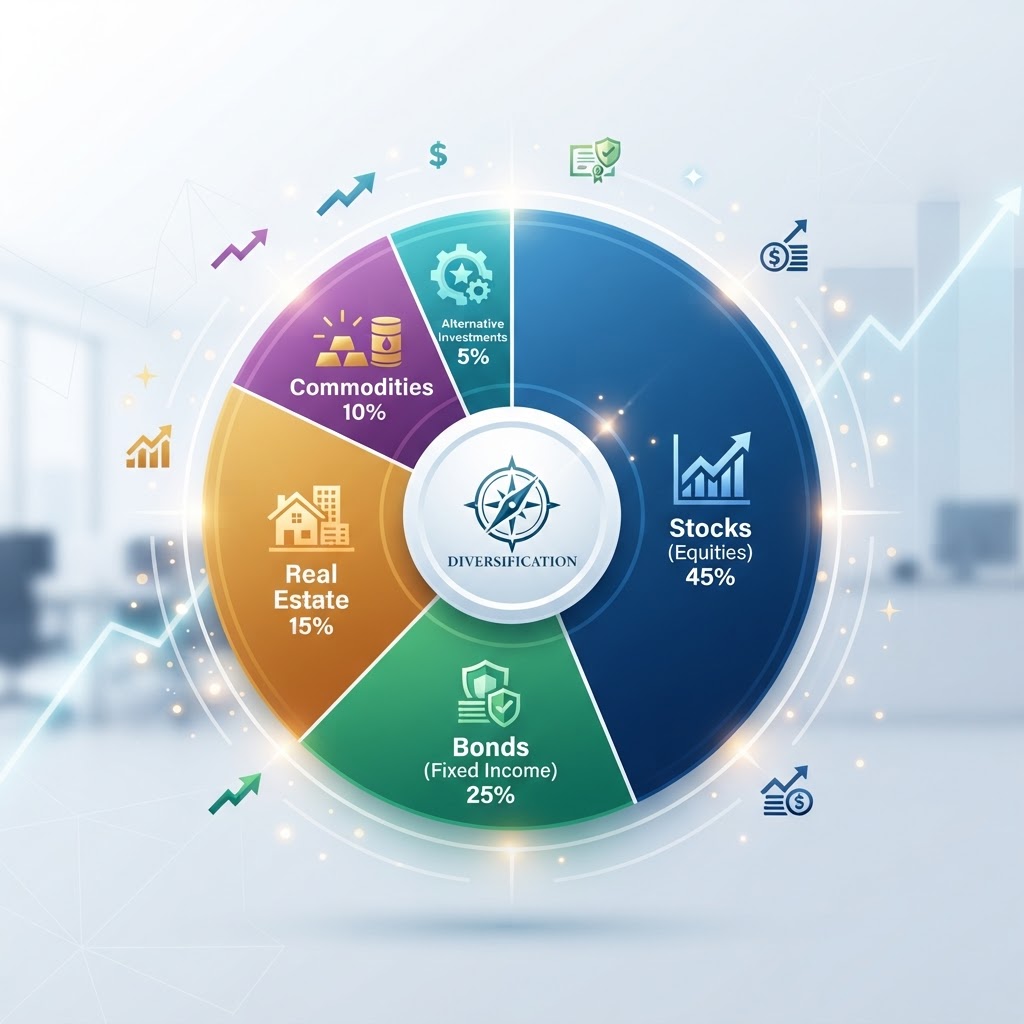
    The investment landscape is complex and intimidating to many people, but the core principles that drive long-term investment success are straightforward. Diversification — spreading investment across multiple asset classes, geographies, and securities — reduces risk without proportionally reducing expected return. A globally diversified portfolio of low-cost index funds captures essentially all available market returns while eliminating the company-specific and sector-specific risks that concentrate in undiversified portfolios.

    Asset allocation — the division of your portfolio between stocks, bonds, and other asset classes — is the most important investment decision you will make, responsible for the majority of long-term portfolio performance variation. Your optimal asset allocation depends on your time horizon, risk tolerance, and specific financial goals. Generally, longer time horizons and higher risk tolerance support higher equity allocations (which provide higher expected returns but greater short-term volatility), while shorter time horizons and lower risk tolerance support more conservative allocations with greater bond and cash components.

    Rebalancing — periodically returning your portfolio to its target allocation as market movements cause drift — is a mechanical discipline that forces you to buy assets that have become relatively cheaper (underperformed recently) and sell assets that have become relatively more expensive (outperformed recently). Annual or semi-annual rebalancing, or threshold-based rebalancing when allocations drift more than 5-10 percentage points from targets, maintains your intended risk profile and can modestly improve long-term returns through the systematic buy-low-sell-high discipline it enforces.

    Market timing — attempting to predict short-term market movements to buy before rises and sell before falls — is one of the most thoroughly debunked strategies in investment research. Decades of academic and practitioner research consistently show that active market timing destroys rather than creates value for virtually all investors, including professional fund managers. The investors who achieve the best long-term outcomes are those who maintain their target allocation consistently through market cycles rather than reacting emotionally to short-term price movements.

    Dollar-cost averaging — investing a fixed amount at regular intervals regardless of market conditions — is both a practical discipline for regular investors and a psychological strategy that reduces the paralysing anxiety of “is now a good time to invest?” by making the answer irrelevant. Investing $500 every month regardless of market conditions produces better long-term outcomes for most investors than attempting to time optimal entry points, primarily because it ensures that investing happens consistently rather than being perpetually delayed waiting for better conditions that may never arrive.

    Debt Management: A Strategic Framework

    Not all debt is created equal. Debt that finances appreciating assets or generates income (mortgages on well-located properties, business loans with positive ROI, student loans for high-earning careers) is categorically different from debt that finances consumption (credit cards, personal loans, car loans for vehicles beyond your means). Conflating these categories leads to either excessive debt aversion that forgoes valuable leverage or insufficient debt concern that allows high-cost consumer debt to compound into a serious financial drag.

    High-interest consumer debt — credit cards typically charging 18-25% APR — is the most financially destructive force in personal finance. At 20% APR, a $10,000 balance doubles to $20,000 in less than four years without additional borrowing. Eliminating high-interest debt is the highest guaranteed return available — paying off a 20% credit card balance is equivalent to earning a guaranteed 20% return on that amount. No investment consistently matches this return, making debt elimination the highest-priority use of available cash flow for anyone carrying significant high-interest balances.

    The debt avalanche method — targeting the highest-interest debt first regardless of balance size — minimises total interest paid and is mathematically optimal. The debt snowball method — targeting the smallest balance first regardless of interest rate — pays more total interest but provides quicker psychological wins that improve motivation and adherence for some people. Both are effective strategies for debt elimination; choose the one you will actually stick with. The worst approach is paying minimum balances on everything while making no systematic progress on elimination.

    Mortgage debt requires a more nuanced analysis. Mortgages at current rates may be worth accelerating payoff if the emotional value of being debt-free is significant, if you are near retirement and want to eliminate the largest fixed expense before income drops, or if the mortgage rate exceeds the expected after-tax return on alternative investments. At historically low mortgage rates, however, the mathematical case for prioritising mortgage payoff over investment is weak — the expected return of a diversified investment portfolio typically exceeds the after-tax cost of a low-rate mortgage over long horizons. This is an individual decision that depends on your specific interest rate, tax situation, risk tolerance, and values.

    Retirement Planning: Building the Income You Will Need

    Retirement planning requires answering three fundamental questions: How much will I need? How much will I have? And how do I bridge any gap? The answers to all three are uncertain, but developing reasonable estimates based on current data is essential for knowing whether you are on track and what adjustments are needed.

    Estimating retirement income needs starts with your current expenses adjusted for anticipated retirement lifestyle changes. Expenses that decrease in retirement include work-related costs (commuting, professional clothing, eating out near work), mortgage payments (if paid off), and potentially income taxes (if retirement income is lower than working income). Expenses that may increase include healthcare (the single largest wildcard in retirement planning), leisure and travel, and potentially housing modifications for aging in place. A widely used starting estimate is 70-80% of pre-retirement income, but this varies significantly by individual — some people spend more in retirement than during their working years if travel and activities increase.

    The 4% rule — withdrawing 4% of your portfolio in the first year of retirement and adjusting for inflation annually — is a widely cited guideline suggesting that a portfolio can sustain 30 years of withdrawals at this rate with high probability. It implies that to fund $60,000 of annual retirement spending, you need approximately $1.5 million in investable assets. This is a planning heuristic, not a guarantee — sequence of returns risk (experiencing poor market returns early in retirement) can significantly affect outcomes, and lower expected future returns than the historical period underlying the 4% rule may warrant a more conservative withdrawal rate.

    Social Security optimisation is one of the highest-value retirement planning decisions available. Claiming at 62 (the earliest eligibility) versus 70 (when benefits max out) results in approximately a 76% difference in monthly benefit — benefits increase by approximately 6-8% for each year of delay between 62 and 70. For people in good health with reasonable life expectancy, delaying Social Security as long as possible while drawing down investable assets is often the mathematically superior strategy, effectively purchasing longevity insurance at favourable rates.

    Key Takeaways and Your Financial Action Plan

    Financial security is built through consistent application of proven principles over time — not through exceptional investment picks, market timing, or financial complexity. The households that achieve genuine wealth independence are those that automate saving, invest consistently in diversified low-cost portfolios, manage debt strategically, protect their assets with appropriate insurance, and review their financial plan regularly to ensure it remains aligned with their evolving goals and circumstances.

    Start where you are. If you have no emergency fund, build one first — three to six months of expenses in a high-yield savings account, insulating you from the financial shocks that derail long-term wealth building plans. If you have high-interest debt, eliminate it systematically. If you are not maximising your employer 401(k) match, do it immediately — the match is a 50-100% guaranteed return on that contribution that no other investment can match. Then work progressively toward maximising tax-advantaged accounts, building taxable investments, and protecting what you build with appropriate insurance and estate planning.

    The financial decisions you make in the next year will compound for decades. Every dollar saved and invested wisely today will be worth many times that amount at retirement. Every dollar of high-interest debt eliminated today saves multiple dollars of future interest. The mathematics are unambiguous and in your favour — if you act consistently and patiently. Build the habits, automate the behaviours, and let time do what it does best: compound your progress into a financial future that reflects the decisions you are making right now.

    This article provides general financial information for educational purposes only. Individual circumstances vary significantly. Always consult a qualified financial advisor for personalised guidance tailored to your specific financial situation and goals.

    Tax Strategy: Keeping More of What You Earn

    Tax optimisation is one of the highest-return financial activities available to households at virtually every income level. The difference between a tax-aware and a tax-unaware investor of similar income can compound to hundreds of thousands of dollars over a working lifetime. This is not about tax avoidance schemes or aggressive strategies that invite scrutiny — it is about fully utilising the tax-advantaged structures that the tax code explicitly provides and making investment decisions that minimise unnecessary tax drag on your wealth building.

    The hierarchy of tax-advantaged savings — the order in which to direct investment dollars for maximum tax efficiency — starts with employer 401(k) contributions up to the employer match (free money, 50-100% instant return), then HSA contributions if enrolled in a qualifying health plan (triple tax advantage: deductible contributions, tax-free growth, tax-free withdrawals for medical expenses), then maximum Roth IRA contributions if income-eligible (tax-free growth and withdrawals, no required minimum distributions), then maximum 401(k) contributions up to the annual limit, and finally taxable investment accounts for any additional savings capacity.

    Tax-loss harvesting in taxable accounts — selling investments that have declined in value to realise losses that offset capital gains — reduces current tax liability while maintaining market exposure through replacement with similar (but not identical) investments. Done systematically, tax-loss harvesting can improve after-tax returns by 0.5-1.5% annually without any change to investment risk or expected returns. Robo-advisors and some brokerage platforms offer automated tax-loss harvesting; alternatively, it can be done manually with attention to the wash-sale rules that prohibit repurchasing substantially identical securities within 30 days of a loss sale.

    Asset location — placing different types of investments in accounts based on their tax efficiency — further optimises after-tax returns. Tax-inefficient assets (bonds, REITs, actively managed funds with high turnover) belong in tax-advantaged accounts where their income is sheltered from annual taxation. Tax-efficient assets (broadly diversified equity index funds, growth stocks held long-term) are better suited to taxable accounts where they generate minimal taxable income and benefit from lower long-term capital gains rates when eventually sold. Proper asset location can add meaningfully to after-tax wealth without changing your overall investment strategy or risk profile.

    Protecting Your Wealth: Insurance and Estate Planning

    Wealth protection is as important as wealth building — perhaps more so, because the same consistent effort that builds wealth over decades can be undermined in a moment by an uninsured catastrophic event. Adequate insurance coverage — life, disability, liability, property, and potentially long-term care — creates the financial safety net that allows wealth building to continue uninterrupted through the inevitable adverse events that life produces.

    Disability insurance is chronically undervalued relative to its importance. The probability of a working-age adult experiencing a disability lasting 90 days or more before retirement is approximately 25-30% — far higher than the probability of premature death that drives most people’s life insurance purchases. A disability that eliminates or dramatically reduces your income for months or years has potentially more severe long-term financial consequences than death (which at least triggers life insurance), yet most people have no individual disability coverage beyond whatever their employer provides. Individual disability policies covering 60-70% of income with own-occupation definitions (paying if you cannot perform your specific occupation, not just any work) provide the most valuable income protection available.

    Estate planning — wills, beneficiary designations, powers of attorney, healthcare directives — is not just for the wealthy. Without a will, your assets pass according to state intestacy laws that may not reflect your wishes. Without beneficiary designations on retirement accounts and life insurance (which pass outside the probate estate regardless of your will), these assets may go to unintended recipients. Without a durable power of attorney and healthcare directive, your family may lack the legal authority to manage your affairs if you become incapacitated. These documents cost relatively little to prepare but provide enormous value at moments of maximum vulnerability. Every adult with any assets or dependents should have them.

    Frequently Asked Questions About Personal Finance

    How much should I have in an emergency fund? Three to six months of essential living expenses in a readily accessible, FDIC-insured high-yield savings account. Self-employed individuals, those with variable income, or households with a single income earner should target the higher end of this range. The emergency fund is not an investment — its purpose is stability and accessibility, not return.

    Should I pay off debt or invest? Generally: always capture your employer 401(k) match first (it is a guaranteed return that beats any debt payoff). Then eliminate high-interest debt (above ~6-7%). Then invest. For debt below 6-7% interest rate, the mathematical case for investing rather than accelerating payoff is solid, though the psychological value of being debt-free is real and legitimate for many people.

    How do I start investing if I have very little money? Start with whatever you can consistently invest, however small. Many brokerages now offer fractional shares and no-minimum accounts. Even $50 per month invested consistently in a diversified low-cost index fund is a meaningful start — both for the wealth it builds over time and for establishing the habit of consistent investing that becomes the foundation of financial independence.

    What is the best investment for beginners? A target-date retirement fund or a three-fund portfolio (total US market index fund, total international index fund, total bond market index fund) in your employer 401(k) or IRA provides instant diversification, professional rebalancing, and very low costs. These straightforward approaches outperform the vast majority of active strategies over long time horizons and require minimal investment knowledge or ongoing attention to implement effectively.

    This article provides general financial information for educational purposes. Financial circumstances vary significantly by individual. Always consult a qualified financial advisor for guidance specific to your situation.

  • How to Improve Your Credit Score Fast: 11 Proven Strategies

    How to Improve Your Credit Score Fast: 11 Proven Strategies

    🏷️ Credit Scores

    Improve credit score fast

    ⭐ Key Takeaways

    • ✅ Payment history (35%) is the single most important factor — autopay prevents all missed payments
    • ✅ Keeping utilization below 10% can add 50-100 points relatively quickly
    • ✅ Checking your own score is a soft pull — it never hurts your score
    • ✅ A 580→760 score improvement saves $138,000+ on a $300K mortgage
    • ✅ You can dispute credit report errors for free at AnnualCreditReport.com

    How Credit Scores Are Calculated

    Factor Weight How to Optimize
    Payment History 35% Autopay for minimum on all accounts
    Credit Utilization 30% Keep below 10% of each card’s limit
    Length of Credit History 15% Don’t close old accounts
    Credit Mix 10% Have both credit cards and installment loans
    New Inquiries 10% Limit credit applications

    The Real Cost of a Low Credit Score

    Score Range Mortgage Rate (30yr) Monthly Payment on $300K Total Interest
    760-850 6.2% $1,834 $360,240
    700-759 6.45% $1,882 $377,520
    640-679 7.2% $2,039 $434,040
    580-639 8.1% $2,218 $498,480

    The difference between a 580 and 760 score: $384/month and $138,000 in total interest. Credit improvement is the highest-ROI financial action most people can take.

    11 Ways to Raise Your Score

    1. Autopay every account

    One missed payment drops score 80-100 points. Autopay for minimums is non-negotiable.

    2. Pay down utilization aggressively

    Paying balances to under 10% of limits can add 50-100 points within 30-60 days.

    3. Request credit limit increases

    Ask every 6-12 months on cards you’ve managed well. Higher limits = lower utilization.

    4. Become an authorized user

    A family member with excellent credit adds you to their old card — their history boosts yours within 30 days.

    5. Dispute errors on your report

    1 in 5 Americans has a credit error. Check AnnualCreditReport.com weekly. Dispute errors directly with bureaus — it’s free.

    6. Don’t close old accounts

    Closing cards reduces available credit and shortens average account age — both hurt your score.

    7. Open a secured card if score is below 580

    A secured card (backed by a cash deposit) builds positive payment history from scratch.

    ❓ Frequently Asked Questions

    ❓ How long to rebuild a 500 credit score to 700?

    With consistent on-time payments and aggressive utilization reduction, 12-24 months is realistic. Serious negative marks (bankruptcy, foreclosure) have diminishing impact after 2-3 years of positive history.

    ❓ Does income affect credit score?

    No — income is not a factor in FICO scores. Lenders may consider income for loan approval, but your credit score is calculated purely from your credit file data.

    ❓ What credit score do I need for a mortgage?

    Conventional: 620 minimum, best rates at 740+. FHA: 500 with 10% down, 580 with 3.5% down. Improving from 620 to 740 before buying could save $50,000+ over the loan’s life.

    our editorial team

    Personal Finance Content Researchers

    Our team researches personal finance topics using publicly available data to help you make informed financial decisions.

    ⚠️ Disclaimer: Educational purposes only. Not professional financial, tax, or investment advice. All investing involves risk. Consult a qualified financial professional before making decisions.

    Building Real Wealth: Evidence-Based Financial Strategies

    Wealth building is not complicated, but it is demanding. It requires consistent behaviour over long periods of time, discipline during market downturns and lifestyle inflation pressure, and a clear understanding of the fundamental principles that separate households that build lasting wealth from those that earn well but arrive at retirement with little to show for it. The principles themselves are not secrets — they are widely known. The challenge is applying them consistently across decades of real life with its competing demands, temptations, and disruptions.

    The first principle is spending less than you earn — consistently, not occasionally. This sounds obvious but runs counter to powerful cultural forces that normalise lifestyle expansion proportional to income growth. Every raise, bonus, and windfall represents an opportunity either to accelerate wealth building or to inflate lifestyle. Households that consistently direct a meaningful portion of income increases to savings and investment rather than consumption build wealth at rates that surprise even financially sophisticated observers when compounded over 20-30 years.

    The second principle is investing early and consistently. The mathematics of compound growth reward early investors with an advantage that later savers cannot overcome through higher savings rates alone. A 25-year-old who invests $500 per month until age 65 at a 7% annual return accumulates approximately $1.3 million. A 35-year-old making the same monthly investment accumulates approximately $600,000 — less than half, despite investing for only 10 fewer years. Time in the market is the most powerful wealth-building variable available, and every year of delay is extremely costly in terminal wealth terms.

    The third principle is minimising fees, taxes, and financial mistakes. Every percentage point of annual fees reduces terminal wealth by approximately 20-25% over a 30-year investment horizon. Tax-advantaged accounts (401k, IRA, Roth IRA, HSA) provide legally guaranteed returns in the form of tax savings that no market investment can match. Avoiding common financial mistakes — panic selling during market downturns, chasing recent performance, taking on consumer debt for depreciating purchases, cashing out retirement accounts early — protects the wealth that good habits create. The wealth destroyed by financial mistakes often exceeds the wealth created by investment returns for households that have not developed financial discipline.

    Investment Fundamentals: What Every Investor Needs to Know

    The investment landscape is complex and intimidating to many people, but the core principles that drive long-term investment success are straightforward. Diversification — spreading investment across multiple asset classes, geographies, and securities — reduces risk without proportionally reducing expected return. A globally diversified portfolio of low-cost index funds captures essentially all available market returns while eliminating the company-specific and sector-specific risks that concentrate in undiversified portfolios.

    Asset allocation — the division of your portfolio between stocks, bonds, and other asset classes — is the most important investment decision you will make, responsible for the majority of long-term portfolio performance variation. Your optimal asset allocation depends on your time horizon, risk tolerance, and specific financial goals. Generally, longer time horizons and higher risk tolerance support higher equity allocations (which provide higher expected returns but greater short-term volatility), while shorter time horizons and lower risk tolerance support more conservative allocations with greater bond and cash components.

    Rebalancing — periodically returning your portfolio to its target allocation as market movements cause drift — is a mechanical discipline that forces you to buy assets that have become relatively cheaper (underperformed recently) and sell assets that have become relatively more expensive (outperformed recently). Annual or semi-annual rebalancing, or threshold-based rebalancing when allocations drift more than 5-10 percentage points from targets, maintains your intended risk profile and can modestly improve long-term returns through the systematic buy-low-sell-high discipline it enforces.

    Market timing — attempting to predict short-term market movements to buy before rises and sell before falls — is one of the most thoroughly debunked strategies in investment research. Decades of academic and practitioner research consistently show that active market timing destroys rather than creates value for virtually all investors, including professional fund managers. The investors who achieve the best long-term outcomes are those who maintain their target allocation consistently through market cycles rather than reacting emotionally to short-term price movements.

    Dollar-cost averaging — investing a fixed amount at regular intervals regardless of market conditions — is both a practical discipline for regular investors and a psychological strategy that reduces the paralysing anxiety of “is now a good time to invest?” by making the answer irrelevant. Investing $500 every month regardless of market conditions produces better long-term outcomes for most investors than attempting to time optimal entry points, primarily because it ensures that investing happens consistently rather than being perpetually delayed waiting for better conditions that may never arrive.

    Debt Management: A Strategic Framework

    Not all debt is created equal. Debt that finances appreciating assets or generates income (mortgages on well-located properties, business loans with positive ROI, student loans for high-earning careers) is categorically different from debt that finances consumption (credit cards, personal loans, car loans for vehicles beyond your means). Conflating these categories leads to either excessive debt aversion that forgoes valuable leverage or insufficient debt concern that allows high-cost consumer debt to compound into a serious financial drag.

    High-interest consumer debt — credit cards typically charging 18-25% APR — is the most financially destructive force in personal finance. At 20% APR, a $10,000 balance doubles to $20,000 in less than four years without additional borrowing. Eliminating high-interest debt is the highest guaranteed return available — paying off a 20% credit card balance is equivalent to earning a guaranteed 20% return on that amount. No investment consistently matches this return, making debt elimination the highest-priority use of available cash flow for anyone carrying significant high-interest balances.

    The debt avalanche method — targeting the highest-interest debt first regardless of balance size — minimises total interest paid and is mathematically optimal. The debt snowball method — targeting the smallest balance first regardless of interest rate — pays more total interest but provides quicker psychological wins that improve motivation and adherence for some people. Both are effective strategies for debt elimination; choose the one you will actually stick with. The worst approach is paying minimum balances on everything while making no systematic progress on elimination.

    Mortgage debt requires a more nuanced analysis. Mortgages at current rates may be worth accelerating payoff if the emotional value of being debt-free is significant, if you are near retirement and want to eliminate the largest fixed expense before income drops, or if the mortgage rate exceeds the expected after-tax return on alternative investments. At historically low mortgage rates, however, the mathematical case for prioritising mortgage payoff over investment is weak — the expected return of a diversified investment portfolio typically exceeds the after-tax cost of a low-rate mortgage over long horizons. This is an individual decision that depends on your specific interest rate, tax situation, risk tolerance, and values.

    Retirement Planning: Building the Income You Will Need

    Retirement planning requires answering three fundamental questions: How much will I need? How much will I have? And how do I bridge any gap? The answers to all three are uncertain, but developing reasonable estimates based on current data is essential for knowing whether you are on track and what adjustments are needed.

    Estimating retirement income needs starts with your current expenses adjusted for anticipated retirement lifestyle changes. Expenses that decrease in retirement include work-related costs (commuting, professional clothing, eating out near work), mortgage payments (if paid off), and potentially income taxes (if retirement income is lower than working income). Expenses that may increase include healthcare (the single largest wildcard in retirement planning), leisure and travel, and potentially housing modifications for aging in place. A widely used starting estimate is 70-80% of pre-retirement income, but this varies significantly by individual — some people spend more in retirement than during their working years if travel and activities increase.

    The 4% rule — withdrawing 4% of your portfolio in the first year of retirement and adjusting for inflation annually — is a widely cited guideline suggesting that a portfolio can sustain 30 years of withdrawals at this rate with high probability. It implies that to fund $60,000 of annual retirement spending, you need approximately $1.5 million in investable assets. This is a planning heuristic, not a guarantee — sequence of returns risk (experiencing poor market returns early in retirement) can significantly affect outcomes, and lower expected future returns than the historical period underlying the 4% rule may warrant a more conservative withdrawal rate.

    Social Security optimisation is one of the highest-value retirement planning decisions available. Claiming at 62 (the earliest eligibility) versus 70 (when benefits max out) results in approximately a 76% difference in monthly benefit — benefits increase by approximately 6-8% for each year of delay between 62 and 70. For people in good health with reasonable life expectancy, delaying Social Security as long as possible while drawing down investable assets is often the mathematically superior strategy, effectively purchasing longevity insurance at favourable rates.

    Key Takeaways and Your Financial Action Plan

    Financial security is built through consistent application of proven principles over time — not through exceptional investment picks, market timing, or financial complexity. The households that achieve genuine wealth independence are those that automate saving, invest consistently in diversified low-cost portfolios, manage debt strategically, protect their assets with appropriate insurance, and review their financial plan regularly to ensure it remains aligned with their evolving goals and circumstances.

    Start where you are. If you have no emergency fund, build one first — three to six months of expenses in a high-yield savings account, insulating you from the financial shocks that derail long-term wealth building plans. If you have high-interest debt, eliminate it systematically. If you are not maximising your employer 401(k) match, do it immediately — the match is a 50-100% guaranteed return on that contribution that no other investment can match. Then work progressively toward maximising tax-advantaged accounts, building taxable investments, and protecting what you build with appropriate insurance and estate planning.

    The financial decisions you make in the next year will compound for decades. Every dollar saved and invested wisely today will be worth many times that amount at retirement. Every dollar of high-interest debt eliminated today saves multiple dollars of future interest. The mathematics are unambiguous and in your favour — if you act consistently and patiently. Build the habits, automate the behaviours, and let time do what it does best: compound your progress into a financial future that reflects the decisions you are making right now.

    This article provides general financial information for educational purposes only. Individual circumstances vary significantly. Always consult a qualified financial advisor for personalised guidance tailored to your specific financial situation and goals.

    Tax Strategy: Keeping More of What You Earn

    Tax optimisation is one of the highest-return financial activities available to households at virtually every income level. The difference between a tax-aware and a tax-unaware investor of similar income can compound to hundreds of thousands of dollars over a working lifetime. This is not about tax avoidance schemes or aggressive strategies that invite scrutiny — it is about fully utilising the tax-advantaged structures that the tax code explicitly provides and making investment decisions that minimise unnecessary tax drag on your wealth building.

    The hierarchy of tax-advantaged savings — the order in which to direct investment dollars for maximum tax efficiency — starts with employer 401(k) contributions up to the employer match (free money, 50-100% instant return), then HSA contributions if enrolled in a qualifying health plan (triple tax advantage: deductible contributions, tax-free growth, tax-free withdrawals for medical expenses), then maximum Roth IRA contributions if income-eligible (tax-free growth and withdrawals, no required minimum distributions), then maximum 401(k) contributions up to the annual limit, and finally taxable investment accounts for any additional savings capacity.

    Tax-loss harvesting in taxable accounts — selling investments that have declined in value to realise losses that offset capital gains — reduces current tax liability while maintaining market exposure through replacement with similar (but not identical) investments. Done systematically, tax-loss harvesting can improve after-tax returns by 0.5-1.5% annually without any change to investment risk or expected returns. Robo-advisors and some brokerage platforms offer automated tax-loss harvesting; alternatively, it can be done manually with attention to the wash-sale rules that prohibit repurchasing substantially identical securities within 30 days of a loss sale.

    Asset location — placing different types of investments in accounts based on their tax efficiency — further optimises after-tax returns. Tax-inefficient assets (bonds, REITs, actively managed funds with high turnover) belong in tax-advantaged accounts where their income is sheltered from annual taxation. Tax-efficient assets (broadly diversified equity index funds, growth stocks held long-term) are better suited to taxable accounts where they generate minimal taxable income and benefit from lower long-term capital gains rates when eventually sold. Proper asset location can add meaningfully to after-tax wealth without changing your overall investment strategy or risk profile.

    Protecting Your Wealth: Insurance and Estate Planning

    Wealth protection is as important as wealth building — perhaps more so, because the same consistent effort that builds wealth over decades can be undermined in a moment by an uninsured catastrophic event. Adequate insurance coverage — life, disability, liability, property, and potentially long-term care — creates the financial safety net that allows wealth building to continue uninterrupted through the inevitable adverse events that life produces.

    Disability insurance is chronically undervalued relative to its importance. The probability of a working-age adult experiencing a disability lasting 90 days or more before retirement is approximately 25-30% — far higher than the probability of premature death that drives most people’s life insurance purchases. A disability that eliminates or dramatically reduces your income for months or years has potentially more severe long-term financial consequences than death (which at least triggers life insurance), yet most people have no individual disability coverage beyond whatever their employer provides. Individual disability policies covering 60-70% of income with own-occupation definitions (paying if you cannot perform your specific occupation, not just any work) provide the most valuable income protection available.

    Estate planning — wills, beneficiary designations, powers of attorney, healthcare directives — is not just for the wealthy. Without a will, your assets pass according to state intestacy laws that may not reflect your wishes. Without beneficiary designations on retirement accounts and life insurance (which pass outside the probate estate regardless of your will), these assets may go to unintended recipients. Without a durable power of attorney and healthcare directive, your family may lack the legal authority to manage your affairs if you become incapacitated. These documents cost relatively little to prepare but provide enormous value at moments of maximum vulnerability. Every adult with any assets or dependents should have them.

    Frequently Asked Questions About Personal Finance

    How much should I have in an emergency fund? Three to six months of essential living expenses in a readily accessible, FDIC-insured high-yield savings account. Self-employed individuals, those with variable income, or households with a single income earner should target the higher end of this range. The emergency fund is not an investment — its purpose is stability and accessibility, not return.

    Should I pay off debt or invest? Generally: always capture your employer 401(k) match first (it is a guaranteed return that beats any debt payoff). Then eliminate high-interest debt (above ~6-7%). Then invest. For debt below 6-7% interest rate, the mathematical case for investing rather than accelerating payoff is solid, though the psychological value of being debt-free is real and legitimate for many people.

    How do I start investing if I have very little money? Start with whatever you can consistently invest, however small. Many brokerages now offer fractional shares and no-minimum accounts. Even $50 per month invested consistently in a diversified low-cost index fund is a meaningful start — both for the wealth it builds over time and for establishing the habit of consistent investing that becomes the foundation of financial independence.

    What is the best investment for beginners? A target-date retirement fund or a three-fund portfolio (total US market index fund, total international index fund, total bond market index fund) in your employer 401(k) or IRA provides instant diversification, professional rebalancing, and very low costs. These straightforward approaches outperform the vast majority of active strategies over long time horizons and require minimal investment knowledge or ongoing attention to implement effectively.

    This article provides general financial information for educational purposes. Financial circumstances vary significantly by individual. Always consult a qualified financial advisor for guidance specific to your situation.

    Financial independence is not reserved for the wealthy or the lucky — it is built systematically by ordinary people who make consistently good financial decisions over long periods of time. The principles that drive this outcome are not complicated. Spend less than you earn. Invest the difference early and consistently in diversified low-cost assets. Minimise fees, taxes, and financial mistakes. Protect what you build with appropriate insurance and estate planning. Review and adjust regularly as your circumstances evolve.

    These principles, applied consistently over 20-30 years of working life, produce financial outcomes that seem remarkable from the outside but are entirely predictable from the inside. The person who saves and invests 15-20% of income from their mid-20s through their 60s, maintains a diversified low-cost portfolio through market cycles without panic selling, minimises lifestyle inflation, and uses tax-advantaged accounts efficiently will almost certainly achieve financial independence — regardless of their income level, their investment genius, or their market timing.

    Start now. Whatever your current financial situation, the next best time to begin making better financial decisions is today. Open that investment account, increase your savings rate by 1%, eliminate that high-interest debt, review your insurance coverage, write that will. Each action is small on its own and transformative in aggregate. Your financial future is built one consistent decision at a time — starting with the decision you make right now.

    Wealth is not built overnight, but it is built reliably by those who commit to sound financial principles and apply them consistently. Every dollar saved today is an investment in your future freedom. Every debt eliminated reduces the friction slowing your progress. Every wise investment decision compounds quietly in the background, building toward the financial independence that makes every other life goal more achievable. The path is clear. The tools are available. The only ingredient you need to supply is consistent, patient action — starting today and continuing for as long as it takes to reach the financial life you are building toward.

    Your Financial Future Starts Now

    The gap between where you are financially and where you want to be is bridged by one thing: consistent, informed action taken over time. Not perfect action. Not genius-level investment decisions. Not exceptional income. Just consistent, patient application of the principles that have proven to build wealth reliably across generations, economic cycles, and wildly different individual circumstances.

    Automate your savings so the decision is made once and executed automatically every month. Build your emergency fund so that unexpected expenses do not derail your investment plan. Eliminate high-interest debt systematically so that compound interest works for you rather than against you. Invest consistently in diversified, low-cost index funds so that market growth accumulates in your portfolio over decades. Maximise tax-advantaged accounts so that you keep the maximum share of your investment returns. Protect what you build with appropriate insurance and estate planning so that a single adverse event cannot undo years of careful work.

    These steps are not glamorous. They will not make headlines or generate dinner party conversation. But they work — reliably, predictably, for anyone who applies them with patience and discipline. The evidence from millions of households over decades is unambiguous: the path to financial independence is straightforward, even if it is not always easy.

    Review your financial situation quarterly. Adjust your plan when circumstances change. Celebrate genuine progress, however modest it seems in the moment. And remember that every financial decision you make today is an investment in the freedom, security, and opportunity that your future self will either have or wish you had built. Make those decisions count. Your financial future is being built right now, one consistent choice at a time.

    This article provides general financial information for educational purposes only. Individual financial circumstances vary significantly. Always consult a qualified financial advisor for personalised guidance tailored to your specific situation and goals.

    Making It Happen: Practical Next Steps

    Knowledge without action produces no results. The most important financial decision you will make today is not which investment to choose or which account to open — it is the decision to act rather than continue planning. Imperfect action taken now beats perfect planning that never gets implemented. Open the account, make the first contribution, set up the automatic transfer, call the insurance broker, schedule the appointment with the financial advisor. Whatever the next concrete step is for your situation, take it today.

    Financial progress is self-reinforcing. The first months of consistent saving and investing feel slow and the amounts feel insignificant. But each month builds on the last, the habit strengthens, and the motivation grows as you begin to see your net worth increasing and your goals getting closer. This is the psychological momentum that sustains long-term financial discipline — not heroic willpower but the reinforcing feedback of visible progress toward goals that genuinely matter to you.

    Track your net worth monthly — assets minus liabilities — as your primary financial health metric. Watching this number grow, even slowly at first, is one of the most motivating financial practices available. Free tools make this easier than ever. Set an annual date to review your complete financial picture: income, spending, savings rate, investment performance, insurance coverage, estate planning documents, and progress toward your major financial goals. That annual review, taken seriously, is worth more than any investment tip or financial trick you will ever encounter.

    Build the life you want by building the financial foundation it requires. The strategies in this article give you a clear, evidence-based path. The rest is up to you — and you are more capable of walking it than you probably realise. Start today. Keep going tomorrow. Let the years do their work.

  • Index Fund Investing for Beginners: Build Wealth Starting with $100

    Index Fund Investing for Beginners: Build Wealth Starting with $100

    🏷️ Investing

    Index fund investing beginners

    ⭐ Key Takeaways

    • ✅ Index funds beat 80-90% of active managers over 10+ year periods
    • ✅ The S&P 500 has returned ~10.7% annually over the past 50 years
    • ✅ $200/month at 10% from age 25 = $638,000 by age 65 — from $96,000 contributed
    • ✅ Fidelity ZERO funds have 0.00% expense ratio — truly free to own
    • ✅ Always max tax-advantaged accounts before taxable investing

    Why Index Funds Beat Active Management

    Factor Index Funds Active Funds
    Expense ratio 0.03-0.10% 0.50-1.50%
    % beating benchmark (15yr) N/A — they ARE the benchmark ~10-15%
    Tax efficiency High (low turnover) Low (frequent trading)
    Minimum investment $0 (many) Often $1,000+

    The math is brutal for active management: a 1% fee on $500,000 costs $350,000+ in foregone compound growth over 30 years. Index funds charge 0.03-0.10% — virtually nothing.

    Best Index Funds for Beginners 2026

    Fund Index Tracked Expense Ratio Minimum
    Fidelity ZERO Total Market (FZROX) Total US Market 0.00% $0
    Vanguard S&P 500 ETF (VOO) S&P 500 0.03% ~$500 (1 share)
    Schwab US Broad Market (SCHB) Total US Market 0.03% $0
    Vanguard Total International (VXUS) Non-US Stocks 0.07% ~$65
    Vanguard Target 2055 Fund Age-adjusted 0.08% $1,000

    The Right Account Order

    1. 401k to employer match

    Instant 50-100% return. Always do this first, no exceptions.

    2. Emergency fund (3-6 months)

    High-yield savings account. Non-negotiable before heavy investing.

    3. Max Roth IRA ($7,000/yr)

    Tax-free growth for life. Best account for most people under 50.

    4. Max 401k ($23,500/yr)

    Reduces taxable income significantly at higher income levels.

    5. Taxable brokerage

    After maxing all tax-advantaged accounts. Use low-cost ETFs.

    ❓ Frequently Asked Questions

    ❓ Is it safe to invest during a market downturn?

    Yes — for long-term investors, downturns mean your contributions buy more shares at lower prices. The only time a downturn hurts is if you’re forced to sell. Keep emergency fund separate from investments.

    ❓ ETF or mutual fund — which is better?

    Both track the same indices at similar costs. ETFs trade throughout the day and have no minimums. Mutual funds trade once per day at closing price. For most beginners, ETFs are more flexible.

    ❓ When should I sell?

    Almost never, unless you need the money, are rebalancing, or are drawing down in retirement. Market volatility is not a reason to sell.

    our editorial team

    Personal Finance Content Researchers

    Our team researches personal finance topics using publicly available data to help you make informed financial decisions.

    ⚠️ Disclaimer: Educational purposes only. Not professional financial, tax, or investment advice. All investing involves risk. Consult a qualified financial professional before making decisions.

    Building Real Wealth: Evidence-Based Financial Strategies

    Wealth building is not complicated, but it is demanding. It requires consistent behaviour over long periods of time, discipline during market downturns and lifestyle inflation pressure, and a clear understanding of the fundamental principles that separate households that build lasting wealth from those that earn well but arrive at retirement with little to show for it. The principles themselves are not secrets — they are widely known. The challenge is applying them consistently across decades of real life with its competing demands, temptations, and disruptions.

    The first principle is spending less than you earn — consistently, not occasionally. This sounds obvious but runs counter to powerful cultural forces that normalise lifestyle expansion proportional to income growth. Every raise, bonus, and windfall represents an opportunity either to accelerate wealth building or to inflate lifestyle. Households that consistently direct a meaningful portion of income increases to savings and investment rather than consumption build wealth at rates that surprise even financially sophisticated observers when compounded over 20-30 years.

    The second principle is investing early and consistently. The mathematics of compound growth reward early investors with an advantage that later savers cannot overcome through higher savings rates alone. A 25-year-old who invests $500 per month until age 65 at a 7% annual return accumulates approximately $1.3 million. A 35-year-old making the same monthly investment accumulates approximately $600,000 — less than half, despite investing for only 10 fewer years. Time in the market is the most powerful wealth-building variable available, and every year of delay is extremely costly in terminal wealth terms.

    The third principle is minimising fees, taxes, and financial mistakes. Every percentage point of annual fees reduces terminal wealth by approximately 20-25% over a 30-year investment horizon. Tax-advantaged accounts (401k, IRA, Roth IRA, HSA) provide legally guaranteed returns in the form of tax savings that no market investment can match. Avoiding common financial mistakes — panic selling during market downturns, chasing recent performance, taking on consumer debt for depreciating purchases, cashing out retirement accounts early — protects the wealth that good habits create. The wealth destroyed by financial mistakes often exceeds the wealth created by investment returns for households that have not developed financial discipline.

    Investment Fundamentals: What Every Investor Needs to Know

    The investment landscape is complex and intimidating to many people, but the core principles that drive long-term investment success are straightforward. Diversification — spreading investment across multiple asset classes, geographies, and securities — reduces risk without proportionally reducing expected return. A globally diversified portfolio of low-cost index funds captures essentially all available market returns while eliminating the company-specific and sector-specific risks that concentrate in undiversified portfolios.

    Asset allocation — the division of your portfolio between stocks, bonds, and other asset classes — is the most important investment decision you will make, responsible for the majority of long-term portfolio performance variation. Your optimal asset allocation depends on your time horizon, risk tolerance, and specific financial goals. Generally, longer time horizons and higher risk tolerance support higher equity allocations (which provide higher expected returns but greater short-term volatility), while shorter time horizons and lower risk tolerance support more conservative allocations with greater bond and cash components.

    Rebalancing — periodically returning your portfolio to its target allocation as market movements cause drift — is a mechanical discipline that forces you to buy assets that have become relatively cheaper (underperformed recently) and sell assets that have become relatively more expensive (outperformed recently). Annual or semi-annual rebalancing, or threshold-based rebalancing when allocations drift more than 5-10 percentage points from targets, maintains your intended risk profile and can modestly improve long-term returns through the systematic buy-low-sell-high discipline it enforces.

    Market timing — attempting to predict short-term market movements to buy before rises and sell before falls — is one of the most thoroughly debunked strategies in investment research. Decades of academic and practitioner research consistently show that active market timing destroys rather than creates value for virtually all investors, including professional fund managers. The investors who achieve the best long-term outcomes are those who maintain their target allocation consistently through market cycles rather than reacting emotionally to short-term price movements.

    Dollar-cost averaging — investing a fixed amount at regular intervals regardless of market conditions — is both a practical discipline for regular investors and a psychological strategy that reduces the paralysing anxiety of “is now a good time to invest?” by making the answer irrelevant. Investing $500 every month regardless of market conditions produces better long-term outcomes for most investors than attempting to time optimal entry points, primarily because it ensures that investing happens consistently rather than being perpetually delayed waiting for better conditions that may never arrive.

    Debt Management: A Strategic Framework

    Not all debt is created equal. Debt that finances appreciating assets or generates income (mortgages on well-located properties, business loans with positive ROI, student loans for high-earning careers) is categorically different from debt that finances consumption (credit cards, personal loans, car loans for vehicles beyond your means). Conflating these categories leads to either excessive debt aversion that forgoes valuable leverage or insufficient debt concern that allows high-cost consumer debt to compound into a serious financial drag.

    High-interest consumer debt — credit cards typically charging 18-25% APR — is the most financially destructive force in personal finance. At 20% APR, a $10,000 balance doubles to $20,000 in less than four years without additional borrowing. Eliminating high-interest debt is the highest guaranteed return available — paying off a 20% credit card balance is equivalent to earning a guaranteed 20% return on that amount. No investment consistently matches this return, making debt elimination the highest-priority use of available cash flow for anyone carrying significant high-interest balances.

    The debt avalanche method — targeting the highest-interest debt first regardless of balance size — minimises total interest paid and is mathematically optimal. The debt snowball method — targeting the smallest balance first regardless of interest rate — pays more total interest but provides quicker psychological wins that improve motivation and adherence for some people. Both are effective strategies for debt elimination; choose the one you will actually stick with. The worst approach is paying minimum balances on everything while making no systematic progress on elimination.

    Mortgage debt requires a more nuanced analysis. Mortgages at current rates may be worth accelerating payoff if the emotional value of being debt-free is significant, if you are near retirement and want to eliminate the largest fixed expense before income drops, or if the mortgage rate exceeds the expected after-tax return on alternative investments. At historically low mortgage rates, however, the mathematical case for prioritising mortgage payoff over investment is weak — the expected return of a diversified investment portfolio typically exceeds the after-tax cost of a low-rate mortgage over long horizons. This is an individual decision that depends on your specific interest rate, tax situation, risk tolerance, and values.

    Retirement Planning: Building the Income You Will Need

    Retirement planning requires answering three fundamental questions: How much will I need? How much will I have? And how do I bridge any gap? The answers to all three are uncertain, but developing reasonable estimates based on current data is essential for knowing whether you are on track and what adjustments are needed.

    Estimating retirement income needs starts with your current expenses adjusted for anticipated retirement lifestyle changes. Expenses that decrease in retirement include work-related costs (commuting, professional clothing, eating out near work), mortgage payments (if paid off), and potentially income taxes (if retirement income is lower than working income). Expenses that may increase include healthcare (the single largest wildcard in retirement planning), leisure and travel, and potentially housing modifications for aging in place. A widely used starting estimate is 70-80% of pre-retirement income, but this varies significantly by individual — some people spend more in retirement than during their working years if travel and activities increase.

    The 4% rule — withdrawing 4% of your portfolio in the first year of retirement and adjusting for inflation annually — is a widely cited guideline suggesting that a portfolio can sustain 30 years of withdrawals at this rate with high probability. It implies that to fund $60,000 of annual retirement spending, you need approximately $1.5 million in investable assets. This is a planning heuristic, not a guarantee — sequence of returns risk (experiencing poor market returns early in retirement) can significantly affect outcomes, and lower expected future returns than the historical period underlying the 4% rule may warrant a more conservative withdrawal rate.

    Social Security optimisation is one of the highest-value retirement planning decisions available. Claiming at 62 (the earliest eligibility) versus 70 (when benefits max out) results in approximately a 76% difference in monthly benefit — benefits increase by approximately 6-8% for each year of delay between 62 and 70. For people in good health with reasonable life expectancy, delaying Social Security as long as possible while drawing down investable assets is often the mathematically superior strategy, effectively purchasing longevity insurance at favourable rates.

    Key Takeaways and Your Financial Action Plan

    Financial security is built through consistent application of proven principles over time — not through exceptional investment picks, market timing, or financial complexity. The households that achieve genuine wealth independence are those that automate saving, invest consistently in diversified low-cost portfolios, manage debt strategically, protect their assets with appropriate insurance, and review their financial plan regularly to ensure it remains aligned with their evolving goals and circumstances.

    Start where you are. If you have no emergency fund, build one first — three to six months of expenses in a high-yield savings account, insulating you from the financial shocks that derail long-term wealth building plans. If you have high-interest debt, eliminate it systematically. If you are not maximising your employer 401(k) match, do it immediately — the match is a 50-100% guaranteed return on that contribution that no other investment can match. Then work progressively toward maximising tax-advantaged accounts, building taxable investments, and protecting what you build with appropriate insurance and estate planning.

    The financial decisions you make in the next year will compound for decades. Every dollar saved and invested wisely today will be worth many times that amount at retirement. Every dollar of high-interest debt eliminated today saves multiple dollars of future interest. The mathematics are unambiguous and in your favour — if you act consistently and patiently. Build the habits, automate the behaviours, and let time do what it does best: compound your progress into a financial future that reflects the decisions you are making right now.

    This article provides general financial information for educational purposes only. Individual circumstances vary significantly. Always consult a qualified financial advisor for personalised guidance tailored to your specific financial situation and goals.

    Tax Strategy: Keeping More of What You Earn

    Tax optimisation is one of the highest-return financial activities available to households at virtually every income level. The difference between a tax-aware and a tax-unaware investor of similar income can compound to hundreds of thousands of dollars over a working lifetime. This is not about tax avoidance schemes or aggressive strategies that invite scrutiny — it is about fully utilising the tax-advantaged structures that the tax code explicitly provides and making investment decisions that minimise unnecessary tax drag on your wealth building.

    The hierarchy of tax-advantaged savings — the order in which to direct investment dollars for maximum tax efficiency — starts with employer 401(k) contributions up to the employer match (free money, 50-100% instant return), then HSA contributions if enrolled in a qualifying health plan (triple tax advantage: deductible contributions, tax-free growth, tax-free withdrawals for medical expenses), then maximum Roth IRA contributions if income-eligible (tax-free growth and withdrawals, no required minimum distributions), then maximum 401(k) contributions up to the annual limit, and finally taxable investment accounts for any additional savings capacity.

    Tax-loss harvesting in taxable accounts — selling investments that have declined in value to realise losses that offset capital gains — reduces current tax liability while maintaining market exposure through replacement with similar (but not identical) investments. Done systematically, tax-loss harvesting can improve after-tax returns by 0.5-1.5% annually without any change to investment risk or expected returns. Robo-advisors and some brokerage platforms offer automated tax-loss harvesting; alternatively, it can be done manually with attention to the wash-sale rules that prohibit repurchasing substantially identical securities within 30 days of a loss sale.

    Asset location — placing different types of investments in accounts based on their tax efficiency — further optimises after-tax returns. Tax-inefficient assets (bonds, REITs, actively managed funds with high turnover) belong in tax-advantaged accounts where their income is sheltered from annual taxation. Tax-efficient assets (broadly diversified equity index funds, growth stocks held long-term) are better suited to taxable accounts where they generate minimal taxable income and benefit from lower long-term capital gains rates when eventually sold. Proper asset location can add meaningfully to after-tax wealth without changing your overall investment strategy or risk profile.

    Protecting Your Wealth: Insurance and Estate Planning

    Wealth protection is as important as wealth building — perhaps more so, because the same consistent effort that builds wealth over decades can be undermined in a moment by an uninsured catastrophic event. Adequate insurance coverage — life, disability, liability, property, and potentially long-term care — creates the financial safety net that allows wealth building to continue uninterrupted through the inevitable adverse events that life produces.

    Disability insurance is chronically undervalued relative to its importance. The probability of a working-age adult experiencing a disability lasting 90 days or more before retirement is approximately 25-30% — far higher than the probability of premature death that drives most people’s life insurance purchases. A disability that eliminates or dramatically reduces your income for months or years has potentially more severe long-term financial consequences than death (which at least triggers life insurance), yet most people have no individual disability coverage beyond whatever their employer provides. Individual disability policies covering 60-70% of income with own-occupation definitions (paying if you cannot perform your specific occupation, not just any work) provide the most valuable income protection available.

    Estate planning — wills, beneficiary designations, powers of attorney, healthcare directives — is not just for the wealthy. Without a will, your assets pass according to state intestacy laws that may not reflect your wishes. Without beneficiary designations on retirement accounts and life insurance (which pass outside the probate estate regardless of your will), these assets may go to unintended recipients. Without a durable power of attorney and healthcare directive, your family may lack the legal authority to manage your affairs if you become incapacitated. These documents cost relatively little to prepare but provide enormous value at moments of maximum vulnerability. Every adult with any assets or dependents should have them.

    Frequently Asked Questions About Personal Finance

    How much should I have in an emergency fund? Three to six months of essential living expenses in a readily accessible, FDIC-insured high-yield savings account. Self-employed individuals, those with variable income, or households with a single income earner should target the higher end of this range. The emergency fund is not an investment — its purpose is stability and accessibility, not return.

    Should I pay off debt or invest? Generally: always capture your employer 401(k) match first (it is a guaranteed return that beats any debt payoff). Then eliminate high-interest debt (above ~6-7%). Then invest. For debt below 6-7% interest rate, the mathematical case for investing rather than accelerating payoff is solid, though the psychological value of being debt-free is real and legitimate for many people.

    How do I start investing if I have very little money? Start with whatever you can consistently invest, however small. Many brokerages now offer fractional shares and no-minimum accounts. Even $50 per month invested consistently in a diversified low-cost index fund is a meaningful start — both for the wealth it builds over time and for establishing the habit of consistent investing that becomes the foundation of financial independence.

    What is the best investment for beginners? A target-date retirement fund or a three-fund portfolio (total US market index fund, total international index fund, total bond market index fund) in your employer 401(k) or IRA provides instant diversification, professional rebalancing, and very low costs. These straightforward approaches outperform the vast majority of active strategies over long time horizons and require minimal investment knowledge or ongoing attention to implement effectively.

    This article provides general financial information for educational purposes. Financial circumstances vary significantly by individual. Always consult a qualified financial advisor for guidance specific to your situation.

    Financial independence is not reserved for the wealthy or the lucky — it is built systematically by ordinary people who make consistently good financial decisions over long periods of time. The principles that drive this outcome are not complicated. Spend less than you earn. Invest the difference early and consistently in diversified low-cost assets. Minimise fees, taxes, and financial mistakes. Protect what you build with appropriate insurance and estate planning. Review and adjust regularly as your circumstances evolve.

    These principles, applied consistently over 20-30 years of working life, produce financial outcomes that seem remarkable from the outside but are entirely predictable from the inside. The person who saves and invests 15-20% of income from their mid-20s through their 60s, maintains a diversified low-cost portfolio through market cycles without panic selling, minimises lifestyle inflation, and uses tax-advantaged accounts efficiently will almost certainly achieve financial independence — regardless of their income level, their investment genius, or their market timing.

    Start now. Whatever your current financial situation, the next best time to begin making better financial decisions is today. Open that investment account, increase your savings rate by 1%, eliminate that high-interest debt, review your insurance coverage, write that will. Each action is small on its own and transformative in aggregate. Your financial future is built one consistent decision at a time — starting with the decision you make right now.

    Wealth is not built overnight, but it is built reliably by those who commit to sound financial principles and apply them consistently. Every dollar saved today is an investment in your future freedom. Every debt eliminated reduces the friction slowing your progress. Every wise investment decision compounds quietly in the background, building toward the financial independence that makes every other life goal more achievable. The path is clear. The tools are available. The only ingredient you need to supply is consistent, patient action — starting today and continuing for as long as it takes to reach the financial life you are building toward.

    Your Financial Future Starts Now

    The gap between where you are financially and where you want to be is bridged by one thing: consistent, informed action taken over time. Not perfect action. Not genius-level investment decisions. Not exceptional income. Just consistent, patient application of the principles that have proven to build wealth reliably across generations, economic cycles, and wildly different individual circumstances.

    Automate your savings so the decision is made once and executed automatically every month. Build your emergency fund so that unexpected expenses do not derail your investment plan. Eliminate high-interest debt systematically so that compound interest works for you rather than against you. Invest consistently in diversified, low-cost index funds so that market growth accumulates in your portfolio over decades. Maximise tax-advantaged accounts so that you keep the maximum share of your investment returns. Protect what you build with appropriate insurance and estate planning so that a single adverse event cannot undo years of careful work.

    These steps are not glamorous. They will not make headlines or generate dinner party conversation. But they work — reliably, predictably, for anyone who applies them with patience and discipline. The evidence from millions of households over decades is unambiguous: the path to financial independence is straightforward, even if it is not always easy.

    Review your financial situation quarterly. Adjust your plan when circumstances change. Celebrate genuine progress, however modest it seems in the moment. And remember that every financial decision you make today is an investment in the freedom, security, and opportunity that your future self will either have or wish you had built. Make those decisions count. Your financial future is being built right now, one consistent choice at a time.

    This article provides general financial information for educational purposes only. Individual financial circumstances vary significantly. Always consult a qualified financial advisor for personalised guidance tailored to your specific situation and goals.

    Making It Happen: Practical Next Steps

    Knowledge without action produces no results. The most important financial decision you will make today is not which investment to choose or which account to open — it is the decision to act rather than continue planning. Imperfect action taken now beats perfect planning that never gets implemented. Open the account, make the first contribution, set up the automatic transfer, call the insurance broker, schedule the appointment with the financial advisor. Whatever the next concrete step is for your situation, take it today.

    Financial progress is self-reinforcing. The first months of consistent saving and investing feel slow and the amounts feel insignificant. But each month builds on the last, the habit strengthens, and the motivation grows as you begin to see your net worth increasing and your goals getting closer. This is the psychological momentum that sustains long-term financial discipline — not heroic willpower but the reinforcing feedback of visible progress toward goals that genuinely matter to you.

    Track your net worth monthly — assets minus liabilities — as your primary financial health metric. Watching this number grow, even slowly at first, is one of the most motivating financial practices available. Free tools make this easier than ever. Set an annual date to review your complete financial picture: income, spending, savings rate, investment performance, insurance coverage, estate planning documents, and progress toward your major financial goals. That annual review, taken seriously, is worth more than any investment tip or financial trick you will ever encounter.

    Build the life you want by building the financial foundation it requires. The strategies in this article give you a clear, evidence-based path. The rest is up to you — and you are more capable of walking it than you probably realise. Start today. Keep going tomorrow. Let the years do their work.

  • The 50/30/20 Budget Rule: How to Make It Work for Any Income

    The 50/30/20 Budget Rule: How to Make It Work for Any Income

    🏷️ Budgeting

    50/30/20 budget rule

    ⭐ Key Takeaways

    • ✅ 50% needs, 30% wants, 20% savings is the simplest effective budget framework
    • ✅ Automate savings on payday — before you can spend it
    • ✅ Review monthly; your first budget is never your best
    • ✅ High cost-of-living areas may need a 60/20/20 adjustment
    • ✅ YNAB and Mint make tracking nearly effortless

    What the 50/30/20 Rule Means

    The 50/30/20 rule divides your after-tax income into three clear buckets: 50% to needs (rent, utilities, groceries, insurance, minimum debt payments), 30% to wants (dining out, entertainment, travel, subscriptions), and 20% to savings and extra debt repayment.

    Monthly Income Needs (50%) Wants (30%) Savings (20%)
    $3,000 $1,500 $900 $600
    $5,000 $2,500 $1,500 $1,000
    $7,500 $3,750 $2,250 $1,500
    $10,000 $5,000 $3,000 $2,000

    How to Apply It in 5 Steps

    Step 1: Calculate take-home income

    Include salary, side income, and any regular passive income. Exclude irregular bonuses — budget those separately.

    Step 2: List every expense

    Review 3 months of bank statements. Categorize every item as Need, Want, or Savings. Most people are surprised by what they find in Wants.

    Step 3: Find the gaps

    If Needs eat 65% of income, you must either cut costs or increase income. If Savings is at 5%, you need to find more.

    Step 4: Automate savings first

    Set auto-transfers on payday. Treat savings as a non-negotiable bill — not what’s left over.

    Step 5: Review monthly

    Track for 3 months before making major changes. Small adjustments beat big overhauls.

    Best Budgeting Apps

    App Best Feature Cost
    YNAB Zero-based budgeting $14.99/mo
    Mint Auto-categorization Free
    Personal Capital Investment + budget tracking Free
    Simplifi Spending plan + watchlists $3.99/mo
    Copilot (iPhone) AI transaction cleaning $13/mo

    ❓ Frequently Asked Questions

    ❓ What counts as a need vs a want?

    Needs: housing, utilities, minimum debt payments, basic groceries, essential transportation. Everything else is a want — including gym memberships, streaming subscriptions, and dining out.

    ❓ What if I can’t save 20% right now?

    Start with 5-10% and increase by 1% every 3-6 months. The habit matters more than the amount initially. Consistent savings at 10% beats sporadic savings at 20%.

    ❓ Should 401k match count in the 20%?

    Yes — always contribute enough to capture the full employer match first. It’s an instant 50-100% return, the best guaranteed investment available.

    our editorial team

    Personal Finance Content Researchers

    Our team researches personal finance topics using publicly available data to help you make informed financial decisions.

    ⚠️ Disclaimer: Educational purposes only. Not professional financial, tax, or investment advice. All investing involves risk. Consult a qualified financial professional before making decisions.

    Building Real Wealth: Evidence-Based Financial Strategies

    Wealth building is not complicated, but it is demanding. It requires consistent behaviour over long periods of time, discipline during market downturns and lifestyle inflation pressure, and a clear understanding of the fundamental principles that separate households that build lasting wealth from those that earn well but arrive at retirement with little to show for it. The principles themselves are not secrets — they are widely known. The challenge is applying them consistently across decades of real life with its competing demands, temptations, and disruptions.

    The first principle is spending less than you earn — consistently, not occasionally. This sounds obvious but runs counter to powerful cultural forces that normalise lifestyle expansion proportional to income growth. Every raise, bonus, and windfall represents an opportunity either to accelerate wealth building or to inflate lifestyle. Households that consistently direct a meaningful portion of income increases to savings and investment rather than consumption build wealth at rates that surprise even financially sophisticated observers when compounded over 20-30 years.

    The second principle is investing early and consistently. The mathematics of compound growth reward early investors with an advantage that later savers cannot overcome through higher savings rates alone. A 25-year-old who invests $500 per month until age 65 at a 7% annual return accumulates approximately $1.3 million. A 35-year-old making the same monthly investment accumulates approximately $600,000 — less than half, despite investing for only 10 fewer years. Time in the market is the most powerful wealth-building variable available, and every year of delay is extremely costly in terminal wealth terms.

    The third principle is minimising fees, taxes, and financial mistakes. Every percentage point of annual fees reduces terminal wealth by approximately 20-25% over a 30-year investment horizon. Tax-advantaged accounts (401k, IRA, Roth IRA, HSA) provide legally guaranteed returns in the form of tax savings that no market investment can match. Avoiding common financial mistakes — panic selling during market downturns, chasing recent performance, taking on consumer debt for depreciating purchases, cashing out retirement accounts early — protects the wealth that good habits create. The wealth destroyed by financial mistakes often exceeds the wealth created by investment returns for households that have not developed financial discipline.

    Investment Fundamentals: What Every Investor Needs to Know

    The investment landscape is complex and intimidating to many people, but the core principles that drive long-term investment success are straightforward. Diversification — spreading investment across multiple asset classes, geographies, and securities — reduces risk without proportionally reducing expected return. A globally diversified portfolio of low-cost index funds captures essentially all available market returns while eliminating the company-specific and sector-specific risks that concentrate in undiversified portfolios.

    Asset allocation — the division of your portfolio between stocks, bonds, and other asset classes — is the most important investment decision you will make, responsible for the majority of long-term portfolio performance variation. Your optimal asset allocation depends on your time horizon, risk tolerance, and specific financial goals. Generally, longer time horizons and higher risk tolerance support higher equity allocations (which provide higher expected returns but greater short-term volatility), while shorter time horizons and lower risk tolerance support more conservative allocations with greater bond and cash components.

    Rebalancing — periodically returning your portfolio to its target allocation as market movements cause drift — is a mechanical discipline that forces you to buy assets that have become relatively cheaper (underperformed recently) and sell assets that have become relatively more expensive (outperformed recently). Annual or semi-annual rebalancing, or threshold-based rebalancing when allocations drift more than 5-10 percentage points from targets, maintains your intended risk profile and can modestly improve long-term returns through the systematic buy-low-sell-high discipline it enforces.

    Market timing — attempting to predict short-term market movements to buy before rises and sell before falls — is one of the most thoroughly debunked strategies in investment research. Decades of academic and practitioner research consistently show that active market timing destroys rather than creates value for virtually all investors, including professional fund managers. The investors who achieve the best long-term outcomes are those who maintain their target allocation consistently through market cycles rather than reacting emotionally to short-term price movements.

    Dollar-cost averaging — investing a fixed amount at regular intervals regardless of market conditions — is both a practical discipline for regular investors and a psychological strategy that reduces the paralysing anxiety of “is now a good time to invest?” by making the answer irrelevant. Investing $500 every month regardless of market conditions produces better long-term outcomes for most investors than attempting to time optimal entry points, primarily because it ensures that investing happens consistently rather than being perpetually delayed waiting for better conditions that may never arrive.

    Debt Management: A Strategic Framework

    Not all debt is created equal. Debt that finances appreciating assets or generates income (mortgages on well-located properties, business loans with positive ROI, student loans for high-earning careers) is categorically different from debt that finances consumption (credit cards, personal loans, car loans for vehicles beyond your means). Conflating these categories leads to either excessive debt aversion that forgoes valuable leverage or insufficient debt concern that allows high-cost consumer debt to compound into a serious financial drag.

    High-interest consumer debt — credit cards typically charging 18-25% APR — is the most financially destructive force in personal finance. At 20% APR, a $10,000 balance doubles to $20,000 in less than four years without additional borrowing. Eliminating high-interest debt is the highest guaranteed return available — paying off a 20% credit card balance is equivalent to earning a guaranteed 20% return on that amount. No investment consistently matches this return, making debt elimination the highest-priority use of available cash flow for anyone carrying significant high-interest balances.

    The debt avalanche method — targeting the highest-interest debt first regardless of balance size — minimises total interest paid and is mathematically optimal. The debt snowball method — targeting the smallest balance first regardless of interest rate — pays more total interest but provides quicker psychological wins that improve motivation and adherence for some people. Both are effective strategies for debt elimination; choose the one you will actually stick with. The worst approach is paying minimum balances on everything while making no systematic progress on elimination.

    Mortgage debt requires a more nuanced analysis. Mortgages at current rates may be worth accelerating payoff if the emotional value of being debt-free is significant, if you are near retirement and want to eliminate the largest fixed expense before income drops, or if the mortgage rate exceeds the expected after-tax return on alternative investments. At historically low mortgage rates, however, the mathematical case for prioritising mortgage payoff over investment is weak — the expected return of a diversified investment portfolio typically exceeds the after-tax cost of a low-rate mortgage over long horizons. This is an individual decision that depends on your specific interest rate, tax situation, risk tolerance, and values.

    Retirement Planning: Building the Income You Will Need

    Retirement planning requires answering three fundamental questions: How much will I need? How much will I have? And how do I bridge any gap? The answers to all three are uncertain, but developing reasonable estimates based on current data is essential for knowing whether you are on track and what adjustments are needed.

    Estimating retirement income needs starts with your current expenses adjusted for anticipated retirement lifestyle changes. Expenses that decrease in retirement include work-related costs (commuting, professional clothing, eating out near work), mortgage payments (if paid off), and potentially income taxes (if retirement income is lower than working income). Expenses that may increase include healthcare (the single largest wildcard in retirement planning), leisure and travel, and potentially housing modifications for aging in place. A widely used starting estimate is 70-80% of pre-retirement income, but this varies significantly by individual — some people spend more in retirement than during their working years if travel and activities increase.

    The 4% rule — withdrawing 4% of your portfolio in the first year of retirement and adjusting for inflation annually — is a widely cited guideline suggesting that a portfolio can sustain 30 years of withdrawals at this rate with high probability. It implies that to fund $60,000 of annual retirement spending, you need approximately $1.5 million in investable assets. This is a planning heuristic, not a guarantee — sequence of returns risk (experiencing poor market returns early in retirement) can significantly affect outcomes, and lower expected future returns than the historical period underlying the 4% rule may warrant a more conservative withdrawal rate.

    Social Security optimisation is one of the highest-value retirement planning decisions available. Claiming at 62 (the earliest eligibility) versus 70 (when benefits max out) results in approximately a 76% difference in monthly benefit — benefits increase by approximately 6-8% for each year of delay between 62 and 70. For people in good health with reasonable life expectancy, delaying Social Security as long as possible while drawing down investable assets is often the mathematically superior strategy, effectively purchasing longevity insurance at favourable rates.

    Key Takeaways and Your Financial Action Plan

    Financial security is built through consistent application of proven principles over time — not through exceptional investment picks, market timing, or financial complexity. The households that achieve genuine wealth independence are those that automate saving, invest consistently in diversified low-cost portfolios, manage debt strategically, protect their assets with appropriate insurance, and review their financial plan regularly to ensure it remains aligned with their evolving goals and circumstances.

    Start where you are. If you have no emergency fund, build one first — three to six months of expenses in a high-yield savings account, insulating you from the financial shocks that derail long-term wealth building plans. If you have high-interest debt, eliminate it systematically. If you are not maximising your employer 401(k) match, do it immediately — the match is a 50-100% guaranteed return on that contribution that no other investment can match. Then work progressively toward maximising tax-advantaged accounts, building taxable investments, and protecting what you build with appropriate insurance and estate planning.

    The financial decisions you make in the next year will compound for decades. Every dollar saved and invested wisely today will be worth many times that amount at retirement. Every dollar of high-interest debt eliminated today saves multiple dollars of future interest. The mathematics are unambiguous and in your favour — if you act consistently and patiently. Build the habits, automate the behaviours, and let time do what it does best: compound your progress into a financial future that reflects the decisions you are making right now.

    This article provides general financial information for educational purposes only. Individual circumstances vary significantly. Always consult a qualified financial advisor for personalised guidance tailored to your specific financial situation and goals.

    Tax Strategy: Keeping More of What You Earn

    Tax optimisation is one of the highest-return financial activities available to households at virtually every income level. The difference between a tax-aware and a tax-unaware investor of similar income can compound to hundreds of thousands of dollars over a working lifetime. This is not about tax avoidance schemes or aggressive strategies that invite scrutiny — it is about fully utilising the tax-advantaged structures that the tax code explicitly provides and making investment decisions that minimise unnecessary tax drag on your wealth building.

    The hierarchy of tax-advantaged savings — the order in which to direct investment dollars for maximum tax efficiency — starts with employer 401(k) contributions up to the employer match (free money, 50-100% instant return), then HSA contributions if enrolled in a qualifying health plan (triple tax advantage: deductible contributions, tax-free growth, tax-free withdrawals for medical expenses), then maximum Roth IRA contributions if income-eligible (tax-free growth and withdrawals, no required minimum distributions), then maximum 401(k) contributions up to the annual limit, and finally taxable investment accounts for any additional savings capacity.

    Tax-loss harvesting in taxable accounts — selling investments that have declined in value to realise losses that offset capital gains — reduces current tax liability while maintaining market exposure through replacement with similar (but not identical) investments. Done systematically, tax-loss harvesting can improve after-tax returns by 0.5-1.5% annually without any change to investment risk or expected returns. Robo-advisors and some brokerage platforms offer automated tax-loss harvesting; alternatively, it can be done manually with attention to the wash-sale rules that prohibit repurchasing substantially identical securities within 30 days of a loss sale.

    Asset location — placing different types of investments in accounts based on their tax efficiency — further optimises after-tax returns. Tax-inefficient assets (bonds, REITs, actively managed funds with high turnover) belong in tax-advantaged accounts where their income is sheltered from annual taxation. Tax-efficient assets (broadly diversified equity index funds, growth stocks held long-term) are better suited to taxable accounts where they generate minimal taxable income and benefit from lower long-term capital gains rates when eventually sold. Proper asset location can add meaningfully to after-tax wealth without changing your overall investment strategy or risk profile.

    Protecting Your Wealth: Insurance and Estate Planning

    Wealth protection is as important as wealth building — perhaps more so, because the same consistent effort that builds wealth over decades can be undermined in a moment by an uninsured catastrophic event. Adequate insurance coverage — life, disability, liability, property, and potentially long-term care — creates the financial safety net that allows wealth building to continue uninterrupted through the inevitable adverse events that life produces.

    Disability insurance is chronically undervalued relative to its importance. The probability of a working-age adult experiencing a disability lasting 90 days or more before retirement is approximately 25-30% — far higher than the probability of premature death that drives most people’s life insurance purchases. A disability that eliminates or dramatically reduces your income for months or years has potentially more severe long-term financial consequences than death (which at least triggers life insurance), yet most people have no individual disability coverage beyond whatever their employer provides. Individual disability policies covering 60-70% of income with own-occupation definitions (paying if you cannot perform your specific occupation, not just any work) provide the most valuable income protection available.

    Estate planning — wills, beneficiary designations, powers of attorney, healthcare directives — is not just for the wealthy. Without a will, your assets pass according to state intestacy laws that may not reflect your wishes. Without beneficiary designations on retirement accounts and life insurance (which pass outside the probate estate regardless of your will), these assets may go to unintended recipients. Without a durable power of attorney and healthcare directive, your family may lack the legal authority to manage your affairs if you become incapacitated. These documents cost relatively little to prepare but provide enormous value at moments of maximum vulnerability. Every adult with any assets or dependents should have them.

    Frequently Asked Questions About Personal Finance

    How much should I have in an emergency fund? Three to six months of essential living expenses in a readily accessible, FDIC-insured high-yield savings account. Self-employed individuals, those with variable income, or households with a single income earner should target the higher end of this range. The emergency fund is not an investment — its purpose is stability and accessibility, not return.

    Should I pay off debt or invest? Generally: always capture your employer 401(k) match first (it is a guaranteed return that beats any debt payoff). Then eliminate high-interest debt (above ~6-7%). Then invest. For debt below 6-7% interest rate, the mathematical case for investing rather than accelerating payoff is solid, though the psychological value of being debt-free is real and legitimate for many people.

    How do I start investing if I have very little money? Start with whatever you can consistently invest, however small. Many brokerages now offer fractional shares and no-minimum accounts. Even $50 per month invested consistently in a diversified low-cost index fund is a meaningful start — both for the wealth it builds over time and for establishing the habit of consistent investing that becomes the foundation of financial independence.

    What is the best investment for beginners? A target-date retirement fund or a three-fund portfolio (total US market index fund, total international index fund, total bond market index fund) in your employer 401(k) or IRA provides instant diversification, professional rebalancing, and very low costs. These straightforward approaches outperform the vast majority of active strategies over long time horizons and require minimal investment knowledge or ongoing attention to implement effectively.

    This article provides general financial information for educational purposes. Financial circumstances vary significantly by individual. Always consult a qualified financial advisor for guidance specific to your situation.

    Financial independence is not reserved for the wealthy or the lucky — it is built systematically by ordinary people who make consistently good financial decisions over long periods of time. The principles that drive this outcome are not complicated. Spend less than you earn. Invest the difference early and consistently in diversified low-cost assets. Minimise fees, taxes, and financial mistakes. Protect what you build with appropriate insurance and estate planning. Review and adjust regularly as your circumstances evolve.

    These principles, applied consistently over 20-30 years of working life, produce financial outcomes that seem remarkable from the outside but are entirely predictable from the inside. The person who saves and invests 15-20% of income from their mid-20s through their 60s, maintains a diversified low-cost portfolio through market cycles without panic selling, minimises lifestyle inflation, and uses tax-advantaged accounts efficiently will almost certainly achieve financial independence — regardless of their income level, their investment genius, or their market timing.

    Start now. Whatever your current financial situation, the next best time to begin making better financial decisions is today. Open that investment account, increase your savings rate by 1%, eliminate that high-interest debt, review your insurance coverage, write that will. Each action is small on its own and transformative in aggregate. Your financial future is built one consistent decision at a time — starting with the decision you make right now.

    Wealth is not built overnight, but it is built reliably by those who commit to sound financial principles and apply them consistently. Every dollar saved today is an investment in your future freedom. Every debt eliminated reduces the friction slowing your progress. Every wise investment decision compounds quietly in the background, building toward the financial independence that makes every other life goal more achievable. The path is clear. The tools are available. The only ingredient you need to supply is consistent, patient action — starting today and continuing for as long as it takes to reach the financial life you are building toward.

    Your Financial Future Starts Now

    The gap between where you are financially and where you want to be is bridged by one thing: consistent, informed action taken over time. Not perfect action. Not genius-level investment decisions. Not exceptional income. Just consistent, patient application of the principles that have proven to build wealth reliably across generations, economic cycles, and wildly different individual circumstances.

    Automate your savings so the decision is made once and executed automatically every month. Build your emergency fund so that unexpected expenses do not derail your investment plan. Eliminate high-interest debt systematically so that compound interest works for you rather than against you. Invest consistently in diversified, low-cost index funds so that market growth accumulates in your portfolio over decades. Maximise tax-advantaged accounts so that you keep the maximum share of your investment returns. Protect what you build with appropriate insurance and estate planning so that a single adverse event cannot undo years of careful work.

    These steps are not glamorous. They will not make headlines or generate dinner party conversation. But they work — reliably, predictably, for anyone who applies them with patience and discipline. The evidence from millions of households over decades is unambiguous: the path to financial independence is straightforward, even if it is not always easy.

    Review your financial situation quarterly. Adjust your plan when circumstances change. Celebrate genuine progress, however modest it seems in the moment. And remember that every financial decision you make today is an investment in the freedom, security, and opportunity that your future self will either have or wish you had built. Make those decisions count. Your financial future is being built right now, one consistent choice at a time.

    This article provides general financial information for educational purposes only. Individual financial circumstances vary significantly. Always consult a qualified financial advisor for personalised guidance tailored to your specific situation and goals.

    Making It Happen: Practical Next Steps

    Knowledge without action produces no results. The most important financial decision you will make today is not which investment to choose or which account to open — it is the decision to act rather than continue planning. Imperfect action taken now beats perfect planning that never gets implemented. Open the account, make the first contribution, set up the automatic transfer, call the insurance broker, schedule the appointment with the financial advisor. Whatever the next concrete step is for your situation, take it today.

    Financial progress is self-reinforcing. The first months of consistent saving and investing feel slow and the amounts feel insignificant. But each month builds on the last, the habit strengthens, and the motivation grows as you begin to see your net worth increasing and your goals getting closer. This is the psychological momentum that sustains long-term financial discipline — not heroic willpower but the reinforcing feedback of visible progress toward goals that genuinely matter to you.

    Track your net worth monthly — assets minus liabilities — as your primary financial health metric. Watching this number grow, even slowly at first, is one of the most motivating financial practices available. Free tools make this easier than ever. Set an annual date to review your complete financial picture: income, spending, savings rate, investment performance, insurance coverage, estate planning documents, and progress toward your major financial goals. That annual review, taken seriously, is worth more than any investment tip or financial trick you will ever encounter.

    Build the life you want by building the financial foundation it requires. The strategies in this article give you a clear, evidence-based path. The rest is up to you — and you are more capable of walking it than you probably realise. Start today. Keep going tomorrow. Let the years do their work.